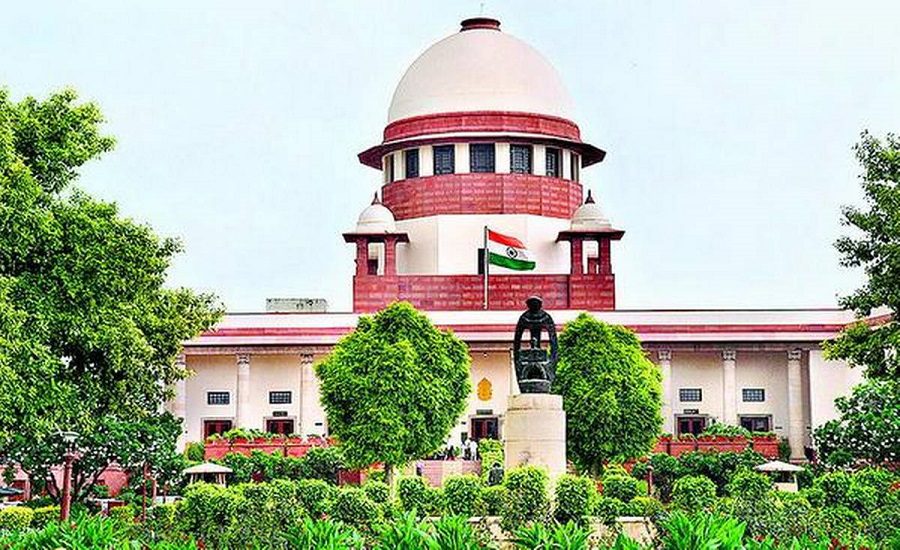
New Delhi: The Supreme Court of India has formally asked the Central Government to respond to a petition seeking the constitution of the Arbitration Council of India (ACI), highlighting concerns over a six-year delay in setting up the statutory body under the Arbitration and Conciliation Act, 1996.
The development brings renewed focus on India’s arbitration framework and its impact on trade and dispute resolution.
What Is the Arbitration Council of India (ACI)?
The Arbitration Council of India is a statutory body designed to strengthen the arbitration ecosystem in India by setting standards, training arbitrators, accrediting institutions, and promoting best practices.
Read also: Supreme Court Reservation Verdict Explained: How Reserved Candidates Can Legally Get General Seats
Its foundation was introduced through amendments to the Arbitration and Conciliation Act, 1996—specifically under Sections 43A and 43B via the 2019 Amendment Act.
Despite these provisions being notified in October 2023, the Council has not been constituted for more than six years since its legislative basis was first introduced in 2019.
Petitioners argue this has created an unregulated arbitration environment in India.
Constitution of Arbitration Council of India: SC Notice to Centre
A Bench of Justices J.K. Maheshwari and Atul S. Chandurkar issued the notice to the Union of India, asking it to file its response within six weeks.
This action signals the Supreme Court’s seriousness in addressing delays around the formation of the ACI and related regulatory concerns.
The case is titled Anil Kalyandas Thanvi versus Union of India & Others and was filed by Anil Kalyandas Thanvi, a cotton trader.
Constitution of Arbitration Council of India: Key Issues
The petitioner criticized the Centre for failing to establish the ACI despite statutory backing under the Arbitration Act. The delay contradicts the objective of promoting effective, transparent, and standardized arbitration procedures.
Unregulated Arbitration Practices
The plea highlights how trade associations and other arbitral institutions currently operate with varying rules and appointment processes, often lacking transparency or impartial standards. According to the petition, this can result in arbitrary outcomes that do not align with constitutional principles.
Challenge to Trade Association Arbitration Rules
The Cotton Association of India (CAI) is specifically named in the petition. The petitioner alleges that the CAI’s arbitration rules, notably dated April 26, 2024, are imposed as a prerequisite for commercial dealings and may override contractual preferences and statutory standards. A declaration of unconstitutionality for these rules is being sought.
Removal of Qualification Standards
Earlier arbitration legislation included an Eighth Schedule outlining qualifications for arbitrators. Its removal heightens the petitioner’s concerns about the need for a central regulatory body to enforce basic professional standards.
What is the Importance of Arbitration Council of India
Establishing the ACI is seen as a major step toward transforming India into a preferred arbitration hub. It could help ensure:
- Uniform arbitration policies and guidelines
- Professional training and accreditation
- Consistency in arbitral awards
- Greater fairness and transparency
Without the ACI, varied practices among institutions risk inconsistent outcomes, which could undermine investor confidence and efficient dispute resolution.
What Happens Next?
The Supreme Court will revisit this matter after the Centre files its response within the stipulated six-week period.
Legal observers note that the government’s position on this petition could influence future arbitration reforms and possible amendments to strengthen regulatory oversight.