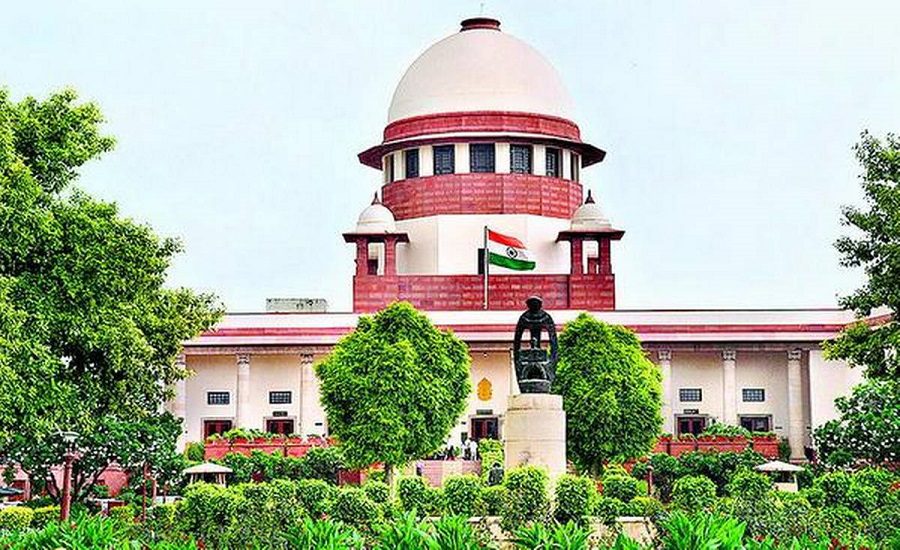
New Delhi: In a significant judgment on disability rights and inclusive employment, the Supreme Court of India directed Coal India Limited (CIL) to appoint a candidate with multiple disabilities to a suitable post after she was denied employment despite qualifying for positions in an earlier recruitment process.
The ruling emphasises reasonable accommodation, intersectionality, and progressive interpretation of disability law under the Rights of Persons with Disabilities Act, 2016 (RPwD Act).
Background of Coal India PwD Candidate Recruitment Case
A two-judge Bench comprising Justice J.B. Pardiwala and Justice K.V. Viswanathan delivered the ruling in the civil appeal arising out of a Calcutta High Court order.
Read also: Explained: Why the Supreme Court Is Re-Examining Creamy Layer in SC/ST Reservation
The bench clarified that the relief granted is specific to the facts and circumstances of this case and should not be treated as a precedent.
The appellant, Sujata Bora, had applied for the post of Management Trainee (Personnel and HR) in Coal India’s 2019 recruitment under the Visually Handicapped (VH) category. Although she qualified for the interview and underwent document verification and medical examination, she was denied appointment when it surfaced that she also suffered from residual partial hemiparesis in addition to low vision.
The original vacancy advertisement did not mention provisions for candidates with multiple disabilities, which allegedly led to her exclusion.
Supreme Court Intervention in Coal India PwD Candidate Recruitment
Earlier, a Single Judge of the Calcutta High Court had held that Coal India, as a public sector undertaking, should have accounted for candidates with multiple disabilities.
It quashed her unfitness declaration but permitted her to be considered in a future recruitment cycle, directing one post to remain vacant. However, the High Court’s Division Bench reversed this relief, citing the expiry of the recruitment panel as the reason for denying immediate appointment.
The Supreme Court set aside the Division Bench’s order, emphasising that the technical expiry of a panel cannot be a ground to deny justice when the appellant was wrongly excluded on account of her disability.
Key Observations: Disability Inclusion and Justice
The Supreme Court reiterated the central tenet of the RPwD Act — reasonable accommodation — which mandates necessary modifications or adjustments to ensure disabled persons can participate effectively in employment without imposing undue burden on employers.
The Court observed that reasonable accommodation goes beyond physical aids and must include policy and procedural flexibility.
Intersectionality and Equality
In a progressive move, the Court also recognised the importance of intersectionality — how multiple layers of disadvantage (here, disability plus gender) intensify discrimination and necessitate tailored relief to achieve substantive equality.
CSR, ESG and Disability Rights
The judgment drew from international human rights instruments, including the International Labour Organisation (ILO) standards, to assert that disability inclusion forms an essential part of Corporate Social Responsibility (CSR) and Environmental, Social, and Governance (ESG) frameworks.
The Court noted that organisations should view disability inclusion not just as compliance but as a strategic advantage that enhances resilience and societal impact.
Direction: Supernumerary Post & Universal Design Compliance
In its operative directions, the Supreme Court instructed:
- The Chairman of Coal India Limited must create a supernumerary post to accommodate Ms. Bora, given she was denied employment not by her own fault but due to recruitment notification shortcomings.
- The appointment should be for a desk job, with assistive infrastructure including a separate computer and keyboard, in line with the concept of universal design as defined in Section 2(ze) of the RPwD Act.
- Ms. Bora is to be posted at the North Eastern Coal Fields (NECF), Coal India Limited, located at Margherita, Tinsukia district, Assam.
- The Court relied on Articles 14 (Equality before Law), 21 (Right to Life and Personal Liberty), and 41 (Right to Work) of the Constitution, along with its powers under Article 142 to do complete justice.
Medical Assessment and Benchmark Disability
As part of proceedings, the Supreme Court had earlier directed the All India Institute of Medical Sciences (AIIMS), New Delhi to form a panel to assess Ms. Bora’s disability.
The board found her disability percentage at 57%, which exceeds the benchmark disability threshold of 40%, making her eligible for reservation under the RPwD Act.