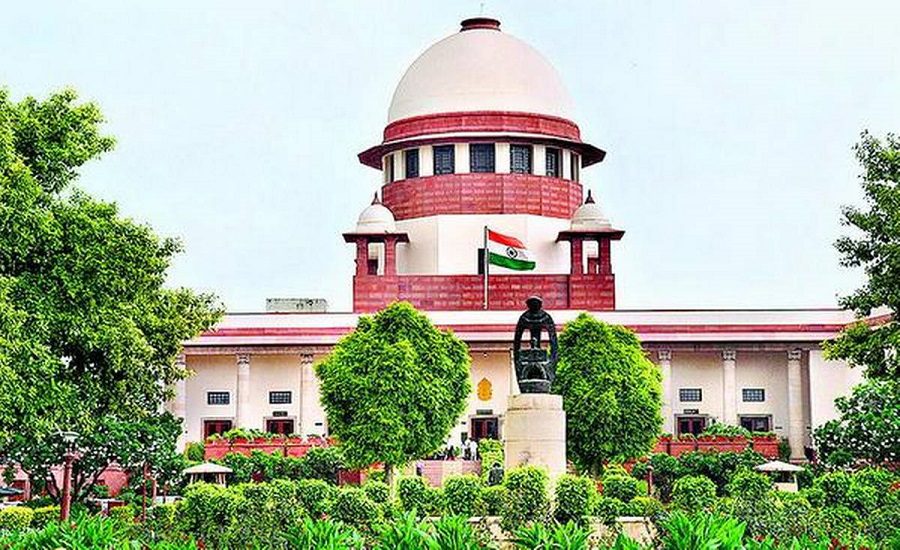
New Delhi: The District Judge appointments issue has taken a major turn after the Supreme Court issued fresh directions on reinstatement and seniority following its landmark judgment in Rejanish K.V. v. K. Deepa.
The Court clarified how judicial officers who were earlier reverted from District Judge posts should be treated and how their seniority must be determined.
The ruling aims to bring uniformity and fairness in the appointment process across High Courts in India. It also addresses complications created by earlier judicial interpretations and sets a clear framework for reinstatement, seniority determination, and future recruitment of District Judges.
Background of the District Judge Appointments Case
The case revolves around the interpretation of Article 233 of the Constitution, which governs appointments of District Judges in India.
Earlier, the Supreme Court in Dheeraj Mor v. High Court of Delhi (2020) ruled that only practising advocates were eligible for direct recruitment as District Judges. Because of this decision, several judicial officers who had been appointed as District Judges through direct recruitment were reverted back to lower judicial posts.
However, in 2025, a Constitution Bench in Rejanish K.V. v. K. Deepa overturned this position. It ruled that civil judges who previously had at least seven years of experience as advocates are also eligible for direct recruitment as District Judges, even if they later joined judicial service.
Following this landmark judgment, the Supreme Court has now issued additional directions to resolve issues related to reinstatement and seniority.
District Judge Appointments: Key Directions of the Supreme Court
A three-judge bench of the Supreme Court led by the Chief Justice of India declared that the reversion of judicial officers from District Judge posts after the 2020 judgment was illegal.
The Court directed that:
- Judicial officers who were earlier appointed as District Judges but later reverted must be treated as District Judges from their original appointment date.
- These officers will receive seniority benefits and notional pay advantages from the original date of appointment.
- However, they will not receive arrears of salary for the intervening period.
This decision restores the professional status and service benefits of affected judicial officers.
The Supreme Court also dealt with another category of candidates whose selection process for District Judge posts had been completed but appointments were not issued due to eligibility disputes.
The Court directed that:
- High Courts and State Governments must appoint these candidates immediately.
- Their appointments will take effect from 12 October 2025, one day after the Constitution Bench judgment.
- Their seniority relative to other officers will be determined by the respective High Courts after hearing all affected parties.
How Seniority Will Be Decided
Since the issue of seniority varies across states and High Courts, the Supreme Court has laid down a structured process.
The Court ordered that:
- Each High Court must create a three-judge committee to examine seniority disputes.
- The committee will hear all affected officers before making a recommendation.
- The final decision will be taken by the Full Bench of the High Court.
- The entire exercise must be completed within three months.
This mechanism aims to ensure transparency and fairness in seniority determination.
What Happens to Ongoing or Incomplete Recruitment Processes?
For candidates whose recruitment processes are still pending, the Court gave the following directions:
- High Courts must complete the ongoing selection process and appoint eligible candidates.
- Candidates who are selected will receive seniority only prospectively.
- Previously settled seniority positions will not be reopened.
Age Relaxation for Over-Age Candidates
The Court also addressed candidates who may have become over-age because of delays caused by litigation.
It directed that:
- High Courts should grant age relaxation to such candidates.
- A fresh recruitment process must be initiated to allow them to participate.
- However, the Court clarified that no automatic right to appointment arises merely because a person was once eligible.
Challenges by Bar Associations Dismissed
Several Bar Associations had challenged the appointment of judicial officers as District Judges through direct recruitment.
The Supreme Court clarified that such challenges cannot survive after the Constitution Bench ruling in Rejanish v. Deepa and directed that all such pending cases should be disposed of or dismissed.
District Judge Appointments: Why This Judgment Is Important
This ruling is significant for India’s judicial system because it:
- Restores the positions of judges who were wrongly reverted.
- Creates a uniform framework for determining seniority in District Judge appointments.
- Clears legal confusion created by conflicting earlier judgments.
- Ensures fair recruitment and career progression within the judiciary.
By clarifying eligibility and seniority rules, the Supreme Court has attempted to stabilize the structure of Higher Judicial Services across states.