https://indianmasterminds.com

ADVERTISEMENT
ADVERTISEMENT

Supreme Court Judgment on Adoptive Mothers Maternity Leave: Key Changes, Impact, and Legal Significance

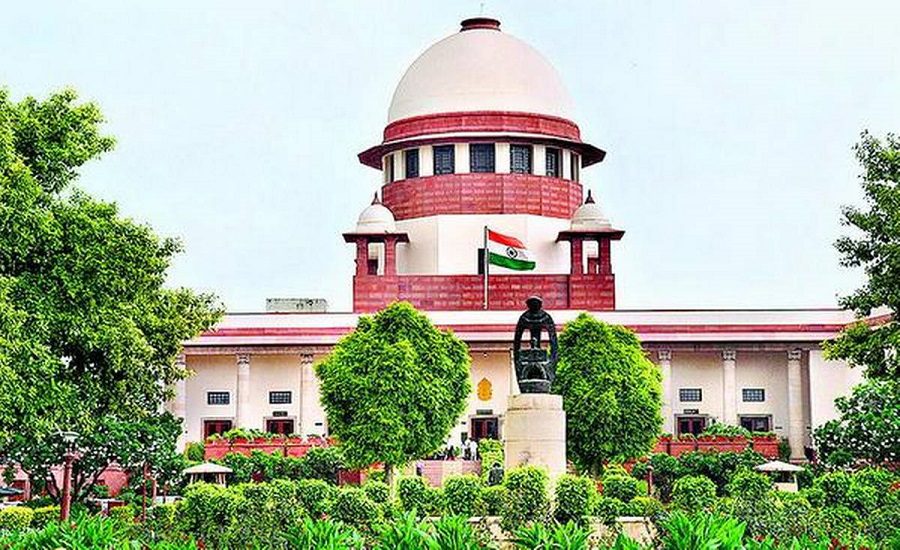
The Supreme Court of India has struck down a discriminatory law that denied maternity leave to adoptive mothers if the child was older than three months. The ruling ensures equal rights and 12 weeks leave for all adoptive mothers.
Supreme Court Maternity Leave Ruling
Indian Masterminds Stories

New Delhi: The Supreme Court maternity leave adoptive mothers ruling has brought a major change in India’s labour and social welfare laws.

In a landmark judgment, the Supreme Court struck down a provision that denied maternity leave to adoptive mothers if the child was older than three months. The court said such a rule is unfair and violates equality.

This decision ensures that adoptive mothers get the same rights as biological mothers and recognizes that every child, regardless of age, needs care and bonding time with their mother.

Supreme Court Maternity Leave Ruling: What Was the Law Earlier

Under earlier provisions of the Maternity Benefit Act, 1961 (amended in 2017):

  • Adoptive mothers were eligible for 12 weeks of maternity leave only if the child was below 3 months of age.
  • If a woman adopted a child older than 3 months, she got no maternity leave at all.

Read also: SC Women Welfare Scam: Lokayukta Court Signals Zero Tolerance, Rejects Bail Pleas of 8 Officials

This created a major gap and was widely criticised as discriminatory.

Details of Supreme Court Maternity Leave Ruling

A bench of Justices J.B. Pardiwala and R. Mahadevan ruled that:

  • All adoptive mothers are entitled to maternity leave of 12 weeks, regardless of the child’s age.
  • The earlier restriction was arbitrary and discriminatory.
  • Parenting responsibilities are the same whether a child is biological or adopted.

The court clearly stated that the arrival of a child—by birth, adoption, or surrogacy—requires time, care, and emotional bonding.

Why the Court Struck Down the Law

The Supreme Court found several problems with the old rule:

1. Violation of Equality

  • The rule treated adoptive mothers differently from biological mothers.
  • This goes against Article 14 (Right to Equality) of the Constitution.

2. No Logical Basis

  • There was no reasonable reason to limit benefits only to children below 3 months.
  • Adoption processes often take time, making such a limit impractical.

3. Against Child Welfare

  • Older adopted children also need care, bonding, and emotional support.
  • Denying leave harms both the mother and the child.

Impact of the Supreme Court Maternity Leave Ruling

  • Adoptive mothers will now receive equal maternity benefits.
  • Recognises all types of families, including adoption and surrogacy.
  • The court also suggested the need for paternity leave laws to promote shared parenting.

Legal and Social Significance of Supreme Court Maternity Leave Ruling

This judgment is important because:

  • It strengthens women’s reproductive and parenting rights.
  • It removes discrimination in a social welfare law.
  • It aligns labour laws with modern family structures.

The Supreme Court has repeatedly said that maternity leave is not a favour but a legal right linked to dignity and health.

Read also: Supreme Court Plans AI-Driven Case Listing System to Improve Transparency and End Manual Bench Allocation


Indian Masterminds Stories
ADVERTISEMENT
ADVERTISEMENT
Related Stories
ADVERTISEMENT
ADVERTISEMENT
NEWS
National Highways Fee Rules 2026
72 Hours Rule Explained: Your FASTag Mistake Can Cost You Double — New Toll Rules 2026 Explained in Simple Terms
Appropriation Bill 2026
Appropriation Bill 2026 Passed: Why This One Decision Could Shape India’s Economic Future
ALMM Framework Extension
India Tightens Solar Rules with ALMM Expansion—What It Means for Projects, Imports, and Growth
Supreme Court Maternity Leave Ruling
Supreme Court Judgment on Adoptive Mothers Maternity Leave: Key Changes, Impact, and Legal Significance
SAGAR Initiative
Explained: What is the SAGAR Initiative? India’s Powerful Maritime Strategy to Secure the Indian Ocean Region
Indigenous Floating LiDAR Buoy
What Is India’s Indigenous Floating LiDAR Buoy and How It Will Transform Offshore Wind Energy Development
Yeoman Marine NGOPV
Explained: How Yeoman Marine’s NGOPV Project Is Quietly Strengthening India’s Maritime Dominance
MIGM Naval Mine
DRDO MIGM Naval Mine: Why It Is a Nightmare for Enemy Submarines and Stealth Warships
ADVERTISEMENT
ADVERTISEMENT
Videos
WhatsApp Image 2026-03-16 at 4.18
What Happens After Terror Strikes? Surinder Choudhary Explains the Reality of Counter-Terror Operations
beno zephine
India’s First Visually Impaired IFS Officer on Diplomacy, Inclusion and Changing the System
WhatsApp Image 2026-03-02 at 10.22
Beno Zephine: India’s First 100% Visually Challenged IFS Officer Who Rewrote the Rules of Diplomacy | EXCLUSIVE
ADVERTISEMENT
UPSC Stories
WhatsApp Image 2026-03-18 at 7.30
Who Scored Highest in UPSC Interview 2025? Tejaswini Singh Tops with 225 Marks, Top 5 Profiles & Mark Calculation Explained
Tejaswini Singh secured the highest UPSC interview score this year with 225 marks, followed by Anjana...
Bhavika Chopra AIR 25 UPSC CSE 2025
How Abhijit Banerjee & Esther Duflo Inspired Bhavika Chopra to Crack UPSC
Bhavika Chopra secures AIR 25 in UPSC 2025, inspired by Abhijit Banerjee and Esther Duflo. Explore her...
Sreeja JS UPSC CSE 2025 AIR 57
She Wrote Her Dream on a Wall—Years Later, Sreeja JS Achieved AIR 57 in UPSC
Sreeja JS secured AIR 57 in UPSC 2025 with a dream written on her wall. Read her inspiring journey, strategy,...
CSR NEWS
ECIL
ECIL Completes CSR Project by Handing Over Retaining Wall at Rastriya Vidya Kendra, Telangana
ECIL Enhances Student Safety and School Infrastructure in Medchal-Malkajgiri District Through Corporate...
ntpc
NTPC WR-I Launches ₹7.64 Crore CSR Project to Renovate IPD Blocks at N.M. Wadia Hospital, Solapur
Renovation of Buildings A, B, and Annex to Strengthen Healthcare Infrastructure, Improve Patient Care,...
AAI
AAI Provides ₹12.29 Crore CSR Support to Balasaheb Deoras Rugnalay in Pune for Healthcare Expansion
Funding to build new pathology lab and Ayurveda–Panchakarma departments to strengthen community healthcare...
ADVERTISEMENT
ADVERTISEMENT
ADVERTISEMENT
Latest
National Highways Fee Rules 2026
72 Hours Rule Explained: Your FASTag Mistake Can Cost You Double — New Toll Rules 2026 Explained in Simple Terms
Appropriation Bill 2026
Appropriation Bill 2026 Passed: Why This One Decision Could Shape India’s Economic Future
ADVERTISEMENT
ADVERTISEMENT
ADVERTISEMENT
ADVERTISEMENT
ADVERTISEMENT
ADVERTISEMENT
ADVERTISEMENT
Videos
WhatsApp Image 2026-03-16 at 4.18
beno zephine
WhatsApp Image 2026-03-02 at 10.22
ADVERTISEMENT
ADVERTISEMENT