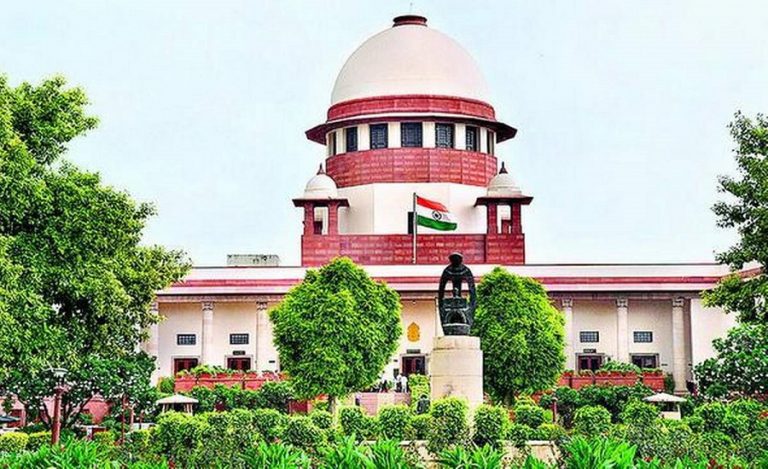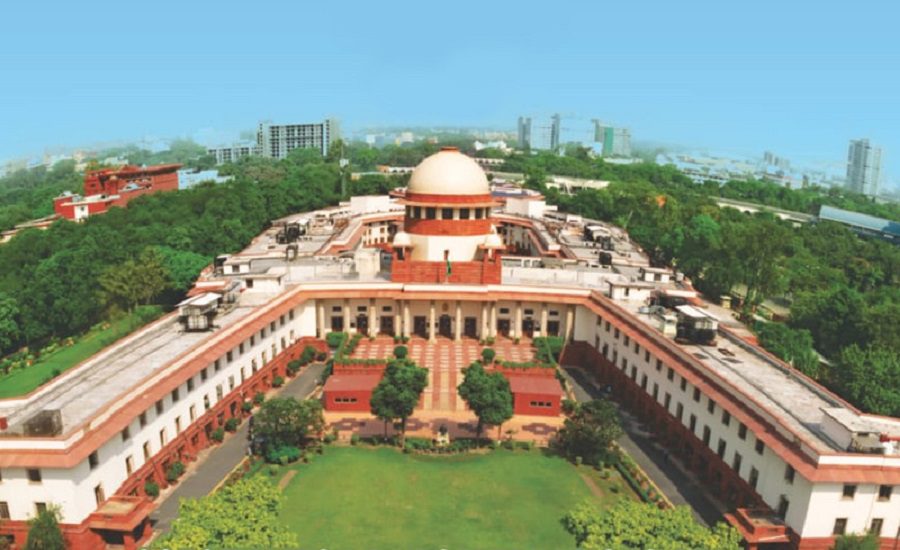
New Delhi: In a landmark ruling on 9 December 2025, the Supreme Court of India (SC) held that an employee who resigns or opts for voluntary retirement after completing at least five years of continuous service is entitled to gratuity under the Payment of Gratuity Act, 1972 (PGA 1972).
The decision clarifies that resignation or voluntary retirement does not disqualify an employee from claiming gratuity — provided the minimum service requirement is met.
This pronouncement reinforces the social-security objective of the Act and underscores that the right to gratuity is not limited to traditional retirement alone.
Background of Resignation Gratuity Entitlement
The Payment of Gratuity Act, 1972 is a statutory welfare legislation enacted to provide a lump-sum benefit (gratuity) to employees who render continuous service to an employer.
Read also: CSS Forum Proposes Measures to Protect Central Secretariat Employees from Air Pollution
According to Section 4 of the Act: “Gratuity shall be payable to an employee on the termination of his employment after he has rendered continuous service for not less than five years.”
“Termination” under the Act has been interpreted to include resignation or voluntary retirement as well — not just superannuation or compulsory retirement.
The amount of gratuity is typically calculated as 15 days’ wages (last drawn basic salary) for each completed year of service.
Historically, there was some confusion, especially when employees resigned or opted for voluntary retirement before attaining traditional retirement age — whether they remained eligible for gratuity or not. Some industry-employed gratuity schemes had attempted to impose stricter eligibility criteria for resignation, e.g., 10 years’ service.
What the Supreme Court Ruled: Key Findings of the December 9, 2025 Judgment
The Bench — comprising Justice Rajesh Bindal and Justice Manmohan — directed that the appellant’s family, who had resigned (or voluntarily retired) after more than 30 years of service, should be granted gratuity under the PGA 1972.
The Court emphatically held that employees are entitled to gratuity once they complete five years of continuous service and resign or retire — even if they give up claims to pension or other retirement benefits.
The fact that the employer (in this case, the Delhi Transport Corporation) has not been exempted from the PGA 1972 under Section 5 means the Act applies in full force.
The Court clarified that “termination” under Section 4 includes resignation or voluntary retirement — so gratuity cannot be denied on that ground alone.
Resignation Gratuity Entitlement: Legal Significance and Broader Implications
This judgment has far-reaching consequences for both employees and employers across India. Key implications include:
Reaffirmation of Social Security Purpose: The decision reaffirms the welfare intent of the Payment of Gratuity Act — as a protection for long-serving employees irrespective of how their service ends.
Clarity Over Past Confusion: Past practices in some organisations, especially private establishments, had tried to restrict gratuity for those resigning or taking voluntary retirement, sometimes requiring 10 or more years of service. This judgment undercuts such restrictions, aligning practice with statutory law.
Encouraging Timely Payment of Gratuity: Employers must recognise gratuity claims without forcing employees to resort to litigation, especially where the 5-year threshold is satisfied. The ruling raises the bar for denials based merely on resignation or voluntary retirement.
Impact Across Sectors: Since PGA 1972 applies to establishments with 10 or more employees (e.g., factories, shops, educational institutions, transport corporations, etc.), the judgment is likely to affect diverse sectors.
Importance of Resignation Gratuity Entitlement Ruling
The December 2025 ruling comes at a time when India is seeing dynamic workforce movement — resignations, voluntary retirements, career changes, etc. With many employees leaving service before conventional retirement age, this ruling ensures that long-term contributions don’t go unrewarded merely because of career shifts.
For employees: it offers clarity and security — a statutory right to gratuity post five years of continuous service, even on resignation or voluntary retirement.
For employers: it serves as a caution to ensure compliance with the Act and avoid litigation. Further, it underscores that exemptions under Section 5 (if any) must be formally notified; absence of such notification means the Act applies.
What Happens Next: Practical Points for Employees & Employers
- Employees considering resignation or voluntary retirement after five years of continuous service should check whether they are covered under the Payment of Gratuity Act (i.e., the employer has not obtained exemption under Section 5).
- Employers must assess their gratuity liability and ensure that dues are settled according to the Act — failure to do so may invite legal claims.
- Nomination / legal-heir protocols must be adhered to, especially in cases of death.
- Payroll/HR departments should ensure proper record-keeping of continuous service and last drawn salary to calculate gratuity correctly (15 days’ wages for each completed year).