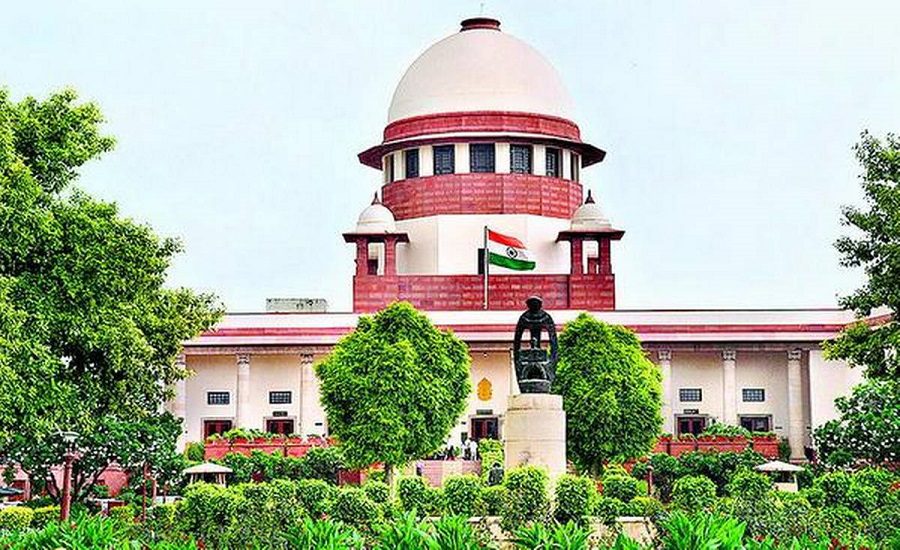
New Delhi: The Supreme Court of India has sought official responses from the Union Government, NBEMS, National Medical Commission (NMC), and MCC on a petition challenging the reduction of the NEET-PG 2025-26 qualifying cut-off percentiles.
The issue has sparked intense debate among students, medical professionals, and legal experts due to its implications on merit, medical education standards, and future healthcare quality in the country.
Background of the NEET-PG 2025-26 Cut-Off Case
After the declaration of results and completion of two rounds of counselling for NEET-PG 2025-26, over 18,000 postgraduate seats remained vacant across medical colleges nationally.
In response, the NBEMS issued a notification on January 13, 2026, significantly reducing the minimum qualifying percentiles.
Under the revised criteria:
- The general category qualifying percentile was reduced from 50th percentile to 7th percentile.
- For SC, ST, and OBC categories, the qualifying cutoff was lowered from 40th percentile to 0 percentile, allowing candidates with very low scores to be eligible.
This drastic change means that candidates with scores barely above zero — or even technically below zero on the NEET-PG scale — could potentially become eligible for counselling in the third round.
NEET-PG 2025-26 Cut-Off: Details of the Supreme Court Petition
A group of petitioners, including social workers and medical professionals, filed a Public Interest Litigation (PIL) in the Supreme Court, challenging the legality and fairness of the sudden cut-off reduction. The petition has raised several major concerns:
1. Violation of Constitutional Rights
The plea contends that lowering the qualifying criteria post-results is arbitrary and violative of Articles 14 (Equality before law) and 21 (Protection of life and personal liberty) of the Constitution. They argue that students prepared under the original criteria and should not be judged by a changed standard.
2. Threat to Medical Standards and Patient Safety
The petitioners argue that allowing candidates with extremely low marks into postgraduate medical training dilutes merit and could undermine the quality of clinical education and future healthcare services in India. They assert that medical education should maintain rigorous entrance standards to ensure competent doctors and protect public health.
3. Executive Interference and Law Interpretation
The plea questions whether the NBEMS had the authority to alter eligibility benchmarks after results were declared. It also points to provisions in the National Medical Commission Act, 2019, which require maintenance of minimum academic standards.
Supreme Court’s Response and Next Steps
On February 4, 2026, a bench of Justices P.S. Narasimha and Alok Aradhe issued notices to the Union of India, NBEMS, NMC, and MCC, seeking their detailed responses to the petition. The Court has listed the matter for further hearings on February 6, 2026, where parties will present their arguments.
The Supreme Court’s involvement indicates the seriousness of the case, as it balances the need to fill vacant seats with maintaining educational quality and fairness to students. The final decision may have lasting implications for how future NEET-PG policies are framed and interpreted.