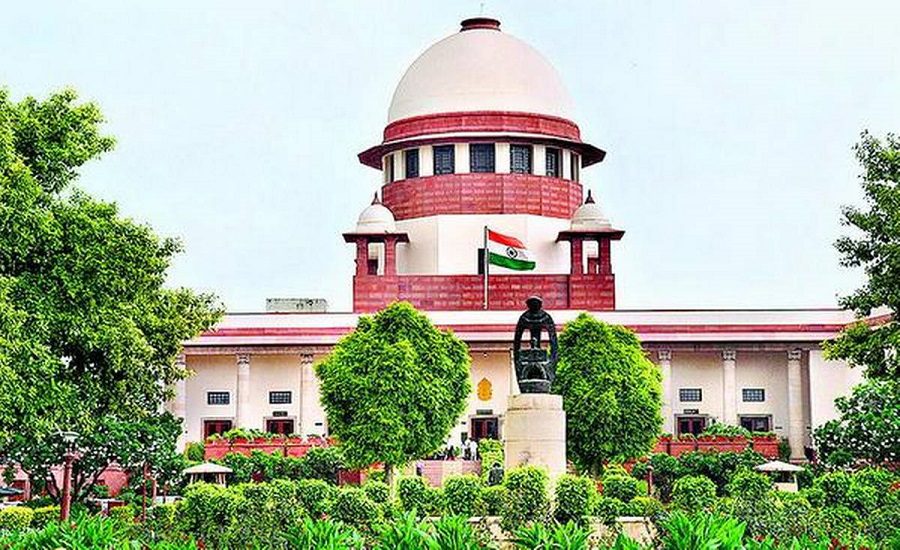
New Delhi: The Supreme Court of India has ruled that the University Grants Commission (UGC) Regulations, 2018 override any conflicting state law governing how search committees for Vice-Chancellor (VC) appointments are formed in universities.
According to the Court, any deviation from the UGC Regulations in forming a search-cum-selection committee for appointing a university Vice-Chancellor is invalid and unlawful.
This landmark verdict underscores the authority of UGC rules over state university laws in matters concerning higher education standards.
University VC Appointment: What the Supreme Court Decided
A constitution bench of the Supreme Court, led by Justice Vikram Nath and Justice Sandeep Mehta, stated that Search-cum-Selection Committee composition is integral to higher education standards and falls within Entry 66 of the Union List — exclusively the Parliament’s domain. Since the UGC Regulations are rooted in this federal power, states cannot override them through their own university laws.
The Court upheld the Madras High Court’s judgment that struck down Section 14(5) of the Puducherry Technological University Act, 2019 because it prescribed a search committee that did not include a nominee of the UGC Chairman and had members “connected” with the university, contrary to Regulation 7.3 of the UGC Regulations.
Background: The Puducherry Technological University Case
The dispute arose from the appointment of Dr. S. Mohan as the first Vice-Chancellor of Puducherry Technological University (PTU) in December 2021. The search committee under the PTU Act did not have the UGC Chairman’s nominee, violating Regulation 7.3 of the UGC Regulations, 2018, which mandates its inclusion and requires that committee members not be connected with the university.
Two writ petitions were filed before the Madras High Court. One challenged the legality of Dr. Mohan’s appointment and the other contested the constitutional validity of the PTU Act’s Section 14(5). The High Court struck down the clause as ultra vires the UGC Regulations and quashed the appointment.
Supreme Court’s Reasoning on University VC Appointment
The Supreme Court clarified that the UGC Act, 1956 empowers the Commission to frame regulations that set “standards” for higher education — including how Vice-Chancellors (key academic leaders) are chosen.
The Court emphasized that such standards are part of Parliament’s exclusive legislative field and cannot be diluted by conflicting state universities’ statutes.
The judgment pointed out that since the UGC Regulations are under Entry 66, List I (Union List) of the Constitution, state laws cannot create parallel or inconsistent rules. This means the PTU Act’s provision for a differing search committee structure was effectively invalid.
Protection for the Incumbent Vice-Chancellor
Despite declaring the appointment process unlawful, the Supreme Court, using its powers under Article 142 of the Constitution, permitted Dr. S. Mohan to continue as Vice-Chancellor until the end of his tenure in December 2026, or until a valid successor is appointed under proper UGC compliant process, whichever is earlier. The Court reasoned that he had no allegations against his integrity or performance and that abrupt removal could disrupt academic functioning.
Read also: Supreme Court Makes Police Reporting Mandatory in Student Suicide and Unnatural Death Cases