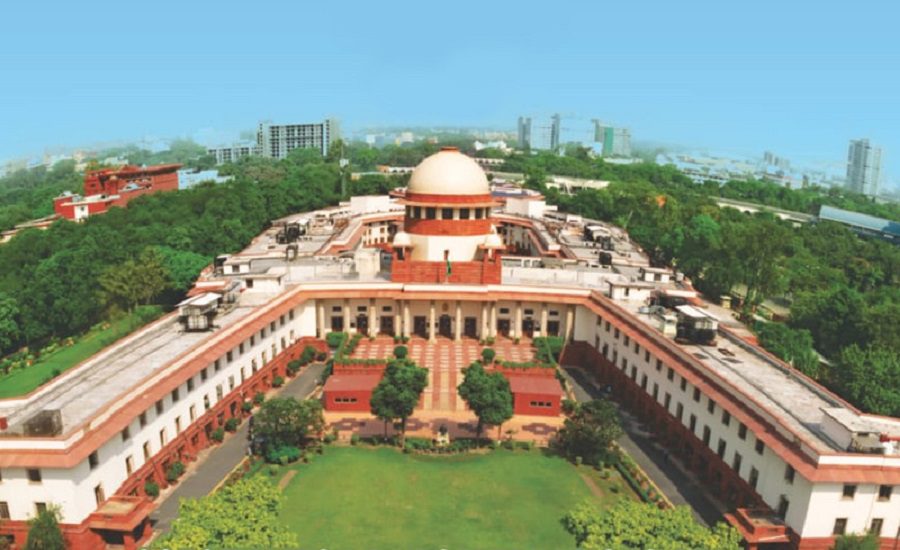
New Delhi: The Supreme Court of India (SC) on Monday reaffirmed its earlier decision cancelling over 23,000 appointments made by West Bengal School Service Commission (WBSSC) — part of the WBSSC 2016 recruitment scam that has proved to be one of the largest education-sector frauds in the state.
In a stern judgment delivered recently — under the case titled Shawon Aditya vs Union of India — the Court refused to grant relief to petitioners who sought reinstatement of jobs cancelled in the wake of the scandal.
Background of the WBSSC 2016 Recruitment Scam
In 2016, WBSSC conducted a large-scale recruitment drive (the 2016 State Level Selection Test – SLST) for teaching and non-teaching staff in state-run and aided schools across West Bengal.
Over 23 lakh candidates reportedly applied for around 24,640 available posts. Strangely, more than 25,000 appointment letters were eventually issued — raising suspicions.
Read also: How Two Tribal Villages in West Bengal Ended Decades of Isolation
Allegations of large-scale manipulation emerged such as; OMR answer sheets were reportedly tampered with, merit lists were manipulated (commonly referred to as “rank-jumping”), and fake appointments issued.
Multiple petitions challenging the recruitment process were filed in Calcutta High Court (CHC), leading in April 2024 to a landmark judgment cancelling all 25,753 appointments made through the 2016 process.
The CHC declared the selection process “fraudulent and manipulated.”
The decision triggered widespread unrest among those appointed in 2016 — both teaching and non-teaching staff — many of whom had been working for years.
Supreme Court’s April 2025 Judgment on WBSSC 2016 Recruitment Scam
On 3 April 2025, the Supreme Court upheld the Calcutta High Court’s decision, rejecting pleas to reinstate the cancelled appointments. The Court affirmed that the 2016 recruitment exercise was “vitiated by fraud and tainted beyond repair.”
The Court called it a “systemic fraud” — stressing that the manipulation was not isolated to a few candidates, but involved the entire system, including officials and possibly external agencies.
The Court also observed that the inability of the authorities to preserve original physical OMR sheets — or even mirror copies — made any meaningful verification impossible. This destruction or loss of crucial records was one of the pivotal reasons for scrapping the entire list.
Acknowledging that many “untainted” candidates (i.e., those not found involved in manipulation) too would suffer because of the mass cancellation, the Court nonetheless emphasized that “the purity of the selection process is of the highest priority” and must remain “free of infirmities.”
To mitigate hardship for some genuinely clean candidates, the Court allowed them a limited route: those who did not fall under the “tainted” category and had prior service with state government or autonomous bodies, could apply to revert to their earlier posts. Such applications must be processed within three months.
Meanwhile, the Court directed a completely fresh recruitment process to be conducted — under the newly notified West Bengal School Service Commission (Selection for Appointment) Rules, 2025. The new process must ensure that no candidate previously flagged as “tainted” is allowed to re-enter the system under any pretext.
Recent Developments in WBSSC 2016 Recruitment Scam
On August 5, 2025, the Supreme Court dismissed all review petitions filed against its April 3 verdict. Petitioners had sought re-consideration of the order canceling 25,000+ appointments.
The Court reiterated that the extensive hearings, which included detailed investigation reports (notably from Central Bureau of Investigation — CBI) and admissions by involved authorities, sufficiently established that the recruitment process was irretrievably compromised. There was no scope for partial restoration.
The SC also stressed that the cancellation order applied uniformly — irrespective of whether an individual candidate was personally implicated in wrongdoing — because the entire panel was declared void.
Key Impact & Implications of SC Ruling on WBSSC 2016 Recruitment Scam
- The verdict sends a powerful message: systemic corruption in public recruitment cannot be tolerated, even if a large number of “innocent” candidates suffer as collateral damage.
- By calling the 2016 process “tainted beyond repair,” the Court affirmed that public trust in merit-based recruitment — especially in something as crucial as education — must be preserved at all costs.
- Over 23,000 teaching and non-teaching staff who were working for years now stand effectively jobless. Many are untainted, but have lost employment because their appointments were cancelled en-bloc.
- The limited relief path (reverting to prior posts) is available only to those who had earlier government or autonomous-body employment — leaving a large number in limbo.
- Even for those eligible, re-employment is uncertain, as it depends on administrative discretion and processing within a tight timeline.
- The WBSSC must conduct a fresh recruitment under the 2025 rules with strict safeguards to ensure transparency and fairness. Any prior beneficiary of the 2016 panel flagged as “tainted” must be excluded — no exceptions. This implies a major overhaul of recruitment architecture, oversight mechanisms, and record-keeping.
- The state government and education authorities now face the dual challenge of managing staffing shortages in schools (due to mass cancellations) and rebuilding credibility in public recruitment.
Wider Context: Governance, Accountability & Systemic Failures
The scale of the fraud — involving over 23 lakh applicants, more than 25,000 appointments, manipulated OMR sheets, destroyed records, and rank-jumping — points to systemic failures rather than isolated misconduct. The involvement of agencies responsible for recruitment and record-keeping makes it a governance crisis.
That even some “untainted” candidates suffer indicates the harsh trade-off the judiciary deemed necessary: short-term hardship for long-term institutional integrity. As the Court said, “the purity of the selection process is of the highest priority.”
The ruling may set a precedent for other states/commissions — reminding them that “fast-track” recruitments at the cost of fair process will be struck down, even after years of service.