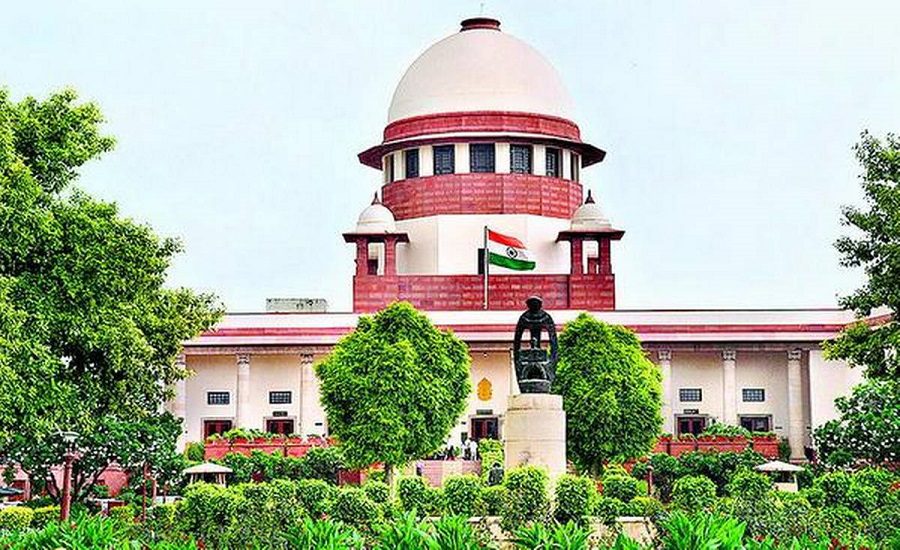
New Delhi: The Supreme Court of India has recently agreed to examine a Public Interest Litigation (PIL) seeking a nationwide ban on Female Genital Mutilation (FGM) — often referred to as female circumcision or “khafz/khatna” — in India.
Background of the Case
The petition, filed by Chetna Welfare Society, aims to protect minor girls from a deeply harmful practice that, according to the plea, violates their fundamental human rights. The SC’s decision to take up the plea and issue notices to the central government and other respondents marks a potentially watershed moment in India’s struggle to confront and legally outlaw FGM.
Read also: Big Relief for Retirees: Supreme Court Flags Finance Act 2025 in Landmark Pension Parity Case
At a time when global attention is intensifying on FGM as a human rights and health concern, this judicial development signals that India may soon formally address a practice that has long remained shrouded in silence and controversy.
Legal Landscape of Female Genital Mutilation India
Previous Legal Recognition & Attempts: The issue of FGM in India first reached the national spotlight when a PIL was filed in the SC in 2017 by Sunita Tiwari, a human rights lawyer. The petition sought a complete ban on FGM and requested directions to police and authorities to act under existing provisions of Indian law — until specific legislation could be enacted.
Supporters of the petition argued that FGM violates constitutional rights — particularly:
- Article 21 of the Constitution of India (right to life and personal liberty), since bodily integrity and dignity are compromised.
- Article 14 of the Constitution of India (right to equality) and Article 15 of the Constitution of India (prohibition of discrimination on grounds of sex, religion etc.), as the practice discriminates specifically against female children.
Responding previously, the Central Government told the Court that the practice is already a crime under existing laws — including the criminal provisions of the Indian Penal Code (IPC) and the Protection of Children from Sexual Offences Act (POCSO Act) — and sought the Court’s direction for implementation.
Nevertheless, no specific legislation or comprehensive ban has been enacted to date. A 2017 response from the Ministry of Women and Child Development stated that there is no official data or study confirming the prevalence of FGM in India.
What is Female Genital Mutilation?
Female Genital Mutilation/Cutting (FGM/C) — also called female circumcision — refers to all procedures involving partial or total removal of the external female genitalia, or other injury to the female genital organs, for non-medical reasons. The practice is widely denounced internationally as a violation of human rights, given its severe consequences on physical health, psychological well-being, bodily autonomy, and sexual rights.
Globally, FGM/C is recognized as a harmful traditional practice. World Health Organization (WHO) classifies FGM/C as a gross violation of human rights of girls and women.
Prevalence of FGM in India
In India, FGM is not widespread across the population, but among certain communities, it has been practiced for decades — often in secrecy. The most commonly cited community is the Dawoodi Bohra community, a sect within the Shia branch of Islam.
According to research by organisations working to eliminate FGM in Asia, estimates suggest that 75 %–85 % of women in the Dawoodi Bohra community in India have undergone FGM/C. The practice reportedly occurs typically when girls are around six or seven years old.
In the Dawoodi Bohra community, FGM/C is referred to as khafz or khatna/khafd. The procedure can involve partial removal of the clitoral hood (sometimes more), performed by either a traditional cutter or a medical practitioner.
Some reports suggest that other smaller sects — such as the Suleimani Bohra, Alavi Bohra, and even some Sunni communities in Kerala — may also practise FGM, though the scale is believed to be far smaller and reliable data is lacking.
Health, Psychological and Human Rights Consequences
FGM/C has a wide range of immediate and long-term consequences. Immediately after the procedure, girls may suffer pain, bleeding, infection, and risk of sepsis. Over time, FGM often leads to complications during urination, menstruation, sexual activity, childbirth, and can contribute to infertility and other serious reproductive health problems.
Beyond physical harm, FGM inflicts deep psychological trauma. Survivors have reported severe emotional distress, long-term shame, loss of sexual autonomy, and even post-traumatic stress.
From a human rights perspective, FGM violates fundamental rights — including the right to life with dignity, bodily autonomy, health, and equality. In India, critics argue that FGM perpetuates gender discrimination and entrenches patriarchal control over female bodies.
Renewed Petition & Court’s Decision on Female Genital Mutilation India
The renewed plea — now by Chetna Welfare Society — takes up where earlier efforts left off. According to the petition:
- FGM is performed on minor girls without their consent, under the guise of religious custom.
- The practice has severe physical and psychological consequences, including risk of infection, complications in childbirth, permanent impairment, and violation of basic human dignity.
- It violates international human rights obligations, including those under the United Nations conventions and the global stance of WHO against FGM.
- There is no essential religious mandate in the primary religious text (Quran) to perform FGM; the petition argues the practice is instead a harmful cultural tradition — particularly among the Dawoodi Bohra community.
In response, in November 2025, a bench of the SC comprising B. V. Nagarathna and R. Mahadevan issued notices to the Central Government and the relevant ministries, calling for their response.
The Court’s decision to examine this plea formally signals that FGM’s legality and acceptability in India are under serious judicial scrutiny.
Core Issues of Female Genital Mutilation India Before the Court
The current SC hearing on FGM raises several interconnected issues of law, religion, human rights, and ethics.
Key among them:
Consent and Bodily Autonomy: FGM is typically performed on minor girls — who cannot give informed consent. It raises the issue of bodily autonomy and whether non-consensual genital cutting can ever be acceptable under law or religion.
Right to Life and Dignity: Under Article 21, every individual has the right to life with dignity. FGM, by causing pain, trauma and long-term health issues, arguably violates this basic right.
Gender Equality and Non-Discrimination: Because FGM targets girls and women specifically, it raises serious questions under Articles 14 and 15 about sex-based discrimination.
Religious Freedom vs. Fundamental Rights: Opponents of the ban — including organizations from within communities practicing FGM — argue that such practices are integral to their religious/cultural identity, protected under constitutional provisions guaranteeing freedom of religion (Articles 25 and 26). The Court must therefore balance religious freedom with the rights of minors to bodily integrity and protection.
Need for Specific Legislation vs. Use of Existing Laws: While existing laws like the IPC and POCSO Act may cover aspects of genital mutilation and sexual offences, activists argue that a dedicated law explicitly banning FGM is urgently needed — to ensure clarity, enforcement, and deterrence.
Broader Context: International & Human Rights Perspective
- FGM is not unique to India; it is practised in many parts of Africa, the Middle East, and elsewhere. Internationally, FGM is recognized as a serious violation of the rights of women and girls.
- In 2024, global reports estimated that millions of girls remain at risk of FGM worldwide — underscoring the urgency for international and national action.
- Activists and civil-society organisations — such as the Asia Network to End FGM/C (led by groups like Orchid Project and ARROW) — have long worked across Asia to end all forms of FGM/C. Their work includes advocating for legislative bans, raising awareness, and supporting survivors.
- Given this global consensus, a legal ban in India would align the country with international human rights standards, and affirm the rights of girls and women to bodily integrity, health, and dignity.
Key Significance of SC Ruling on Female Genital Mutilation India
The SC’s agreement to examine the plea has several important implications:
1. Legal Precedent: A ban would set a strong legal precedent, clarifying that non-therapeutic genital modification of minors is unacceptable under Indian law, even if claimed to be religious or cultural.
2. Protection of Vulnerable Girls: A nationwide ban could protect thousands of minor girls — particularly from vulnerable communities — from enduring painful, unsafe procedures without consent.
3. Awareness and Breaking Silence: The very act of judicial scrutiny brings FGM out of secrecy. It could lead to greater social awareness, public debate, and eventually social transformation against harmful practices.
4. Alignment with International Norms: It would affirm India’s commitment to global human rights standards, including those championed by agencies like WHO and international treaties to which India is a party.
5. Gender Justice & Bodily Autonomy: A ban would strengthen safeguards around gender justice, bodily autonomy, and equal rights for girls and women, challenging patriarchal norms that perpetuate control over female bodies.
Key Challenges Ahead & What to Watch
However, the road to a ban is not straightforward. The SC will have to weigh deeply contested issues:
- The balance between religious freedom and constitutional guarantees of life, dignity, and equality.
- Whether existing law suffices or a new, specific legislation is necessary.
- Enforcement challenges — even with a ban, implementation will require sensitization, policing, reporting, protection for survivors, and possibly rehabilitation.
- Potential resistance from community groups who view the practice as integral to identity or tradition.
- The need for broader societal change — legal ban alone may not erase deeply entrenched cultural practices without education and awareness.