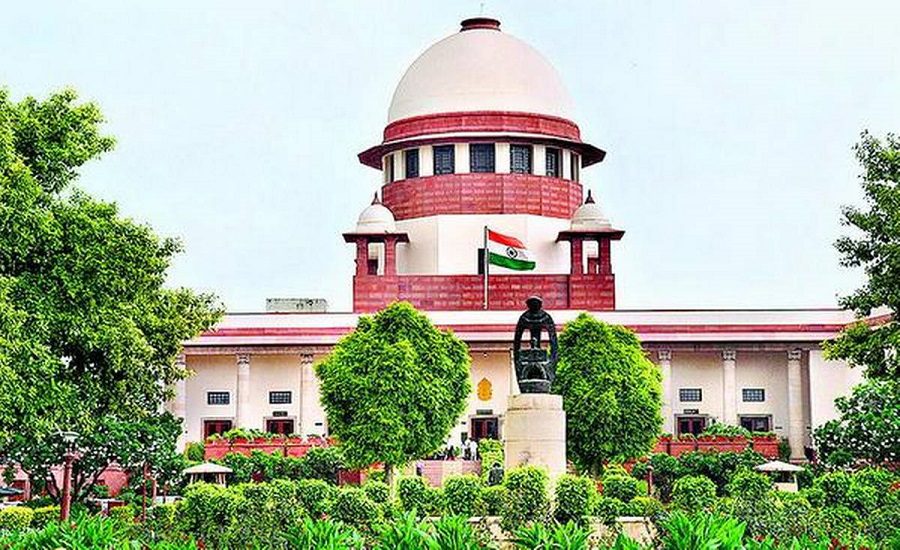
New Delhi: The Supreme Court has sharply criticised government departments and public authorities for failing to promptly comply with judicial orders, warning that such behaviour weakens the authority of courts and may amount to criminal contempt in certain cases. The top court observed that government bodies frequently delay implementing court directions and only move appeals or review petitions when faced with the possibility of contempt proceedings.
The bench emphasised that such conduct not only undermines the rule of law but also risks damaging public confidence in the judicial system.
Court Expresses Concern Over Delayed Appeals
A bench comprising Justices Ahsanuddin Amanullah and R Mahadevan expressed serious concern over what it described as a growing trend of delayed appeals filed by government entities.
The judges pointed out that instead of being rare occurrences, late challenges to court orders are increasingly becoming routine. According to the court, such delays indicate a casual approach by authorities toward judicial directives.
The bench warned that persistent disregard for court orders directly affects the credibility and effectiveness of the justice delivery system.
Observations During Hearing of Contempt Case
The strong remarks came while the Supreme Court was hearing a contempt petition related to officials of the Chhattisgarh government. The case concerned the alleged failure of authorities to carry out a court directive regarding the regularisation of certain employees.
During the proceedings, the court examined the reasons cited by the authorities for not implementing the order within the required time frame.
Administrative Difficulties Not a Valid Excuse
Government authorities often defend delays by pointing to administrative hurdles or difficulties in executing court orders. However, the Supreme Court rejected such explanations when they are raised only during contempt proceedings.
The bench clarified that if authorities face genuine challenges in implementing an order, they must inform the court within the stipulated period rather than waiting until contempt action is initiated.
Failure to do so, the court noted, reflects negligence and disregard for judicial authority.
Final Opportunity Given to Chhattisgarh Government
While taking a stern view of the matter, the Supreme Court nevertheless granted the Chhattisgarh government a final chance to comply with the order. The court directed the authorities to implement the directive within 15 days.
At the same time, the bench advised High Courts across the country to adopt a stricter approach when dealing with similar cases involving government departments or public institutions.
High Courts Asked to Act Firmly
The Supreme Court urged High Courts to deal firmly with litigants who deliberately avoid or delay compliance with judicial orders. The judges particularly highlighted cases where the parties involved fall under the definition of “state” as mentioned in Article 12 of the Constitution.
According to the bench, authorities that represent the state must uphold higher standards of accountability and cannot treat court directions casually.
The court also used strong language to describe such conduct, suggesting that litigants who deliberately evade compliance should be handled with firmness.
Protecting Public Faith in the Judiciary
The bench emphasised that maintaining public trust in the justice system is a shared responsibility for courts at every level. Ensuring that court orders are respected and implemented is essential for safeguarding the credibility of the judiciary.
The judges observed that while the legal system must remain fair and compassionate, it cannot ignore instances where litigants act dishonestly or deliberately undermine judicial authority.
Possibility of Reconsidering Liberal Contempt Approach
The Supreme Court also indicated that the judiciary may need to reassess its traditionally lenient stance toward contempt proceedings in cases involving deliberate non-compliance.
According to the bench, stronger action may be required to prevent misuse of the system and to discourage authorities from ignoring court directives.
Liability May Extend Beyond Direct Parties
The court further clarified that responsibility for non-compliance with judicial orders is not limited only to the parties directly involved in a case.
Officials who play a role in the administrative decision-making process or contribute to delays in implementing court directions may also face accountability under contempt proceedings.