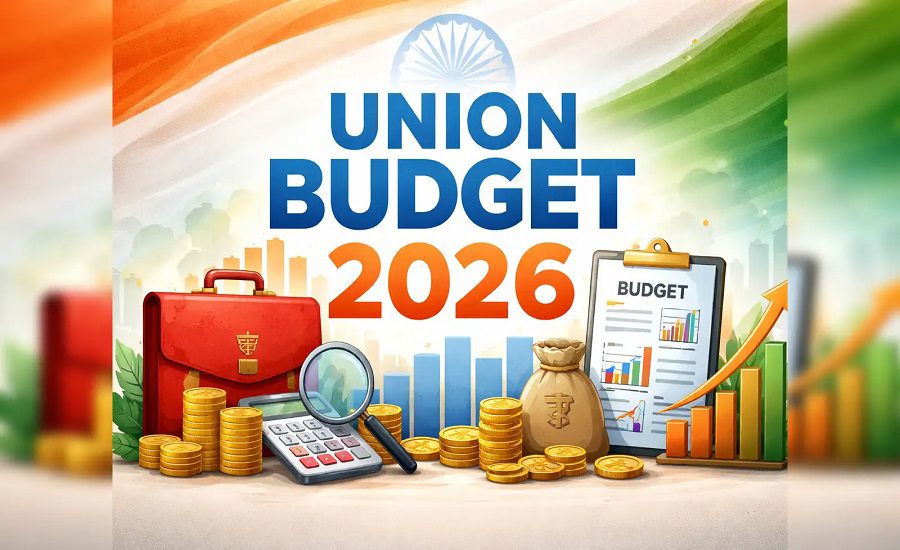
New Delhi: In her Union Budget 2026-27 presentation, Union Finance Minister Smt. Nirmala Sitharaman highlighted a strong push towards boosting domestic manufacturing and technology-driven growth. These initiatives fall under the first Kartavya, aimed at accelerating India’s economic growth, improving competitiveness, and building resilience across sectors.
Biopharma SHAKTI: India as a Global Biopharma Hub
To develop India into a global Biopharma manufacturing hub, the Budget proposes Biopharma SHAKTI with an outlay of ₹10,000 crore over the next 5 years. Key highlights include:
- Establishing 3 new NIPERs and upgrading 7 existing ones.
- Creating a network of 1,000+ accredited clinical trial sites.
- Strengthening the Central Drugs Standard Control Organisation with a dedicated scientific review cadre.
These measures aim to boost domestic production of biologics and biosimilars, ensure faster approvals, and strengthen India’s global presence in pharmaceutical manufacturing.
India Semiconductor Mission 2.0 & Electronics Components
Building on the success of ISM 1.0, the India Semiconductor Mission (ISM) 2.0 will focus on:
- Production of equipment and materials for semiconductors.
- Designing full-stack Indian IP.
- Fortifying supply chains and promoting industry-led R&D and skill development.
The Electronics Components Manufacturing Scheme, launched in 2025 with ₹22,919 crore, will now see its outlay increased to ₹40,000 crore to capitalize on existing momentum.
Rare Earth Corridors & Chemical Parks
The Budget also targets mineral-rich states like Odisha, Kerala, Andhra Pradesh, and Tamil Nadu through dedicated Rare Earth Corridors to promote mining, processing, research, and manufacturing.
Additionally, a Chemical Parks Scheme will support states in establishing 3 dedicated chemical parks through a cluster-based plug-and-play model, reducing import dependency and boosting domestic production.
Container & Construction Equipment Manufacturing
Recognizing the importance of capital goods, the Budget proposes:
- Hi-Tech Tool Rooms at two locations to manufacture high-precision components locally.
- A Construction & Infrastructure Equipment Scheme (CIE) for advanced machinery like lifts, fire-fighting equipment, tunnel-boring machines, and metro construction tools.
- A Container Manufacturing Scheme with ₹10,000 crore over 5 years to build a globally competitive ecosystem.
Textile Sector Boost
The labour-intensive textile sector will receive targeted support through an Integrated Programme with five key components:
- National Fibre Scheme for self-reliance in natural, man-made, and new-age fibres.
- Textile Expansion & Employment Scheme for modernization and capital support.
- National Handloom & Handicraft Programme to strengthen weaver and artisan support.
- Tex-Eco Initiative for globally competitive and sustainable textiles.
- Samarth 2.0 to upgrade skilling ecosystem through industry-academia collaboration.
The Budget also announces Mega Textile Parks under challenge mode and the Mahatma Gandhi Gram Swaraj initiative to promote khadi, handloom, and handicrafts, linking rural products to global markets.
Sports Goods Manufacturing
To promote innovation and global competitiveness in sports goods, the Budget proposes a dedicated initiative supporting:
- Research and design of sports equipment.
- Advanced material science applications.
Conclusion
The Union Budget 2026-27 clearly signals a strong emphasis on scaling up strategic sectors, strengthening domestic manufacturing, and promoting innovation-driven growth. From Biopharma SHAKTI to Mega Textile Parks, the Budget aligns with India’s vision of Viksit Bharat and global competitiveness across high-value sectors.