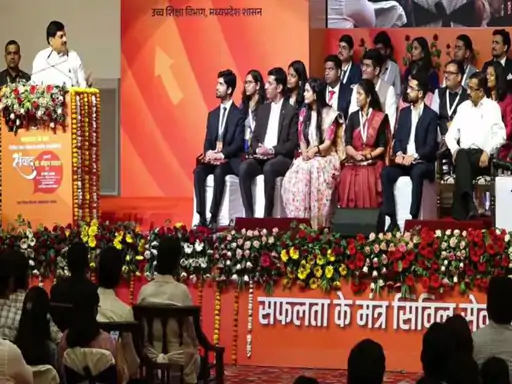
Bhopal: Aspirants preparing for the Civil Services Examination received practical and candid guidance from recently selected UPSC candidates during a special interaction programme titled “Mantras for Success” held at Kushabhau Thakre Auditorium in Bhopal.
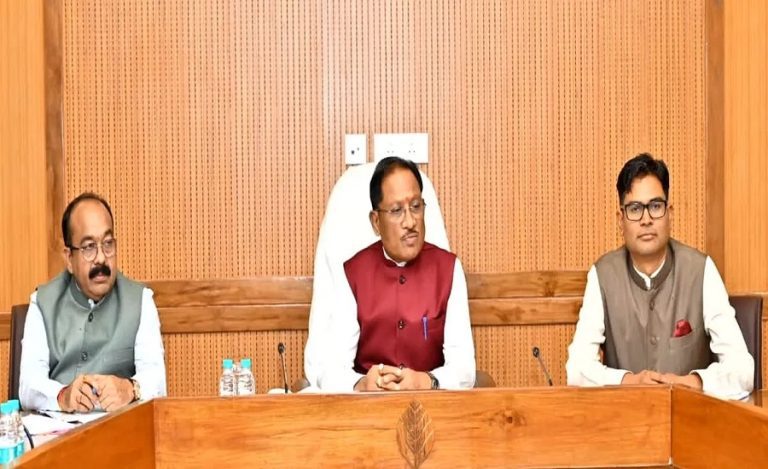
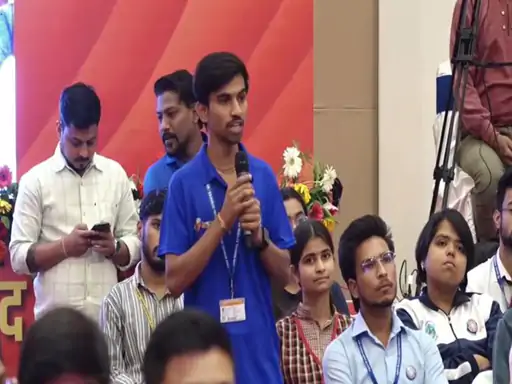
The event, organised to honour 61 successful candidates selected through the Union Public Service Commission examination, took place in the presence of CM Mohan Yadav and turned into an interactive mentoring session where students from various colleges directly asked toppers about preparation strategy, answer writing, prelims failures, mental health and balancing studies with employment.
Aspirants raised practical concerns such as why they repeatedly fail in prelims, how to improve answer writing speed, how to remain disciplined and whether language medium creates barriers in selection.
‘Content and Presentation Both Matter in Answer Writing’
One of the most discussed topics during the session was answer writing strategy.
Responding to a question from student Tanvisha Tiwari, a selected candidate explained that answer writing depends equally on content and presentation.
According to the candidate, content develops through classroom learning, standard books and revision, but presentation requires repeated structured practice.
The candidate shared a practical technique used during preparation: dividing an A4 sheet into two sections, writing pointer-based answers on one side and adding value-enrichment points on the other.
This method helped reduce answer-writing time significantly, bringing down a seven-minute answer to nearly four minutes—an important advantage in the Mains examination where speed and structure directly affect performance.
‘I Also Failed Multiple Times in Prelims’
A key moment came when student Kunal Verma asked how to overcome repeated failure in the preliminary examination.
A selected candidate responded candidly that repeated prelims failure is common and can be overcome through focused revision rather than endlessly expanding study material.
The candidate said success came through repeatedly revising limited sources, attempting regular mock tests and solving Previous Years’ Questions from 2011 onwards.
The candidate added that it is equally important to analyse both wrong and correct answers, because understanding why an answer is correct sharpens conceptual clarity.
AI Emerging as a Preparation Tool for Aspirants
An important suggestion that drew attention during the session was the use of artificial intelligence as a study support tool.
The candidate advised students to use AI to refine answers, compare interpretations and improve analytical understanding.
Rather than replacing study, AI was described as a support mechanism for better revision and conceptual testing.
For many aspirants present, this reflected how digital tools are increasingly becoming part of UPSC preparation strategies.
Rank 194 Holder Advises Tackling Difficult Subjects Strategically
Responding to Akshansh Singh Kushwaha’s question on procrastination, Shreyansh Badoriya explained that difficult subjects should not be avoided, but timing matters.
He advised aspirants to allocate serious attention to difficult portions when mentally fresh.
However, during periods of low motivation, he recommended beginning with subjects that feel easier or more interesting, as that helps restore study momentum.
He also shared that during breaks he practiced geography mapping, which kept him connected to preparation without mental fatigue.
‘UPSC Is Part of Life, Not Life Itself’
Mental health also emerged as a major concern during the interaction.
Responding to Arushi Pagare’s question, Diksha Chaurasia stressed that physical and mental fitness must remain part of preparation.
She advised at least one hour of physical activity daily, whether through running, sports or exercise.
Her broader message was that aspirants should not treat UPSC as the final measure of life.
According to her, the examination is important, but it remains only one part of a larger life journey.
She urged students not to convert study into emotional burden and to consciously take breaks during long preparation cycles.
Preparing With a Job Requires Smaller Targets
For working aspirants, Sofia Siddiqui responded to a question from Paridhi Soni by recommending syllabus fragmentation.
She explained that candidates preparing while employed must divide the syllabus into small manageable units and focus only on targeted preparation.
With limited time available each day, she advised relying heavily on PYQ analysis to identify what deserves priority.
According to her, precision matters more than volume when balancing work and UPSC preparation.
Hindi Medium Is Difficult but Not Impossible
Language medium was another major concern raised by students.
Replying to Anjul Sen’s question, Prachi Chauhan acknowledged that Hindi medium candidates do face additional challenges, especially in obtaining quality study material.
However, she said success through Hindi medium is entirely possible.
Drawing from her own experience, she said the real deciding factor remains effort and consistency rather than language.
Consistency Remains the Strongest Formula
Responding to Siddhant Yadav’s question on discipline, Ayushi Gupta emphasised daily targets.
She advised aspirants to break the syllabus into smaller portions and complete them steadily.
According to her, regular study allows even a large syllabus to become manageable within a few months.
Her central message was simple: consistency remains the most reliable formula for success in UPSC preparation.
Aspirant-Candidate Dialogue Creates Practical Learning Space
The programme stood out because it moved beyond ceremonial felicitation and became a direct exchange between selected candidates and future aspirants.
Students from different colleges used the opportunity to ask practical questions rooted in real preparation struggles.
For many aspirants, hearing selected candidates openly discuss failure, revision discipline, mental fatigue and strategy made the guidance especially relatable.