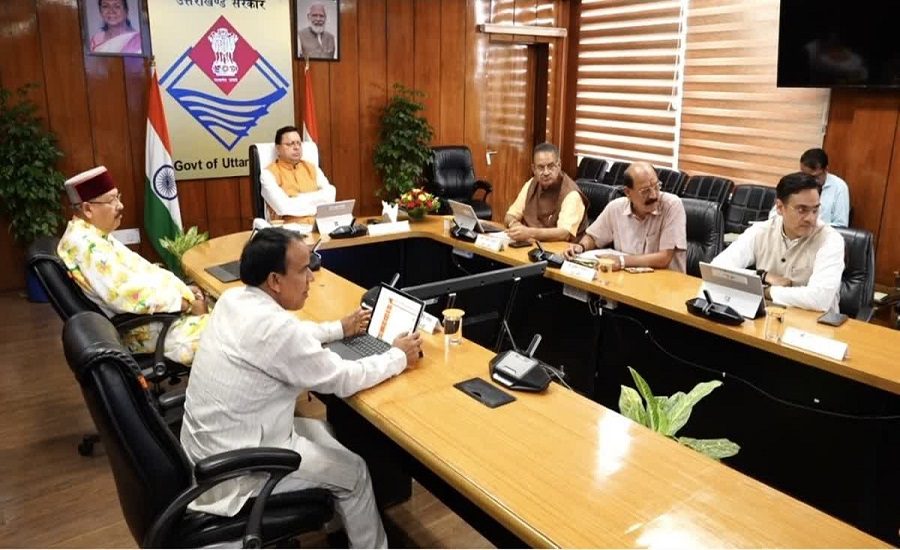
Dehradun: In a decisive move to accelerate industrial, commercial, and urban growth, the Uttarakhand government has approved several landmark policy reforms aimed at enhancing construction, urban planning, and tourism infrastructure across the state. The decisions were taken during a cabinet meeting chaired by Chief Minister Pushkar Singh Dhami at the Secretariat on Wednesday.
Full Construction Permission for Commercial Plots
The cabinet has removed restrictions on ground coverage for commercial plots, allowing 100% construction on commercial lands after accounting for setbacks. Earlier, the maximum permissible coverage was 75%. This change is expected to promote efficient land use and facilitate faster commercial development in urban areas.
Special Townships and Land Pooling Reforms
To encourage planned urban growth, the government has approved amendments to the Uttarakhand Town Planning Scheme, enabling the development of special townships. Modifications have also been made to the Land Pooling Scheme, which will allow land acquisition for urban projects without delays, minimizing disputes and ensuring equitable development.
Tourism and Resort Development Incentives
The cabinet has relaxed land-use restrictions for constructing eco-resorts and other tourism-related infrastructure. Now, resorts can be built on agricultural land, and approach road width requirements have been eased—6 meters in hilly regions and 9 meters in plains. Modifications have also been made to building regulations regarding setbacks, floor area ratios (FAR), parking, and heights for commercial buildings, hotels, and eco-resorts.
Promotion of Green Building Standards
Uttarakhand will now provide additional FAR incentives to promote green building standards, including gold, silver, and platinum-rated constructions. Up to 3% extra FAR will be granted for energy-efficient buildings incorporating cool roofs, green roofs, and renewable energy sources. In hilly regions, traditional hill-style construction will also be rewarded with additional FAR. These measures aim to encourage sustainable, energy-efficient urban development.
Learning from Other States
The reforms draw inspiration from successful urban development models in Gujarat, Maharashtra, Rajasthan, and Karnataka. For instance, Ahmedabad and Surat in Gujarat have developed 90–95% of urban areas under the Town Planning Scheme (TPS), boosting the real estate, construction, and manufacturing sectors, which contribute over 35% to the state GDP. Similarly, Pune and the Naina region in Maharashtra have witnessed large-scale planned urban growth and employment generation.
Integrated Urban Infrastructure Development
Under the TPS framework, Uttarakhand will develop integrated infrastructure including roads, electricity, water, sewerage, parks, and social facilities, without forced land acquisition. Landowners will receive restructured and developed plots, while the government will recover development costs through betterment charges. The model is participatory, ensuring stakeholder engagement and public hearings at each stage.
Three-Phase Township Development Process
The township development under TPS will follow a three-phase process:
- Identification Phase: Development authorities and landowners identify TPS areas, followed by draft planning, intent declaration, and public consultation.
- Draft Publication and Approval: Draft TPS plans will be published for objections and suggestions. The Town Planning Officer will prepare detailed physical and financial plans, which will be submitted to a High-Powered Committee for final approval.
- Implementation and Allocation: Landowners will receive Letters of Award, Certificates of Ownership, and possession of restructured plots. Conveyance deeds will be issued, and revenue records updated.
Future Outlook
With these reforms, Uttarakhand is poised to witness rapid development of satellite towns, modern townships, and eco-friendly resorts, creating a strong foundation for industrial growth, urban expansion, and tourism development across the state. The cabinet’s decisions aim to make Uttarakhand a model for planned, sustainable, and inclusive urbanization.