On 16th February 2026, as the 87th Raising Day of Delhi Police unfolded, the announcements were not merely ceremonial. They carried the weight of a quiet administrative shift, one that would touch the daily lives of nearly 90,000 personnel.
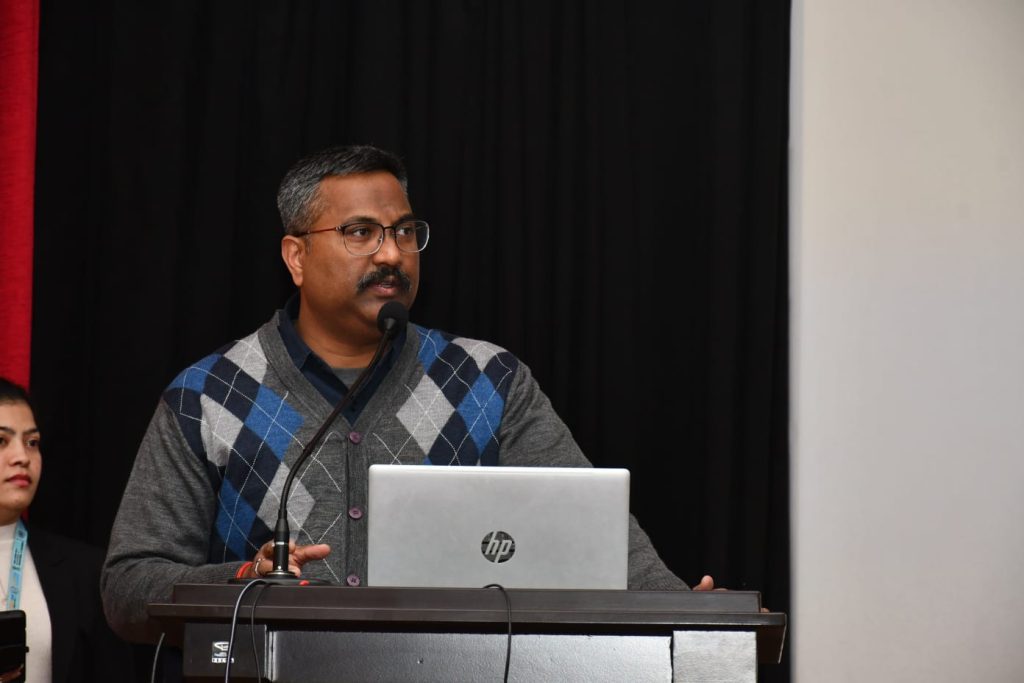
Among the initiatives unveiled, one stood out in both scale and consequence: the rollout of eHRMS 2.0, an AI-enabled personnel management platform. Behind this transformation was a team working in mission mode, led by IPS Bharat Reddy.
The officer shared details about the project in an exclusive conversation with Indian Masterminds.
REIMAGINING THE POLICE WORKFORCE EXPERIENCE
For decades, personnel management in large forces relied heavily on paperwork… files moving across desks, approvals delayed, and records scattered. eHRMS 2.0 aimed to change that completely.
Pioneered by the Department of Personnel and Training, the platform integrates the entire employee lifecycle, from recruitment to retirement. Transfers, promotions, APARs, leaves, LTC, allowances, deputations, training… everything converges into a single digital ecosystem.
The vision was clear. As Satish Golcha, Commissioner of Police, believed, going digital was essential to make the force more transparent and responsive.
But turning that vision into reality required execution at scale.
MISSION MODE
At the centre of this transformation stood Bharat Reddy, holding dual responsibilities as DC Headquarters and DCP Technology & Project Implementation.
He didn’t approach the project as a routine rollout; it was treated like an operational mission.
“When you’re dealing with a force of this size, even a small change impacts thousands instantly. Our goal was to make the transition seamless, not disruptive,” Reddy explains.
The rollout strategy was deliberate. Instead of overwhelming the system, the team began with critical yet manageable components — all types of leaves, LTC, and TA/DA.
These were everyday processes. Getting them right meant building trust.
THE PILOT THAT SET THE TONE
The groundwork began on 1st October 2025, when a pilot was launched across 10 districts and units.
This phase wasn’t just about testing software; it was about understanding behaviour, resistance, and real-world challenges.
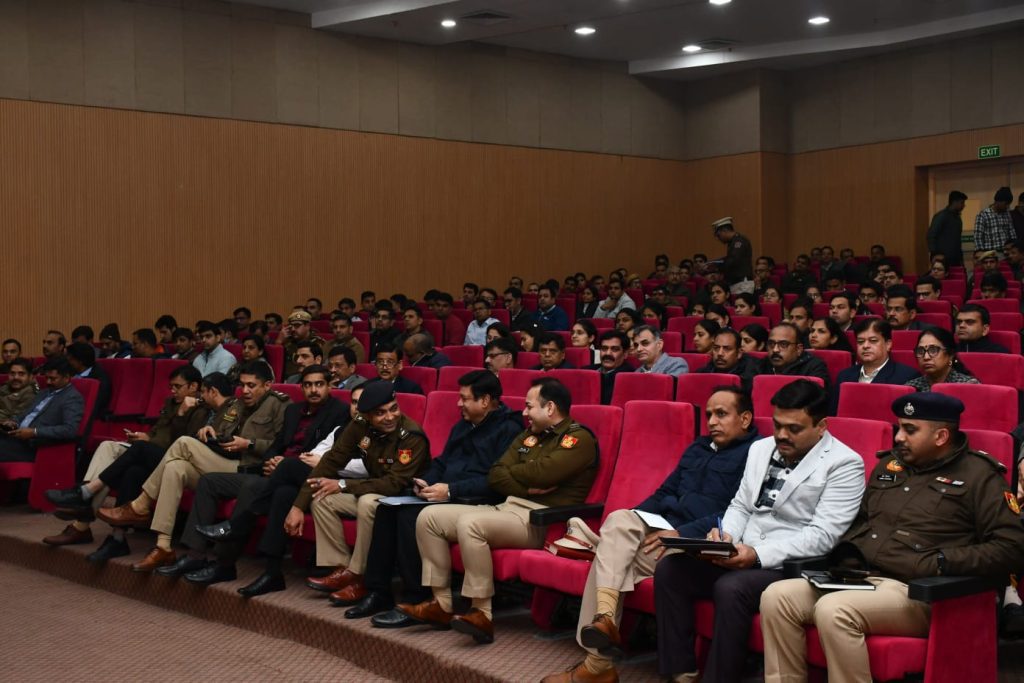
DoPT officials conducted extensive discussions and training sessions, while master trainers were prepared to cascade knowledge across the force. From there, district-level trainings followed, ensuring that the system didn’t remain confined to a few tech-savvy users.
By 1st December 2025, the first milestone was achieved, on time.
“The pilot phase taught us more about people than technology. Every issue we faced became a lesson for scaling the system across Delhi,” Reddy reflects.
The learnings were documented, refined, and fed back into the system before the full rollout.
FROM PILOT TO 90,000 USERS
What followed was a carefully timed expansion.
The target was ambitious: full implementation by 31st January, followed by official rollout on Raising Day. The timeline left little room for error.
Yet, the team pushed forward with phase-wise trainings and continuous hand-holding sessions, ensuring that every officer, from constable to senior rank, could navigate the platform.
By 1st February 2026, the shift was complete in practice.
Personnel could now:
- Apply for all types of leave
- Get approvals digitally
- Submit tour requests
- Process TA/DA claims
—all within eHRMS 2.0.
No files. No waiting lines. No ambiguity.
The idea was simple. If an officer is serving the public, their administrative needs should not slow them down.
THE OFFICIAL ROLLOUT AND THE REAL IMPACT
On 16th February 2026, the system was formally launched. But by then, the transformation had already begun.
Across districts, personnel reported a smoother experience. Processes that once took days were now completed in significantly less time. Transparency improved. Accountability became traceable.
Most importantly, the system reduced the invisible administrative burden that officers carried alongside their duties.
The response from within the force was telling. Many employees openly welcomed the change.
A CULTURAL SHIFT
What makes this initiative stand out is not just the technology; it’s the scale of behavioural change it demanded and achieved.
Digitising a force like Delhi Police isn’t just about software deployment. It’s about:
- Training thousands simultaneously
- Ensuring adoption across ranks
- Maintaining operational continuity
- Delivering within tight timelines
Under Bharat Reddy’s leadership, the project managed all of this without disrupting day-to-day policing.
A BLUEPRINT FOR WHAT COMES NEXT
eHRMS 2.0 is more than a platform; it is a template.
A template for how large, complex organisations can transition into digital systems without chaos. A template for leadership that balances speed with stability.
And perhaps most importantly, a template that places the personnel experience at the centre of reform.
As the Delhi Police moves forward, this shift will quietly influence everything, from morale to efficiency. Because sometimes, the most powerful reforms are not the loudest ones.