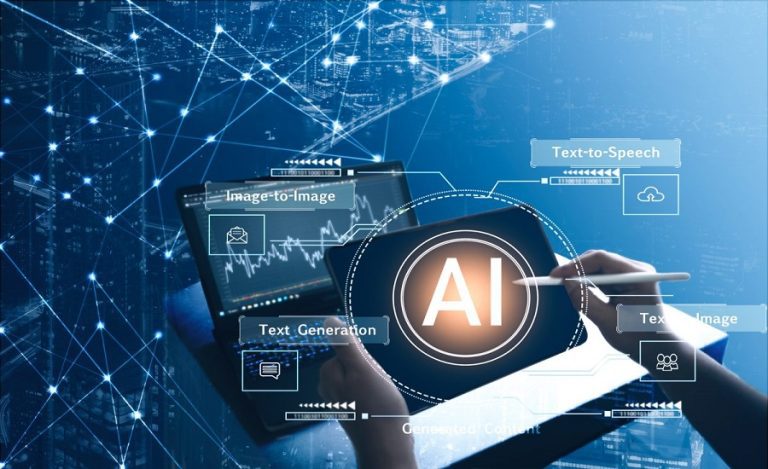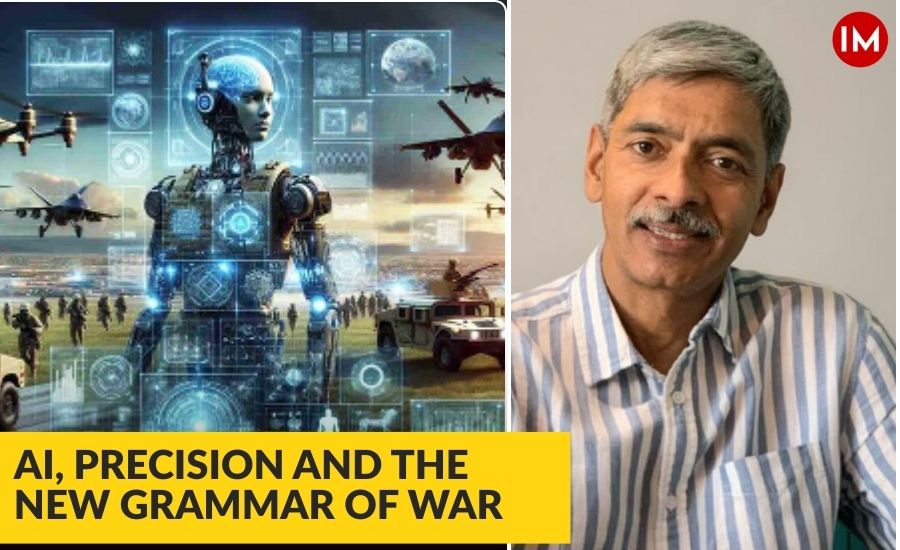
Modern warfare is no longer about mechanised formations and long, grinding battles. It is instead about speed, clarity, precision, and the ability to out think the adversary when the margin for error is measured in nano-seconds. In this environment, Artificial Intelligence has emerged as the decisive dimension converting overwhelming volumes of information into sharp, actionable military advantage. In our Indian context, AI in defence is not a distant aspiration but in fact already shaping operations, policy, and preparedness.
From Concept to Combat Reality
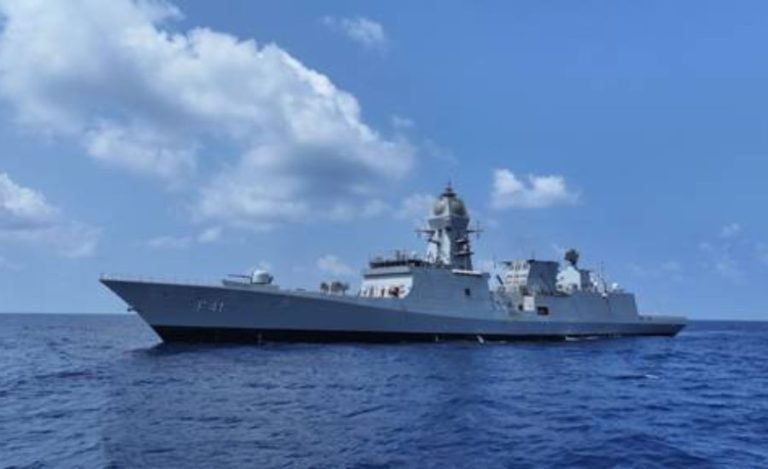
The world has witnessed AI-enabled warfare in recent conflicts, and India has quietly but firmly joined that school of transformation. What was once limited to research centres is today embedded into the core of our defence structure from planning tools, surveillance grids, decision-support systems, logistics to increasingly, autonomous platforms. The shift has been silent, striking, and historic- from platform-centric warfare to intelligence-centric warfare.
Public sector leaders have anchored this transformation. Bharat Electronics Limited, working closely with academia and startups, has established AI incubation programmes that have delivered real-world systems ranging from advanced voice analytics capable of detecting threat cues to AI engines that cut through complex naval documentation and operational planning. Hindustan Aeronautics has ushered in an entirely new combat philosophy with its Combat Air Teaming System, allowing fighter aircraft to control loyal wingman drones, multiplying combat power while protecting pilots.
Equally significant is the emergence of AI-enabled counter-drone systems such as the Indrajaal Ranger showcasing how the future battlespace will be defended not only with firepower, but with intelligence.
A remarkable journey that has been catalysed by Atmanirbhar Bharat and ensuring that India owns not just platforms but the intelligence that drives them.
Operation Sindoor- When Precision Replaced Presence
Operation Sindoor stands as a defining statement of India’s AI maturity. Strategic targets were neutralised without prolonged ground engagement demonstrating the power of non-contact warfare powered by intelligent systems. AI-driven targeting, integrated with BrahMos precision strikes, loitering munitions, and electronic warfare, enabled calibrated, decisive impact without uncontrolled escalation.
At the centre of this capability was Akashteer, DRDO’s AI-enabled air defence command and control ecosystem. Integrated with BEL systems and ISRO satellite feeds, it provided commanders an unprecedented real-time battlefield picture. In the fog of conflict, clarity is power and Akashteer delivered exactly that.
Rafale aircraft equipped with SCALP missiles, guided through CartoSAT imagery and AI-enhanced fire control systems, executed surgical strikes with minimum collateral footprint. This is modern warfare’s new definition of political discipline, ethics and technology empowered.
The Invisible Backbone- Data and Networks
AI thrives on trusted data. India is investing heavily on data that is not just collected, but fused, secured, and transformed into operational wisdom. Defence tech clusters, IIT collaborations, academicia, and encrypted digital ecosystems are ensuring that the armed forces operate on a “single source of true bandwidth” across commands and services.
The Indian Army’s adoption of SAMBHAV during Operation Sindoor was a milestone strengthening secure indigenous communications and signalling a definitive leap towards digital sovereignty. Meanwhile, the Digitisation-3 Initiative aims to deploy nearly 100 AI-driven military applications by 2035, strengthening surveillance, predictive maintenance, logistics, and operational command. The battlespace of tomorrow will not merely be armed but will be with an intelligent umbrella.
Private Sector – The New Combat Partner
For many years, defence innovation remained the lap baby of government entities. Today that is no longer the case. Dynamic private enterprises and start-ups are injecting speed, creativity, and competitiveness into India’s AI defence ecosystem.
Zen Technologies is pioneering anti-drone systems and immersive combat simulators, Paras Defence’s AI solutions decode UAV imagery with precision, Data Patterns integrates AI into cutting-edge avionics, and MTAR’s predictive manufacturing ensures uncompromised aerospace quality. Add to this intelligent anti-drone solutions from Solar Industries and secure AI-enabled communication systems from Avantel, it has only become amply clear that India’s private sector is no longer a supporting actor but now its force multiplier. With robust support from the iDEX ecosystem, over a thousand startups are poised not just to serve India, but soon to emerge as global suppliers.
Ethics, Accountability, and the Human Element
AI undoubtedly brings immense opportunity but then warfare demands caution grounded in responsibility. Technology can never outrun ethics or military judgment. AI systems carry vulnerabilities, bias, unpredictability, cyber threats, and the temptation to disconnect humans from critical decisions.
India’s approach has been measured and disciplined. During Operation Sindoor, our adherence to humanitarian ethics were clear. Systems employed were rigorously vetted. Decisions were calibrated. AI supported the commander but it did not replace him. War demands certainty and credibility as it is not a laboratory for experimental technology.
The Road Ahead
The near future will witness AI-driven battlefield monitoring, predictive logistics, autonomous reconnaissance, and coordinated drone swarms. DRDO’s Centre for Artificial Intelligence and Robotics already leads over 75 AI initiatives, strengthened by startups ready to take bold innovative bets.
AI dominance superiority requires industrial strength. Semiconductor capability, rare earth processing, and indigenous supercomputing infrastructure must mature and evolve. Tech sovereignty is not about ambition alone instead it is a strategic necessity. Scaling of AI-based simulations will transform training, allowing soldiers to rehearse missions with unmatched realism and safety.
Technology with Resolve
India’s AI journey in defence represents confidence without noise and strength and without provocation. We are building capability not merely to fight wars, but to deter adversary with clarity, intelligence, and readiness.
In an increasingly fragmented geopolitical world, power will belong to those nations that can shape conflict environments and not merely just responding to them. Hence AI will be a decisive instrument. But then to win wars you need leadership, discipline, moral courage, and informed decision-making.
India is forging an AI-led strategic precision edge—intelligent, ethical, resilient, and relentless. The battlefields of tomorrow will provide us with right answers.
(The author is an Army Veteran with vast domain experience in J&K, specialisation in management)