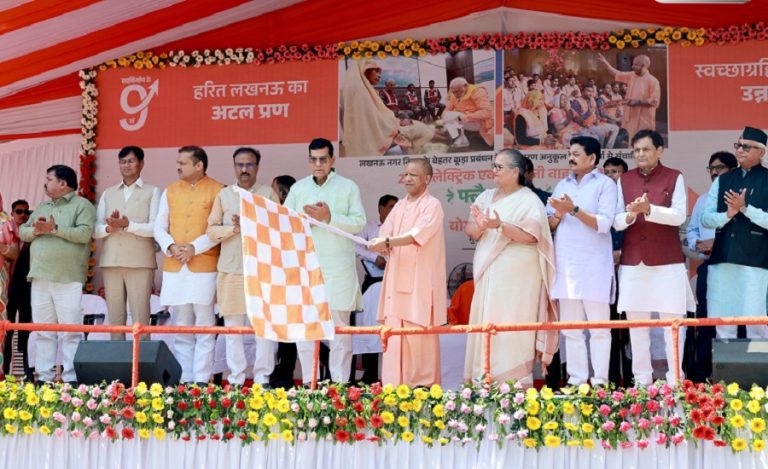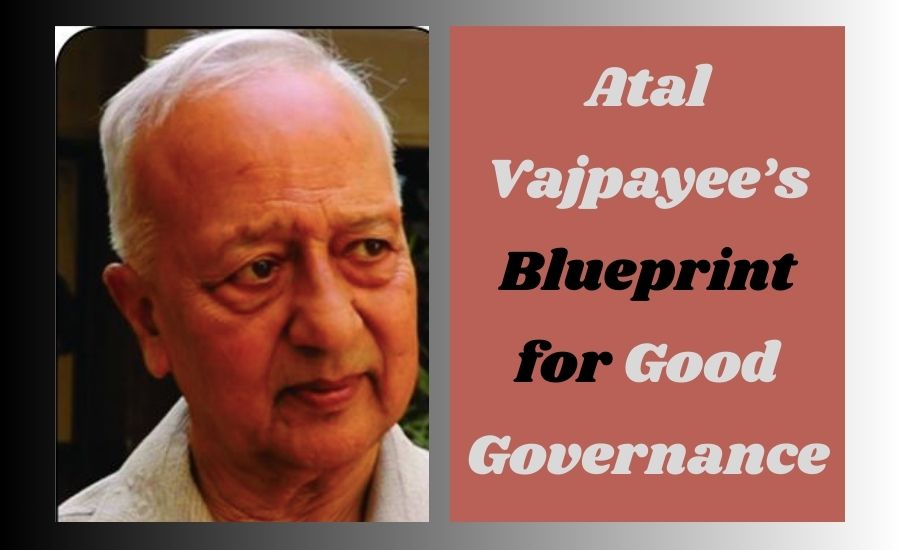
Former Prime Minister Atal Behari Vajpayee’s birthday was declared by the Government of India as Good Governance Day in 2014. The reason was that he symbolised purity, accountability and a clean administration when he was the Prime Minister of India. He turned traditional cultural values into with modern democratic governance. He broadened the appeal of cultural nationalism by combining it with consensual politics, parliamentary decorum, and a commitment to democratic institutions. I saw and experienced this when I was the Secretary General of Rajya Sabha. He combined modern governance with cultural self-awareness
Good governance implies different principles in different times. It includes enforcement of constitutional rights while ensuring an equitable society. It demands that that the institutions and processes of government should serve all stakeholders and not only a select few. The welfare of people should be considered paramount.
According to the former United Nations Secretary General Kofi Annan “good governance is ensuring respect for human rights and the rule of law, strengthening democracy, promoting transparency and capacity in public administration.
A single template for measuring good governance would be the reduction of poverty.
India has managed to bring down the percentage of people living in extreme poverty to less than 17%. Further the distribution of free rations to the extent of 5kg per unit to those living below the poverty line has ensured that no citizen will die of hunger. These are all signs of good governance.
The challenges to good governance are manifold. These may be listed as follows
* Criminalisation of politics. The perceived nexus between politicians, civil servants and business houses are having a baneful influence on public policy.
* Corruption is a major obstacle in improving the quality of governance
* Gender Disparity. Empowerment of women For good governance it is essential to ensure the. The first step would be the implementation of the one third representation of women in parliament and state legislatures
* Delayed Justice With the courts having a pendency of more than 5 crores at all levels , people are losing faith in the efficacy of the judicial system. This faith has to be restored.
Good governance can be ensured by the use of technology and artificial intelligence. Administrative reforms should examine how this technological advancement can be taken advantage of. We have our own family of satellites, which can be used for land mapping; we can use the artificial intelligence to identify bogus voters, and people getting welfare grants which they are not entitled to. This will reduce expenditure, improve our economy and channelise relief to the deserving persons.
(The author is 1965-batch IAS officer who was Chief Secretary of Uttar Pradesh in 1998-2000. He served Union Govt as Secretary in Surface Transport and Water Resources. He retired as Defence Secretary on June 30, 2002. He also served as Secretary General, Rajya Sabha till September 14, 2007)