Have you ever seen a white-coloured tiger in the zoo and wondered why and how has he lost its colour? Well, the white fur is caused by the lack of the pigment pheomelanin, which is found in tigers with orange colour fur. The white tiger or ‘bleached tiger’ as they call it, is a leucitic pigmentation variant of the mainland tiger.
There are very few white tigers existing in the country today and all of them can only be found in zoos or in captivity. Recently, the Delhi Zoological Park witnessed the birth of three white tiger cubs, after a long gap of seven years.
Indian Masterminds spoke with the Director of National Zoological Park, New Delhi, Indian Forest Service officer Dharmdeo Rai, to know more about white tigers and their conservation in the zoo.
GOOD NEWS AFTER SEVEN LONG YEARS
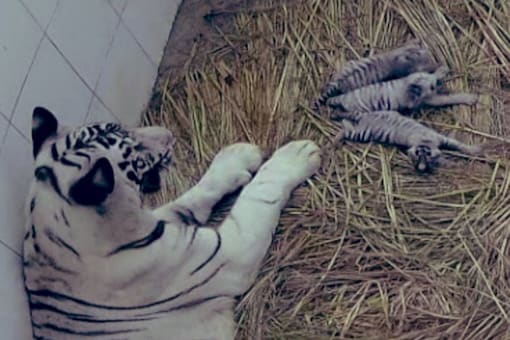
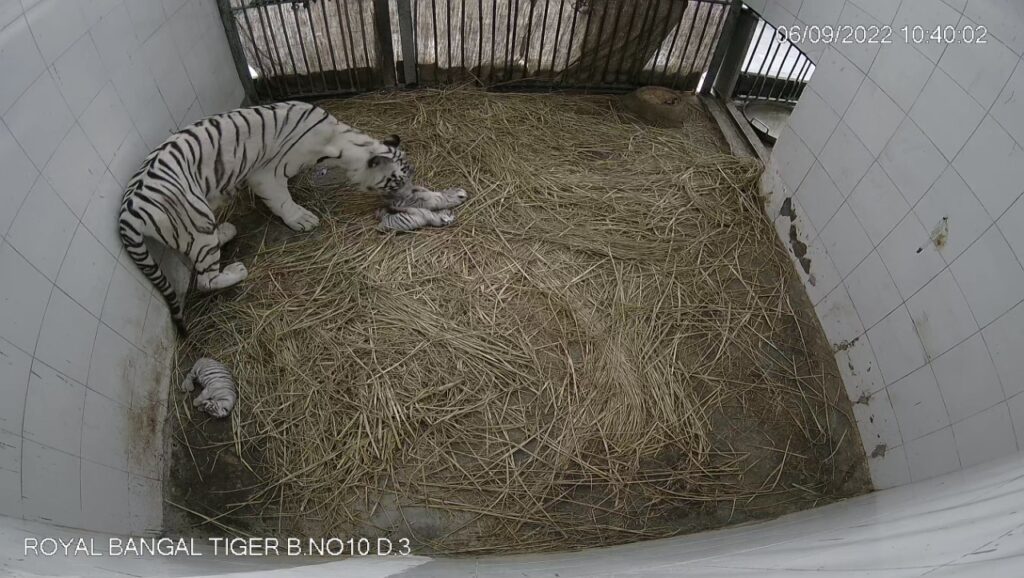
The morning of August 24 brought happiness among the zoo officials as they witnessed the birth of three little white tiger cubs. The mother of the cubs is a 7-year-old white tigress named Sita, who was born in the zoo in 2015. The father is another 7-year-old white tiger, called Vijay, who was brought to the New Delhi Zoo from Lucknow Zoo, six years back.
The birth of the cubs takes the total number of tigers at the Delhi Zoo from eight to now, eleven. Four out of the eight were white tigers. Now, there are seven white tigers and four orange Royal Bengal tigers.
The birth of the cubs is an uncommon phenomenon as, for a white Bengal tiger to be born, both parents must carry the unusual gene for white colouring, which only happens naturally about once in 10,000 births.
REASON BEHIND THE LONG GAP
According to the officer, it took such a long time for white tiger cubs to be born in the zoo because no successful breeding happened, even after several attempts. The National Zoological Park is one of the zoos that participate in the conservation breeding of tigers, and the birth of the cubs is a big step in this direction.
“The selected zoos that participate in the conservation breeding programme exchange animals among themselves for breeding purposes. The animal exchange ensures that there is no in-breeding. The breeding programme is also underway at the Delhi Zoo for other species, including rhinos,” Mr. Rai said.
In 2020, a 6-year-old white tigress, Nirbhaya, mated with a Royal Bengal tiger. Though Nirbhaya gave birth to two cubs on December 10, 2020, she died three days later due to complications. A third cub, which remained inside Nirbhaya, ruptured the tigress’ uterus. However, the first cub died a day after the mother’s death and the second one also succumbed to acute illness a few days later.
“There need to be suitable pairs and the male and female need to accept each other. It’s also a bit of luck. Sometimes tigers may conceive but may give birth to stillborn cubs. This happens in the wild as well. Right now, we have a good population of male and female tigers. We are hopeful that within a year, we will have at least eight to ten tiger cubs,” stated Mr. Rai.
PROTECTION OF THE NEW MOTHER AND HER CUBS
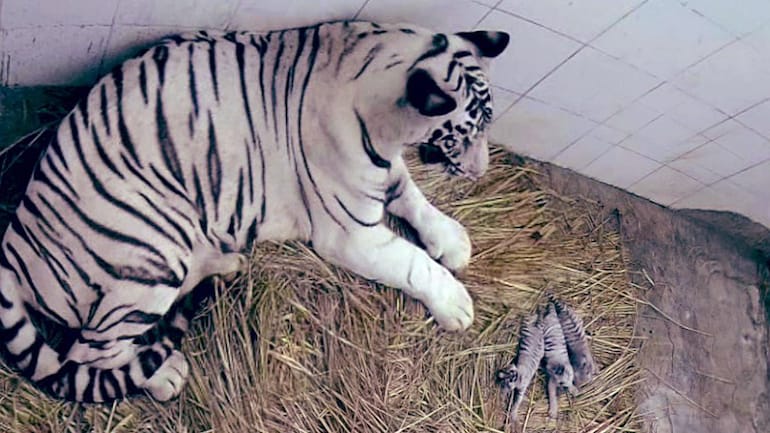
Zoo officials are taking all the necessary steps and precautions to protect Sita and her cubs. Right now, they are kept in a separate enclosure in the zoo and are healthy.
“The little cubs are being nurtured by the mother. We are worried that if we will touch them, the mother might reject her babies. Therefore, we won’t interfere till at least one month. We simply provide food and water to the mother, who is continuously nursing them. So things are looking good now. The mother and cubs are in a separate enclosure, with enough space to move,” Mr. Rai told Indian Masterminds.
The officials are ensuring that there is no disturbance around the mother and the cubs. CCTV cameras have been installed in the enclosure and the little family is being observed and monitored by officials, round the clock.
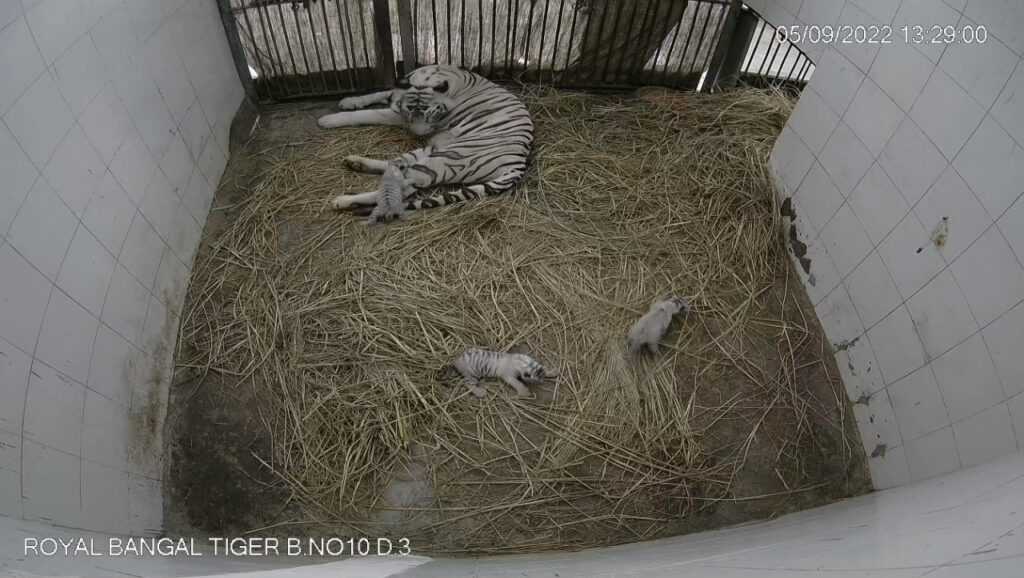
The cubs are expected to be released in enclosures when they become 3 months old. It takes them nearly 20-22 days to fully open their eyes and, currently, they are fully dependent on their mother.
After the death of another tiger, also called Vijay, who died of old age, a couple of weeks back, the birth of these new tiny tiger cubs has brought happiness once again, to the zoo.