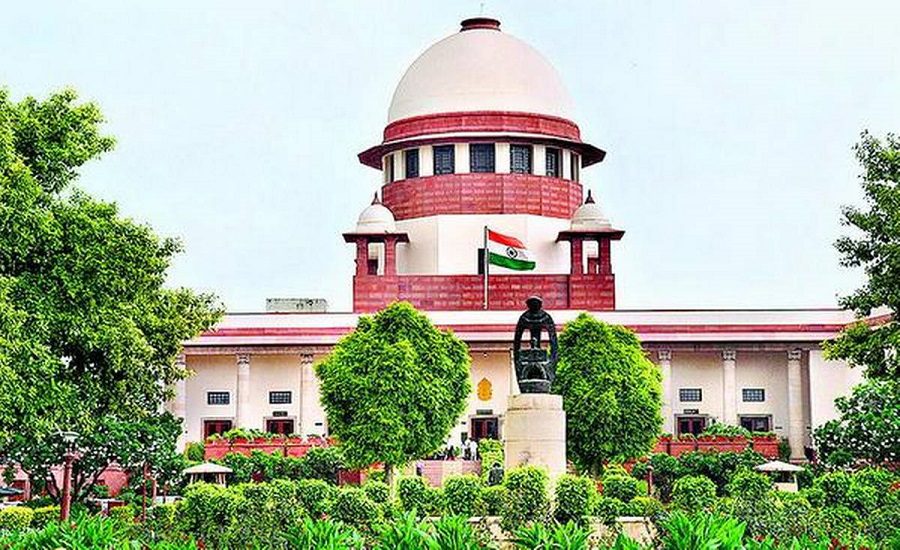
New Delhi: The Supreme Court of India (SC) delivered a powerful admonition to both the police and trial courts: they must act as “initial filters” before prosecuting citizens — especially in cases where there is no “reasonable prospect of conviction.” The Court, in a property-dispute case, discharged an accused because it found that the criminal prosecution was unwarranted, and observed that indiscriminate filing of chargesheets clogs the judicial system, undermines fair justice and wastes limited judicial resources.
The ruling signals judicial impatience with what the Court described as a growing tendency to criminalise civil disputes by invoking criminal law — often without sufficient evidence or reasonable likelihood of conviction. The Court’s comments highlight its concern over mounting backlogs and the need to protect citizens from baseless prosecution, while preserving the integrity and efficiency of the criminal justice system.
Background of the Initial Filters for Prosecutions Case
The matter before the Court involved an FIR filed in March 2020 relating to a property in Salt Lake, Kolkata. The complainant — who claimed to be a tenant of one of the co-owners — alleged that when she attempted to enter the premises with friends and workers, the appellant and other individuals took her photographs/videos without consent and intimidated her.
However, the underlying dispute was not merely criminal: it had its roots in a long-running civil property battle between two brothers who were co-owners of the property. A civil suit was already pending between them, and a civil court had issued an injunction on 29 November 2018 restraining either brother from creating any third-party interest or acting unilaterally in violation of joint possession.
Given this backdrop, the SC Bench — comprising N. Kotiswar Singh and Manmohan, JJ — found that no criminal offence was made out, and observed that the prosecution appeared to be an attempt to give criminal colour to a civil dispute. Consequently, the accused was discharged.
Major Insights of Supreme Court
- The Court underscored that both the police and criminal courts must act as gatekeepers at early procedural stages — the police when filing chargesheets and courts when framing charges. They should act as “initial filters” to ensure that only those matters with a “strong suspicion” and a “reasonable prospect of conviction” proceed to trial.
- According to the judgment authored by Justice Manmohan, the decision to file a chargesheet should depend on whether the material and evidence collected make conviction reasonably foreseeable. Similarly, courts should exercise discretion in framing charges, rather than mechanically prescribing criminal proceedings.
- The Court warned that the tendency to file chargesheets even in weak matters “clogs the judicial system.” It forces judges, court staff, and prosecutors to spend time on trials that are likely to end in acquittal — diverting scarce judicial resources away from serious cases and contributing to a massive backlog.
- The Bench stressed that in a society governed by the rule of law, the State should not prosecute citizens without a reasonable prospect of conviction — doing otherwise would compromise the right to a fair process.
- Importantly, the Court held that when there is a pending civil dispute between the parties — especially with subsisting injunctions or restraining orders — the police and trial courts must be particularly circumspect before criminalising the matter. They must assess whether the evidence justifies criminal prosecution or would more fittingly be resolved in civil proceedings.
- In the instant case, the SC noted that the complainant had refused to make any judicial statement, and legally tenable material or evidence was absent — making the criminal proceeding untenable.
Key Significance & Broader Implications of Initial Filters for Prosecutions
Protecting Citizens from Harassment: The SC’s ruling can be seen as a protective shield for individuals who might otherwise be subjected to frivolous or malicious criminal prosecution — often as a pressure tactic in civil disputes (e.g., property, contract, business conflicts). The “initial filter” requirement serves to deter such misuse and ensure that criminal law is not a tool of harassment or coercion.
Reducing Judicial Overload: India’s courts — especially at the trial level — are burdened by large pendency and resource constraints. By discouraging unnecessary criminal trials, this judgment may help ease the load on courts, reduce backlog, and allow time for serious and deserving criminal matters to be addressed more efficiently.
Reinforcing the Principle of Fair Process: At a deeper level, the ruling reaffirms a fundamental tenet of criminal jurisprudence: the State should not prosecute its citizens lightly. Prosecuting without strong evidence or realistic prospect of conviction undermines not only individual rights but also public faith in the justice system.
Precedent for Future Cases: The decision — rendered in the case may serve as a precedent. It lays down normative guidance for police, prosecutors, and trial courts to exercise discretion, especially in cases overlapping with civil litigation.
Key Challenges and Possible Critiques
Difficulty in Predicting Conviction Outcomes: The Court itself conceded that at the charge-framing stage one cannot conclusively know whether the prosecution will end in conviction or acquittal. Critics may argue that requiring “reasonable prospect of conviction” might unduly restrict prosecutions, or lead to under-prosecution of legitimate criminal complaints.
Risk of Under-enforcement: In some cases, genuine victims may get denied remedy if police or courts, anticipating difficulty of conviction, choose not to proceed. There is a delicate balancing act between preventing misuse and ensuring justice.
Subjectivity in Assessment: What constitutes “strong suspicion” or “reasonable prospect” can be subjective and vary across officers and courts — risking inconsistency.
Read also: Supreme Court Orders UP to Amend Laws Allowing Officials’ Wives in Key Cooperative Roles