Maternal and child health are key to any civilised and developed country. But in contrast to this ideal, many states in India are still battling to achieve success in this critical area. Malnutrition and maternal and infant mortality rates remain high in several parts of the country when measured against global standards. However, the government is making determined efforts to contain this challenge.
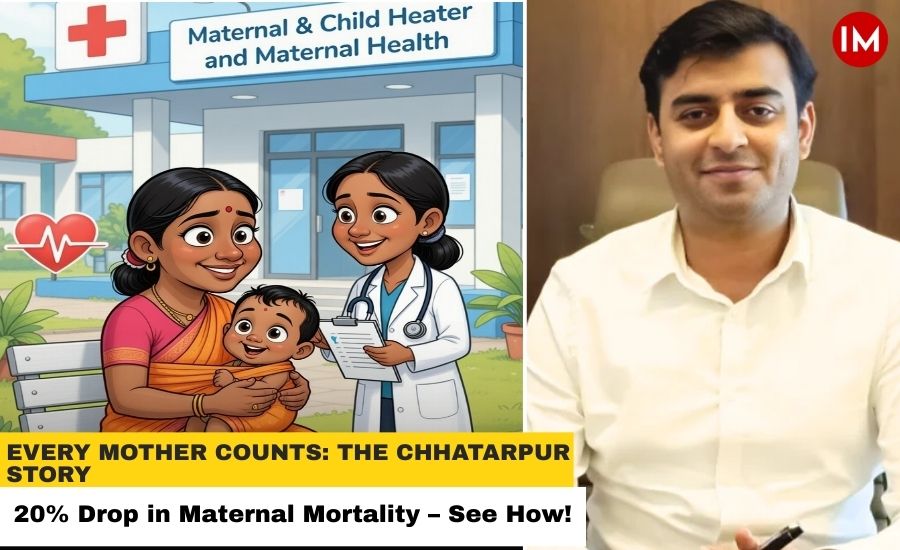
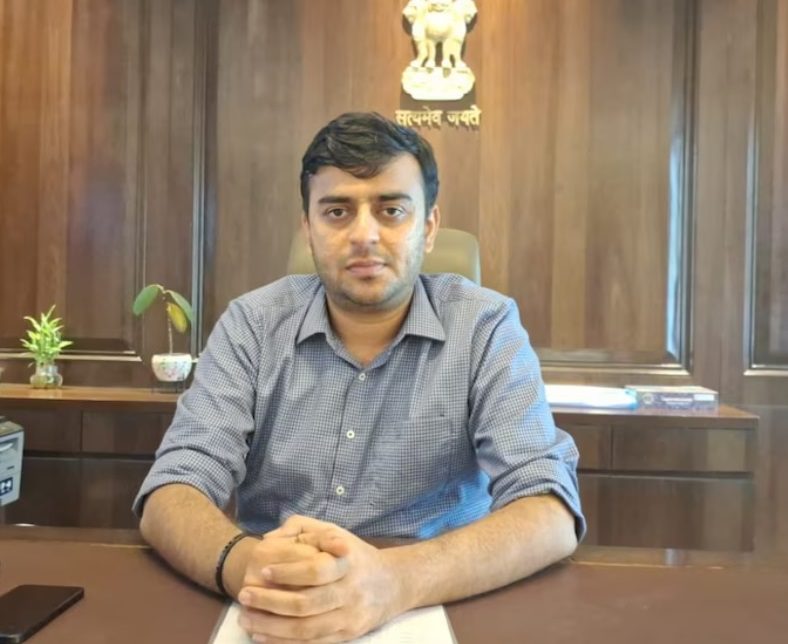
In Chhatarpur district of Madhya Pradesh, where these ratios were alarmingly high until last year, change is now visible. Leading this transformation is IAS officer Parth Jaiswal, currently posted as the Collector of Chhatarpur. A 2015 batch officer of the MP cadre, Mr Jaiswal has taken focused and determined initiatives to curb maternal and infant mortality in the district – and the results are beginning to show.
Indian Masterminds interacted with IAS Jaiswal to learn more about his maternal health initiative in Chhatarpur, its implementation, and the impact it has created so far.
Placing Maternal Health at the Centre of Governance
With a large proportion of Chhatarpur’s population residing in rural areas, Parth Jaiswal made maternal and child health a top administrative priority.
“Our main target is to ensure that every pregnant woman completes all four antenatal check-ups and to reduce the maternal and infant mortality rate in the district,” he says firmly.
To achieve this, the district launched a focused maternal health project aimed at universal coverage of all pregnant women. The initiative emphasises complete care – from conception to birth – ensuring timely registration, regular follow-ups, completion of all four mandatory Antenatal Check-ups (ANCs), and close monitoring of every case.
Not stopping there, Mr Jaiswal set an ambitious target: a 50 percent reduction in maternal and infant mortality within six months.
“I believe governance must reach the most vulnerable first. If we can protect every mother and child, we are building the strongest foundation for the district,” he asserts.
The Three-Pronged Strategy
When asked what concrete steps were taken, Jaiswal explains that the district adopted a clear three-pronged approach.
“Yes, so what are we doing about this? There’s a three-pronged approach,” he explains.
1- Tuesday Vaccination and ANC Monitoring Drive
The first step was to strengthen the existing system. Every Tuesday was designated as a dedicated vaccination day at all Anganwadi centres. On this day –
- Pregnant women and lactating mothers visit Anganwadis.
- Children receive vaccinations.
- Pregnant women undergo ANC check-ups.
To ensure no woman was left behind, Jaiswal deployed around 60–70 district-level officers from various departments for monitoring. Every Tuesday, each officer was assigned two Anganwadis. In total, approximately 150 Anganwadis were visited weekly.
“Within a period of one to two months, we covered all Anganwadis in the district. Our officers personally verified whether check-ups were being conducted properly,” he explains.
Over a three-month period, the administration completed a full round covering all Anganwadis and simultaneously checked all registered pregnant women in the district. This ensured that –
- No woman missed her ANC.
- High-risk pregnancies were identified early.
- Dedicated tracking mechanisms were put in place for those requiring additional care.
“This improved our identification of high-risk pregnancies. Once identified, we were able to track them dedicatedly and ensure they received the care they needed,” Mr Jaiswal says.
2- High-Risk Pregnancy Due List in Hospitals
The second major intervention focused on hospital preparedness.
In every government hospital, a monthly “due list” was created identifying high-risk pregnancies expected during that month. This ensured that hospital staff were pre-alerted and prepared.
“What this does is train the hospital staff in advance to recognise which high-risk pregnancies they must actively monitor that month. That means they are more involved in providing care,” Mr Jaiswal explains.
The impact has been significant.
“As a result, not a single maternal mortality has been registered in our district hospital in the last three months. This is the first time in the last four or five years that such a record has been achieved,” he says with measured satisfaction.
He clarifies that this achievement currently applies to the district hospital, where facilities are better and tracking mechanisms are stronger.
The next step is clear: replicating this model across all block-level hospitals in the district.
“We are taking it forward in this manner and have achieved some success now. The effort is to bring about a fifty percent drop in maternal mortality,” he adds.
3- Social Awareness and Early Identification
Chhatarpur, part of the Bundelkhand region, has faced deeply rooted social challenges.
“Bundelkhand, and indeed our district, is in one of the worst conditions in the state,” Mr Jaiswal notes, referring to the situation a year and a half ago.
In many areas, women hesitate to disclose pregnancies early due to social and cultural reasons. This delay often results in missed check-ups and late identification of high-risk conditions.
“This district has a feudal type of social situation. Women are still very hesitant to disclose their pregnancies early. Because of this, they often miss check-ups and become high-risk,” he explains.
By strengthening early registration and regular follow-ups, the administration has addressed this gap. Early identification now ensures timely care and monitoring.
When Did It Begin?
The focused initiative began around April–May at the beginning of the last financial year. It has now been approximately ten months since its launch.
“It’s been almost a year now. Exactly ten months. It’s been a while,” Mr Jaiswal reflects.
Public Support and Media Recognition
The initiative received significant support from the media, which amplified awareness. Public representatives, village Sarpanches, Panchs, and the general public responded positively.
“When our officers went to the villages, there was a strong response. Media gave it significant push, and the public was very responsive. Our Sarpanches and Panchs were very willing and supportive,” he says.
Support also came from within the administrative machinery and at the state level.
“At the state level also, we were given recognition. They appreciated that our work is good,” he adds.
Measurable Impact So Far
So far, the district has recorded –
- Zero maternal mortality in the district hospital in the last three months
- Approximately 20 percent overall reduction compared to last year
“If I speak in figures, overall the district has seen a 20 percent reduction compared to last year,” Mr Jaiswal shares.
The larger goal remains a 50 percent reduction, which he believes can be achieved within the next three to four months.
“We hope we will definitely achieve the target within the next three to four months,” he says confidently.
Building a District That Protects Every Mother
Through strategic monitoring, administrative mobilisation, hospital preparedness, and social awareness, IAS Jaiswal is steadily building a district that prioritises every pregnant woman and ensures that mothers and babies receive proper care.
His approach demonstrates that sometimes, transformation does not require entirely new systems – but stronger leadership, accountability, and consistent follow-up.
“Governance works when the system reaches the last person. For us, that last person is a pregnant woman in a remote village. If she is safe, the district is progressing,” he says.
In a region once struggling with high maternal and infant mortality, Chhatarpur is now scripting a story of determined change – led by focused administration and a commitment to protect its most vulnerable citizens.
Read Also: From 20% to 3%: How Chhattisgarh’s Korea District Is Beating Malnutrition With a Laddu