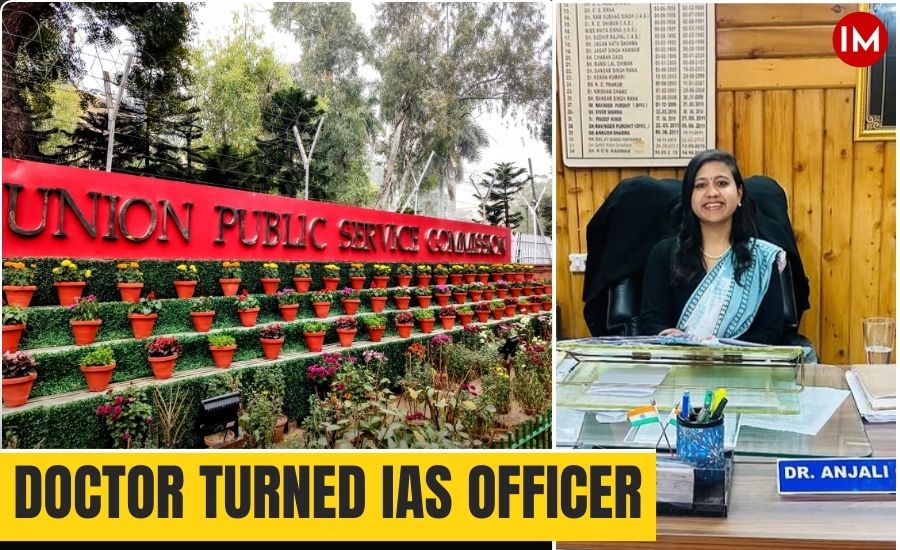
Dr Anjali Garg’s journey to the Indian Administrative Service is shaped by academic discipline, professional exposure, and a clear understanding of where she felt she could make a larger impact. Born in Chandigarh, she grew up in a business family with no immediate exposure to civil services. The idea of governance was not part of her early environment, nor was it an inherited ambition.
“My parents always valued education and encouraged me to become a doctor,” Dr Garg (2023 batch, Himachal Pradesh cadre) shared in a conversation with Indian Masterminds. This support, combined with her own academic focus, led her to excel early. High ranks in AIIMS and NEET UG became turning points that strengthened her confidence and set her firmly on the path of medical education.
She went on to clear the NEET examination and completed her MBBS, fully immersed in clinical training. At that stage, civil services were not a predefined goal. The shift in direction came gradually, influenced by what she witnessed inside hospitals rather than any external motivation.
“Scoring high ranks in AIIMS and NEET UG boosted my confidence, and later I decided to attempt UPSC,” she explained.
WHEN CLINICAL PRACTISE RAISED LARGER QUESTIONS
During her MBBS, Dr Garg was exposed to the realities of public healthcare system. Beyond medical diagnosis and treatment, she encountered persistent challenges such as staff shortages, lack of equipment, and operational constraints that affected patient care. These experiences made her increasingly aware of how systemic issues directly impact outcomes on the ground.
More significantly, she came across social issues that went beyond the scope of clinical medicine. Cases related to women’s health, safety, and violence left a deep impression on her understanding of the role institutions play in people’s lives.
Incidents involving abuse and rape affected her deeply and led her to reflect on the limitations of addressing such problems only at the treatment level. Over time, she felt that governance offered a wider platform to work on these issues before they escalated into medical emergencies.
“I felt I could contribute more through governance and work for larger societal change, especially women’s empowerment,” she said.
This realisation marked a decisive shift. Medicine remained meaningful, but she saw administration as a space where structural change could be initiated.
PREPARING FOR UPSC ALONGSIDE HOSPITAL DUTIES
Dr Garg’s first attempt at the UPSC Civil Services Examination coincided with the COVID-19 pandemic, a period that placed extraordinary demands on medical professionals. Balancing hospital responsibilities with preparation required careful time management and sustained discipline.
She prepared alongside her duties, using whatever time was available outside hospital work. “After night shifts, I would rest for one to two hours and then attend coaching.”
Her approach relied on consistency rather than extended study hours. While her first attempt did not result in selection, it provided experience and clarity. In her second attempt in 2022, she secured an All India Rank of 79, earning her entry into the Indian Administrative Service.
She also distinguished herself academically by scoring 134 marks in medical science, emerging as the subject topper in her optional.
A BALANCED MESSAGE FOR ASPIRANTS
Drawing from her own journey, Dr Garg offers a grounded perspective for aspirants, particularly those considering a career shift. She believes that attempting UPSC should come from genuine intent rather than pressure, and preparation should be approached with balance.
“If you truly want to pursue UPSC, you should definitely try—but always keep a plan B, just like I did,” she has said.
She stresses the importance of health during preparation, advising aspirants to exercise regularly, maintain a proper diet, and avoid viewing the examination as the sole measure of success.
“UPSC should not be treated as a do-or-die situation,” she has emphasised.
CARRYING MEDICAL VALUES INTO ADMINISTRATION
As an IAS officer, Dr Garg finds that her medical background continues to influence her work. The years spent interacting with patients have shaped how she understands public issues and responds to grievances.
She identifies empathy, compassion, kindness, and patience as key skills that medicine instilled in her—qualities she believes are equally important in administration.
These traits, developed through clinical practice, now guide her interactions with citizens and inform her approach to problem-solving within the administrative framework.
Dr Anjali Garg’s transition from medicine to the IAS reflects a deliberate choice shaped by experience rather than impulse. Her journey shows how professional exposure can redefine one’s idea of service—and how skills gained in one field can find renewed purpose in another.