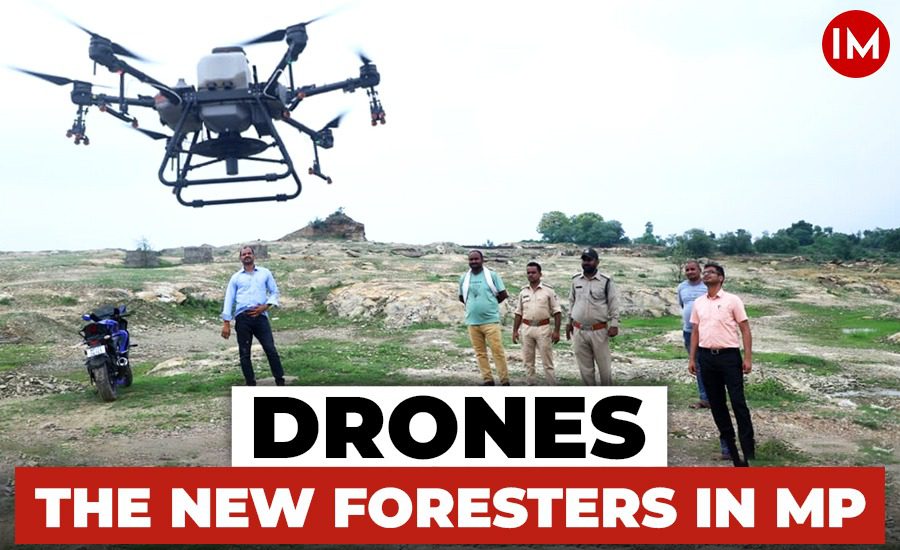
Madhya Pradesh, with its vast stretches of forests and varied terrain, presents unique challenges for reforestation and ecological preservation. But now, an innovative approach spearheaded by Indian Forest Service officer Anupam Sharma has ushered in a new era of forestry management: aerial seeding using drones.
This groundbreaking experiment, conducted by the Rewa Forest Department, could redefine how reforestation and pasture development are approached in inaccessible areas. Here’s how Anupam Sharma’s initiative is setting a precedent for environmental innovation in India.
A VISION FOR CHANGE: THE BIRTH OF THE DRONE SEEDING INITIATIVE
The journey began with a directive from Shri Rajendra Shukla, Honorable Deputy Chief Minister of Madhya Pradesh, who emphasized the urgent need for pasture development in the forest areas near Gaudham in Hinauti village. During an inauguration program for Gauvansh Vihar, he urged the Forest Department to explore modern techniques to cultivate these regions.
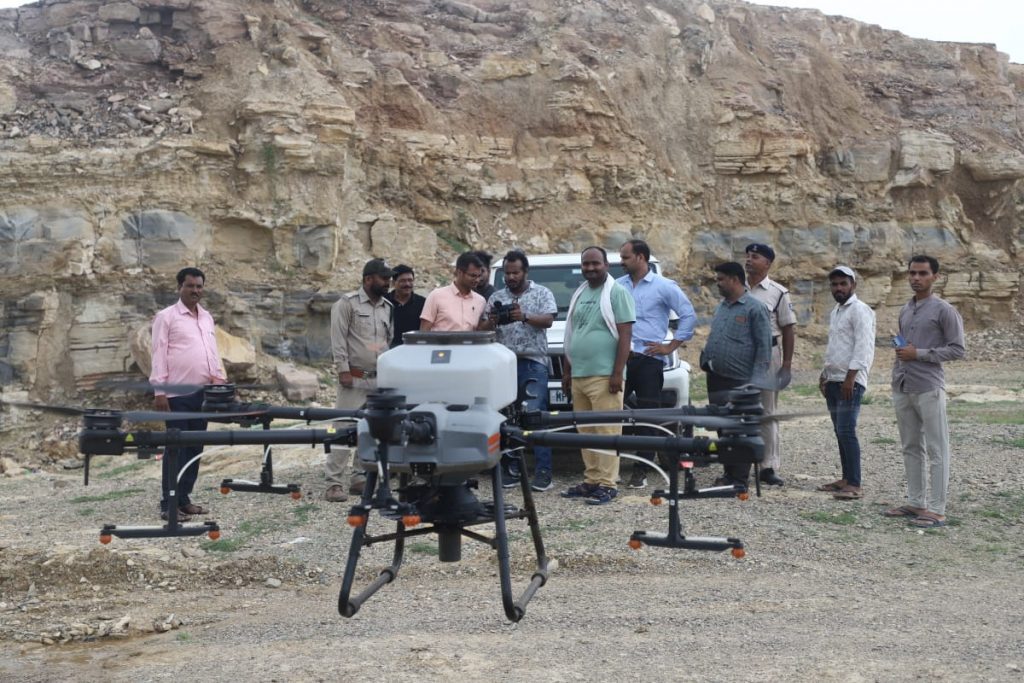
In response, Mr. Sharma identified aerial seeding with drones as a potential solution. This method allows for rapid seeding in difficult terrains, where traditional methods fall short. The experiment not only aims to develop pastureland for the region’s largest cowshed housing 500-600 cows but also explores new methods to regenerate barren landscapes.
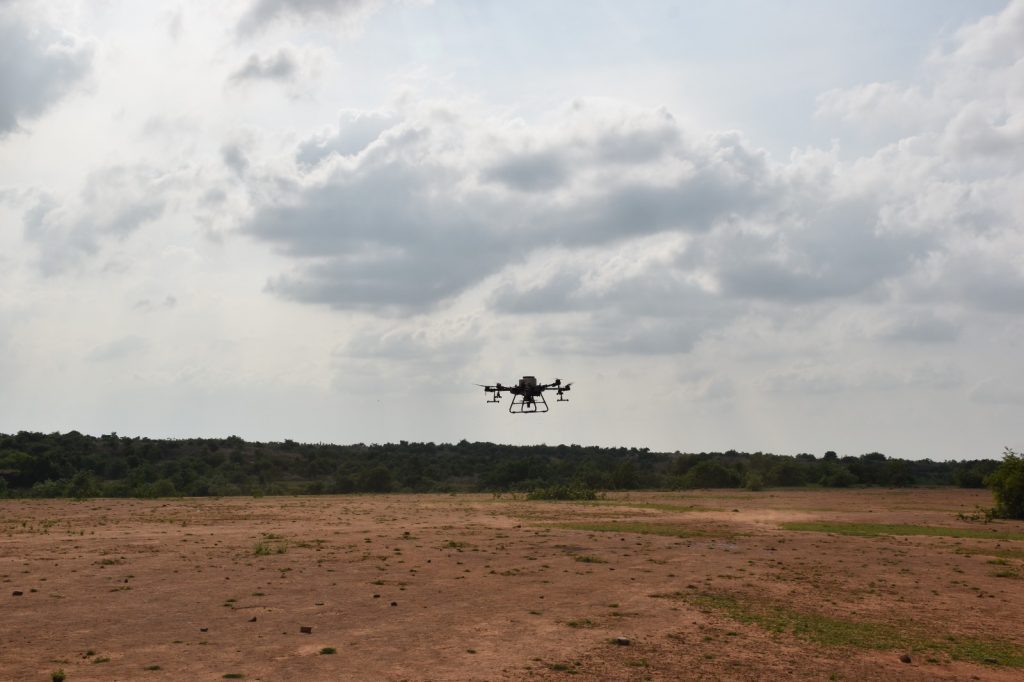
“Where it would take humans a few hours to seed a particular area, it takes a drone hardly 2-3 minutes to cover 1 hectare of land with seeds. It is very time saving and quick as compared to manpower,” he stated.
PIONEERING SITES: BHALUA HILL AND HINAUTI VILLAGE
Two primary sites were selected for this innovative pilot project: Bhalua Hill in Raipur Karchulian and the surrounding forests of Hinauti village in Gangev district.
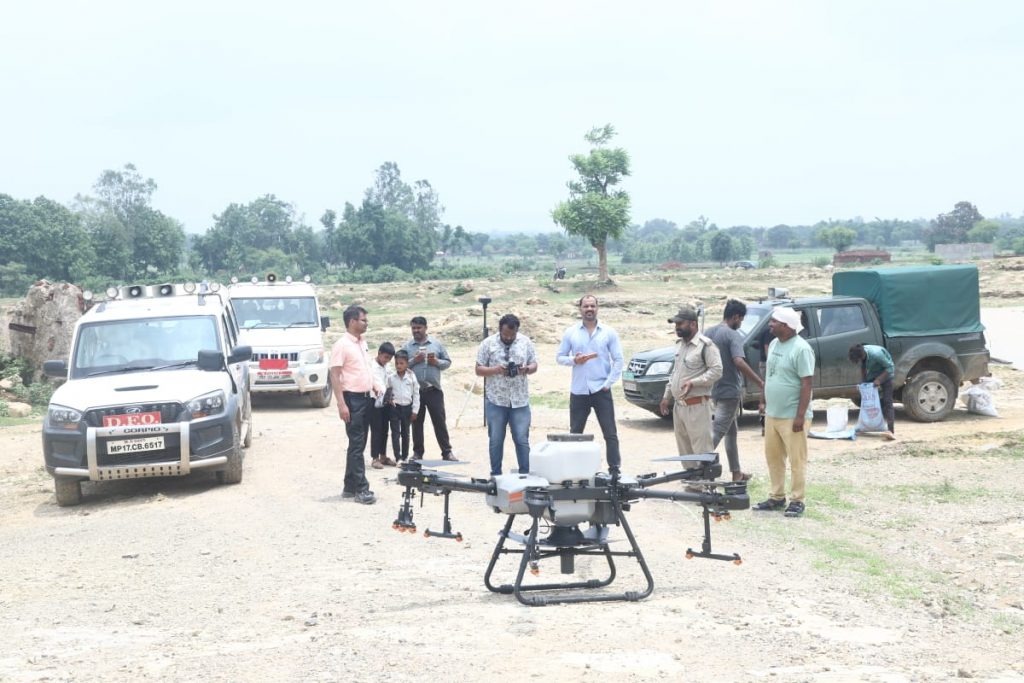
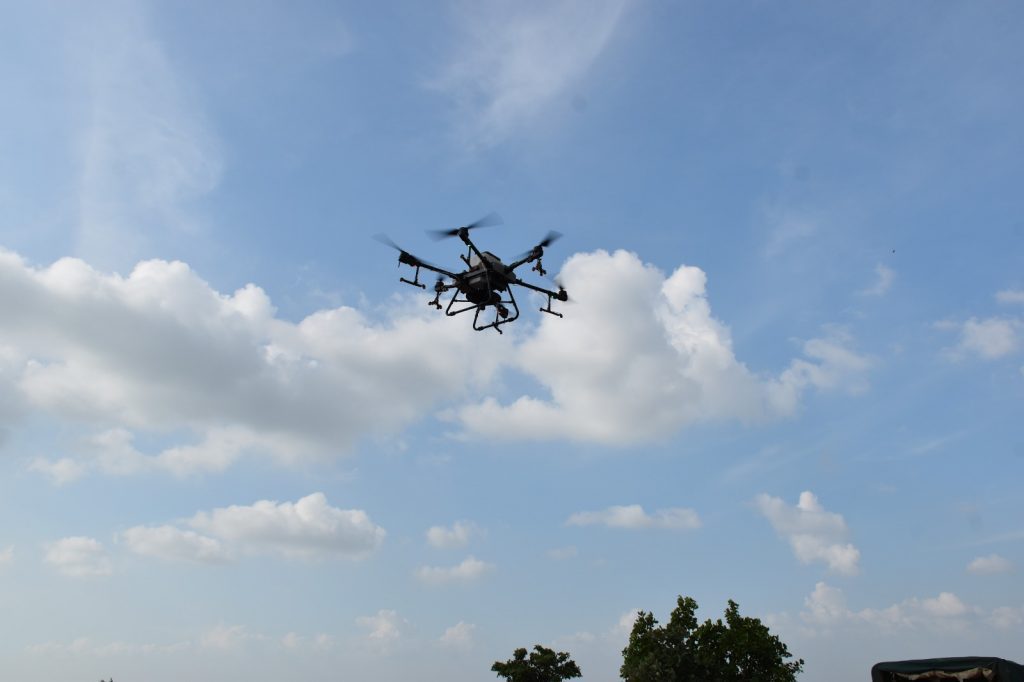
Bhalua Hill, known for its rugged and hilly terrain, has long been considered a wasteland due to its history of mining. It was here that drones equipped with a payload capacity of 40 kg were deployed. The aerial seeding involved dispersing grass species such as Deenanath and Stylo, along with resilient trees like neem, palash, sheesham, and karanja.
“Our objective was to reclaim the ‘mining wasteland’ and quickly seed it with trees to get it under us, which enabled us to utilize the drones,” he told Indian Masterminds.
He further added, “We planned on using such trees as they were suitable for that particular climate and terrain and they hardly require human interference for their care and can grow by themselves naturally.”
The drones’ ability to access this otherwise unreachable area demonstrates one of the core advantages of this technology: it transcends geographical limitations, enabling reforestation efforts in areas previously deemed impractical.
HINAUTI VILLAGE: SUPPORTING SUSTAINABLE PASTURE DEVELOPMENT
In Hinauti, the goal was to create a sustainable pastureland for the local cowshed. This initiative not only aids in providing feed for the cattle but also supports the community’s socio-economic fabric by potentially introducing rotational grazing.
“We would open a segment of the region for a particular time period for the cattle to come and graze and then it would be shut down for a year, while another segment would be opened in the meantime. This will ensure the regrowth of the grass species and regular feeding of the cattle as well,” he shared.
The project’s success hinges on the timely germination of seeds and the development of vegetation that can withstand local climatic conditions. If successful, this initiative could significantly boost the local economy and serve as a blueprint for similar projects across the region.
THE SCIENCE BEHIND DRONE SEEDING: A COMPARATIVE ANALYSIS
The experimental seeding project serves multiple purposes. It acts as a demonstration of technology, providing insights into the efficacy of drones compared to manual seeding methods.
“Land reclamation in Bhalua hills and fodder development in some patches in and around Hinauti cowshed was another major objective,” he told Indian Masterminds.
ADVANTAGES OF DRONE SEEDING
1. Efficiency and Speed: Drones can cover extensive areas quickly, reducing the time and labor costs associated with traditional methods. This efficiency is crucial in vast regions like Madhya Pradesh, where human resources may be limited.
2. Accessibility: By reaching remote and challenging terrains, drones can bring life to areas previously inaccessible for manual labour. This capability opens up new possibilities for reforestation in India’s diverse landscapes.
CHALLENGES AND CONSIDERATIONS
While drone seeding offers exciting potential, several challenges must be addressed:
– Germination Success: The project’s success will be evaluated in 2-3 months based on the germination rate of seeds. This period will determine if drone seeding can rival or surpass traditional methods.
– Ecological Impact: Understanding the ecological impact of introducing new plant species is crucial. The project must ensure that the new flora supports and enhances local biodiversity.
LOOKING FORWARD: THE FUTURE OF DRONE SEEDING IN REWA FOREST DIVISION
The Rewa Forest Department’s experiment, funded through social forestry funds, is not just a local initiative but a pilot that could influence forestry practices across India. If successful, Anupam Sharma’s drone seeding model could be replicated in other areas under the Rewa Forest Division and beyond.
This pioneering approach exemplifies how technological innovation can address ecological challenges, offering a glimpse into the future of sustainable forestry. It signifies a promising step toward balancing economic development with environmental conservation, ensuring that India’s forests continue to thrive for generations to come.
As Madhya Pradesh embarks on this new path, the world watches closely, eager to see if drones can indeed be the key to unlocking the full potential of India’s forests.