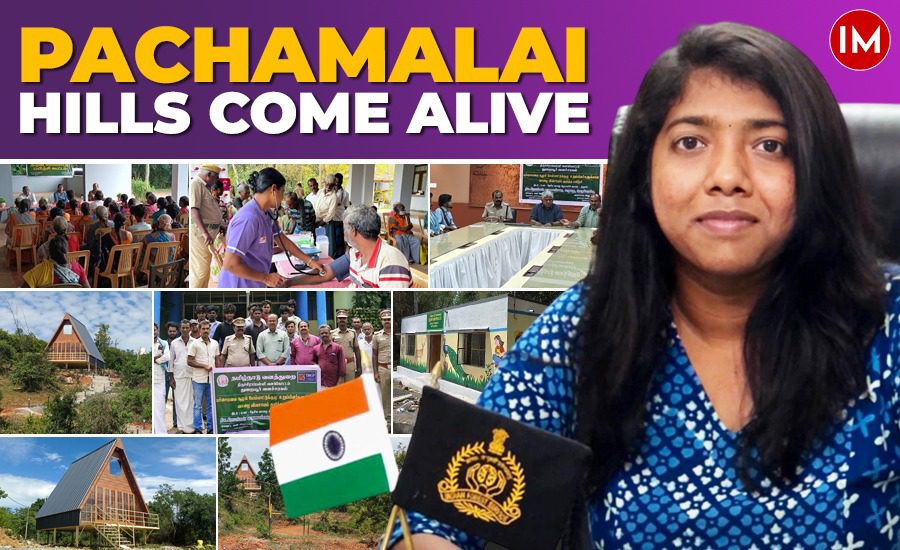
In Tamil Nadu’s Trichy Division, the Pachamalai Ecotourism project has become a living example of how environmental awareness can be combined with community development. The initiative is led by 2020-batch Indian Forest Service officer S. Krithiga, currently serving as the District Forest Officer (DFO). While the project was first launched in 2015 to bring visitors to the Pachamalai hills—part of the Eastern Ghats renowned for its butterflies and floral richness—it faced a steep decline during the COVID-19 pandemic. The loss of tourist inflow threatened both conservation and community income, making revival essential.
REVIVING TOURISM WITH INNOVATION
When Krithiga took charge, her focus was on modernising facilities while protecting the natural and cultural essence of the hills. A major highlight of the revival has been the introduction of A-frame cottages for accommodation. Unlike conventional options, this design had not been implemented before in reserved forest areas or even in private projects nearby. “So that’s when we stumbled upon this structure, this A-frame kind of structure,” Krithiga explained in a conversation with Indian Masterminds. “It was actually new, not implemented anywhere else in any RF area or even in private.”
These eco-friendly cottages, blending seamlessly with the landscape, were meant to attract more visitors by offering a fresh and sustainable lodging experience. But the path was not easy. Funding approvals took nearly two years, and the remote location of Pachamalai made it challenging to transport construction materials. “To take the material and do the work there, it was a bit difficult,” she recalled. Despite the hurdles, the project pushed forward, showing that persistence and careful resource management can overcome tough terrain.
LINKING CONSERVATIONS WITH LIVELIHOOD
The Pachamalai project was never just about tourism—it was also designed to improve the lives of local tribal communities while safeguarding forests. Located outside core forest land, it avoids direct intrusion into sensitive zones while using the natural setting to create economic opportunities. Nearly half of the Pachamalai hills remain under forest cover, serving as a scenic backdrop for ecotourism activities.
For the residents, who mostly depend on agriculture and minor forest produce, ecotourism now serves as a supplementary source of income. “We thought ecotourism would provide them an extra livelihood opportunity and extra income,” Krithiga said. “That is the reason why this initiative was initially started here.” By bringing more visitors, the project not only spreads awareness about the Eastern Ghats’ biodiversity—which is often less studied compared to the Western Ghats—but also improves community living standards without harming the environment.
ROOTED IN CULTURE AND COMMUNITY SKILLS
A unique feature of Pachamalai ecotourism is how it incorporates tribal traditions. Food for visitors is prepared by members of the Eco-Development Committees (EDCs), with menus built around local cuisine and millet-based dishes. “This food that is being provided is basically made by local people,” Krithiga explained. “All three meals—breakfast, lunch, and dinner—are prepared by locals, and their own cuisine with millets and herbal teas is what tourists get to enjoy.”
Beyond employment in cooking and hospitality, the project also invests in skill training. Through consultative meetings, the forest division identifies community needs and organises programmes under schemes such as the Tamil Nadu Biodiversity Conservation and Greening Project for Climate Change Response (TPGPCCR). Currently, 15 EDCs function in Pachamalai. Trainings include pepper cultivation, honey processing, and tourism services—all chosen based on the demands of the farmers themselves. “It is basically demand driven,” Krithiga emphasised. “This was all the demand that was put up by the farmers. Based on that, we organised the skill development activities.” This approach ensures that programmes directly match local aspirations, turning training into sustainable income sources.
KNOWLEDGE AND AWARENESS FOR THE FUTURE
Adding another important dimension to the project is the Kalanjiyam Learning Centre, a recently set-up space designed as both a mini-library and a community gathering spot. Stocked with books on forests and conservation, it is open to children and residents in the evenings. “It is actually a mini-library kind of thing,” Krithiga said. “We have forest- and conservation-related books that are kept there for local people and children to sit, read, and utilise.”
The centre also hosts awareness events and environmental programmes, further strengthening the community’s connection with conservation. By creating a space for knowledge sharing, the project ensures that ecotourism is not just about visitors but also about empowering locals with awareness and pride in their environment.
A MODEL FOR SUSTAINABLE TOURISM
Through all these efforts—innovative eco-friendly cottages, tribal-driven hospitality, skill development, and conservation education—the Pachamalai Ecotourism Project under DFO S Krithiga’s leadership has regained momentum. What was once struggling after the pandemic has now turned into a model of balanced ecotourism, offering both economic benefits and ecological protection.
As visitor numbers rise again, the initiative continues to deliver on its twin goals of protecting forests and improving livelihoods. With its blend of modern facilities, cultural authenticity, and community-driven development, Pachamalai stands as proof that tourism can be sustainable and inclusive. With ongoing support and community involvement, it has the potential to inspire similar projects across the Eastern Ghats—promoting conservation and stability for generations to come.