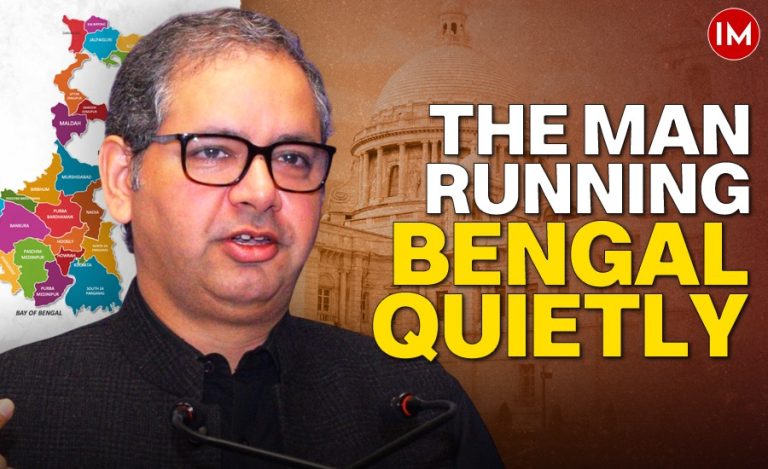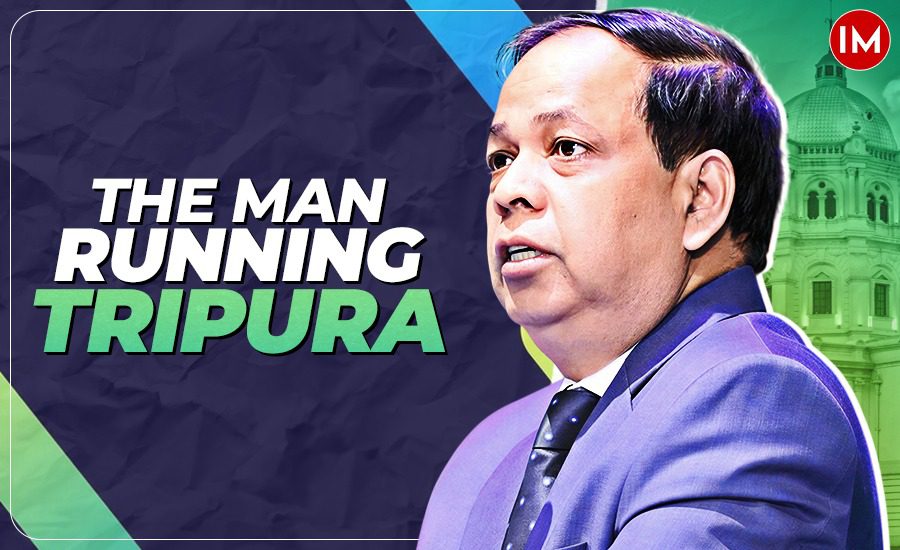
When Jitendra Kumar Sinha took charge as the Chief Secretary of Tripura, it was not a moment of sudden ascent. It was the culmination of nearly three decades spent inside district offices, secretariats, and policy corridors, often away from public attention, but always close to the machinery that keeps governance moving.
Born on 25 September 1970 in Bihar, Sinha grew up in an environment where education and public service quietly shaped ambition. His academic grounding in Economics, followed by an MBA in Business Administration and a postgraduate diploma in public policy, gave him an analytical approach that would later define his administrative style: measured, structured, and deeply policy-oriented.
In 1996, after clearing the UPSC Civil Services Examination, he entered the Indian Administrative Service and was allotted the Tripura cadre, a state that would go on to define his professional life.
LEARNING GOVERNANCE FROM THE GROUND UP
Sinha’s early years in service were spent at the district level, where administration is immediate and unforgiving. As Assistant Collector and Sub-Divisional Officer in South Tripura, followed by stints as Additional District Magistrate in South and West Tripura, he dealt with land revenue, law and order, development delivery, and the everyday negotiations between policy and people.
These roles were not glamorous, but they were formative. They taught him how decisions made in files translate into outcomes on the ground, and how easily systems fail when coordination breaks down.
INSIDE THE POWER CORE OF TRIPURA
By the early 2000s, Sinha had moved into the state’s strategic administrative core. As Commissioner of Taxes, he engaged with fiscal systems and revenue management. Soon after, his appointment as Secretary to the Chief Minister placed him at the center of Tripura’s political and administrative interface.
Working closely with the state’s political leadership, he handled policy coordination, inter-departmental communication, and high-level decision-making. It was a role that demanded discretion, speed, and clarity… qualities that would later define his leadership at the top.
A BROADER VIEW FROM THE CENTRE
Sinha’s career took a wider turn when he moved on central deputation as Joint Secretary in the Ministry for Development of North Eastern Region (DoNER). At the national level, he worked on infrastructure planning, funding mechanisms, and development coordination across multiple northeastern states.
This phase expanded his understanding of center-state relations and gave him a macro perspective on how regional development is shaped by policy alignment, financial flow, and institutional capacity.
RETURNING HOME TO HANDLE THE HARDEST PORTFOLIOS
On returning to Tripura, Sinha resumed leadership roles with renewed depth. As District Magistrate of West Tripura, he oversaw the state’s most critical district. Later, as Principal Secretary for Health & Family Welfare, Finance, and Rural Development & Panchayats, he handled some of the government’s most demanding portfolios.
During the COVID-19 period, his responsibilities in health administration placed him at the center of crisis management, coordinating systems, resources, and policy responses during an unprecedented public health emergency.
CHIEF SECRETARY OF TRIPURA
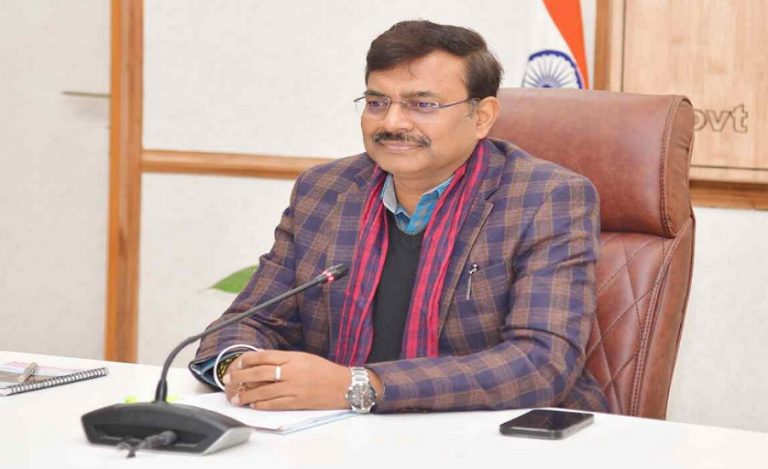
In July 2022, Jitendra Kumar Sinha was appointed Chief Secretary of Tripura, becoming the state’s senior-most bureaucrat. In this role, he oversees general administration, personnel management, and coordination across departments, acting as the crucial link between political leadership and the administrative machinery.
Beyond files and meetings, his tenure has focused on shaping governance for the future, whether encouraging citizen participation in elections, leading climate awareness initiatives like Mission Life, or promoting the use of artificial intelligence in governance to improve efficiency and service delivery.
LEADERSHIP WITHOUT NOISE
What sets Sinha apart is not public rhetoric or personal branding. His profile remains deliberately understated. There is little public information about his family life or personal interests, a reflection of a civil servant who has kept the spotlight firmly on institutions rather than himself.
Colleagues describe an administrator who prefers preparation over publicity, coordination over confrontation, and long-term systems over short-term headlines.
THE ADMINISTRATOR BEHIND THE STATE
Today, as Tripura navigates governance challenges, development ambitions, and technological transitions, Jitendra Kumar Sinha stands at the center, quietly steering policy, managing complexity, and ensuring continuity.
His story is not one of sudden breakthroughs, but of sustained responsibility. It is the story of an officer who rose step by step, file by file, district by district, until the state itself became his charge.