In the dense forests of Bastar, where survival often comes before schooling and opportunities arrive late – if at all – an idea quietly changed hundreds of young lives. It was not a grand policy announced from a capital city, but a belief carried by one officer who understood struggle from within.
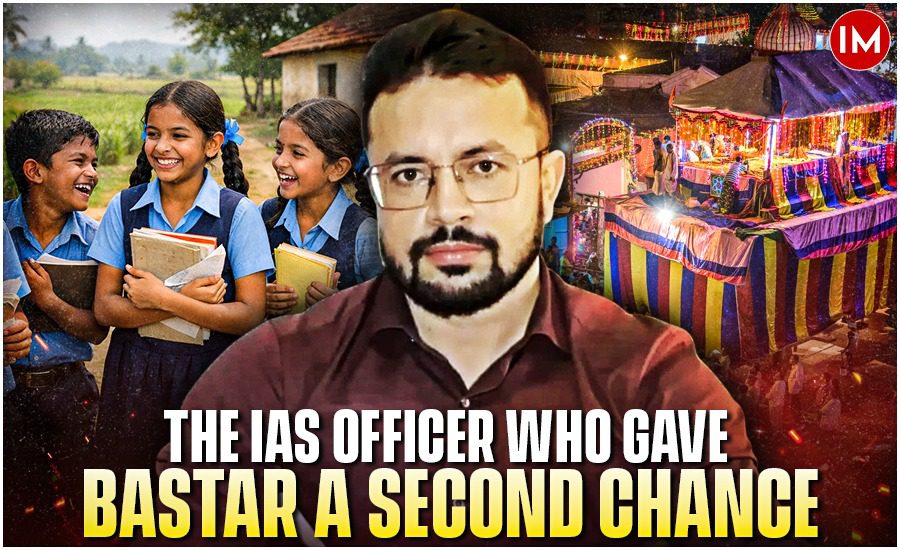
Mr. Vinit Nandanwar, a 2013-batch IAS officer of the Chhattisgarh cadre, grew up in a Naxal-affected region himself. Limited resources, uncertainty, and repeated failures were part of his early life. Clearing the UPSC in his fourth attempt, he went on to become Bastar’s first IAS officer—and later, one of its most empathetic administrators.
When he took charge in districts like Sukma and Dantewada, he did not see just files and figures. He saw reflections of his own past in the children standing at the edge of the system.
TRUST IN ADMINISTRATION AND REACHING THE LAST MILE
Mr. Nandanwar believes that public trust is the real capital of administration. According to him, people approach officers with expectations – not for favours, but for solutions.
His focus remained simple: How far can governance reach?
For him, innovation was meaningful only if it was sustainable and scalable. “An idea matters only when it benefits the maximum number of people,” he often emphasised.
This thinking shaped many of his initiatives – from doorstep delivery of services to education reforms in the most remote tribal belts.
SECOND CHANCE: REWRITING DESTINIES IN DANTEWADA
One of Mr. Nandanwar’s most impactful initiatives was the ‘Second Chance’ education model, launched during his tenure in Dantewada.
He noticed a harsh reality: many tribal students could not clear Class 12 or competitive exams like PTPMT, not because of lack of talent, but due to weak foundations and absence of guidance. Most came from residential hostels or extremely remote villages. By the time they reached Class 12, many were already falling behind.
Instead of abandoning them after school, Mr. Nandanwar asked a simple question—Why stop supporting them just when they need help the most?
The result was a structured, residential, one-year Second Chance programme, where students who had already studied from Class 9 to 12 were given one additional year—full academic support, food, accommodation, and professional coaching.
The programme was run with strict schedules, weekly tests, revision plans, and mentoring—much like UPSC preparation itself.
The outcome was remarkable.
Out of 30 students in the first batch, 28 cleared competitive exams.
Overall, nearly 60–65 selections came from Dantewada in that phase—an unprecedented achievement for a district once known only for conflict.
MAKING BASIC SERVICES DIGNIFIED
Education was not the only focus. Mr. Nandanwar addressed everyday struggles that silently break people.
Caste certificates, for instance, took months and endless visits to offices. He remembered his own painful experience of trying to get one made. In Sukma alone, over 35,000 caste certificates were issued in two years.
Through doorstep service delivery, teams reached villages to provide caste certificates, Aadhaar services, and revenue documents – restoring dignity to people who otherwise felt invisible.
REVIVING LIVELIHOODS IN CONFLICT ZONES
In Sukma, a fish seed production centre had been destroyed during Naxal violence. Instead of abandoning it, Mr. Nandanwar spoke to villagers—many of whom were skilled in fisheries.
Despite security concerns, the centre was revived. Today, Sukma no longer depends on outside districts for fish seed, creating local employment and restoring confidence among villagers.
BASTAR BEYOND HEADLINES
For Mr. Nandanwar, Bastar is not just a conflict zone – it is home to one of India’s richest living cultures.
He speaks passionately about Bastar Dussehra, a 75-day-long festival that begins with Hariyali Amavasya and ends at Muriya Darbar. Unlike the rest of India, Bastar’s Dussehra is not about Lord Ram’s return—it is about tribal deities, community rituals, and collective faith.
From chariot-making to night journeys, flower rituals to traditional councils, the festival reflects Bastar’s deep-rooted identity.
“Bastar has everything—culture, forests, tourism, and wisdom,” he says. “We just need to look beyond stereotypes.”
MINIMUM GOVERNMENT, MAXIMUM GOVERNANCE
Currently serving as Director, Land Records, Mr. Nandanwar continues to push for technology-driven transparency. Aadhaar-authenticated land records, geo-referenced maps, and digital revenue services aim to ensure that no one’s land can be altered without consent.
His vision is clear – people should not run behind offices; governance should reach their homes.
A JOURNEY STILL UNFOLDING
From a Naxal-affected childhood to becoming a symbol of hope in Bastar, Mr Vinit Nandanwar’s journey is about resilience, empathy, and giving people a second chance.
For him, administration is not about authority – it is about walking alongside people until they can walk on their own.
And in Bastar, many now are.