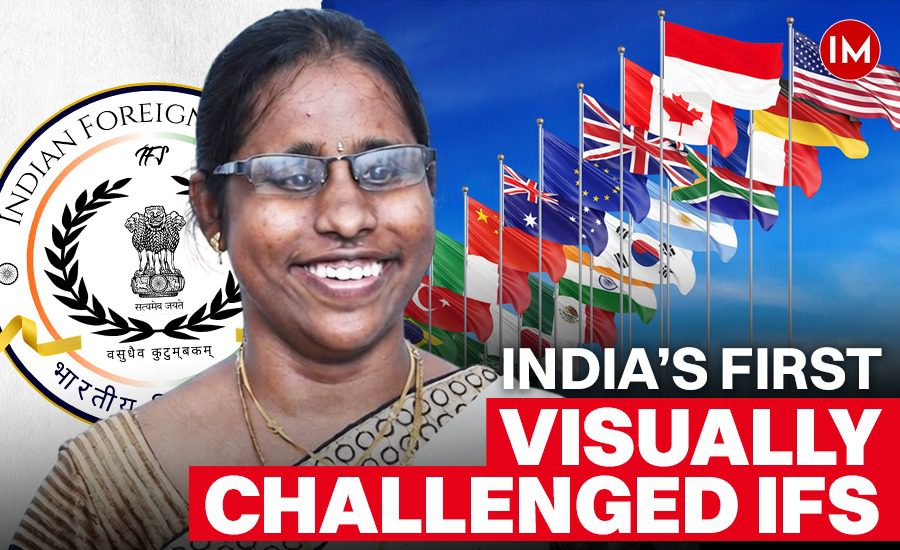
When the world introduces Beno Zephine as India’s first 100 per cent visually challenged Indian Foreign Service officer, the title carries history. But behind that milestone lies a deeply personal journey shaped by family, education, struggle and steady resolve.
Her awareness that life would unfold differently did not arrive in a dramatic instant. It revealed itself gradually, through classrooms structured differently, through books she could not access independently, and through the subtle ways people responded to her. As a child, she was surrounded by care, yet that protection sometimes came intertwined with limitations, making her early years a balance between support and self-discovery.
Watch her exclusive video interview here:
PARENTS WHO TURNED WORDS INTO WINDOWS
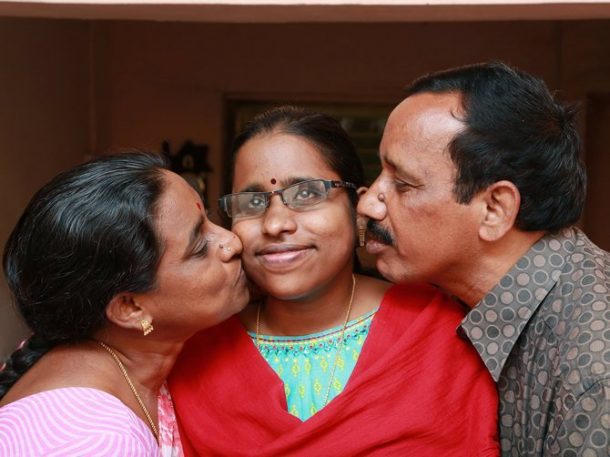
Currently posted in the Embassy of India, Jakarta, her parents played a defining role in shaping her world. What she could not see, her mother made audible. Newspapers were read aloud daily. Books were narrated line by line. Editorial discussions became part of the household routine. At the time, it felt natural. Only later did she recognise the depth of commitment behind those efforts.
Those sessions did more than bridge accessibility gaps; they cultivated her love for language, strengthened her grasp of current affairs, and built the intellectual grounding that would later prove crucial.
BETWEEN TWO CLASSROOMS
Her academic journey moved between a school for the blind and later mainstream colleges. In the former, she found comfort among peers who shared similar experiences. In the latter, she stepped into a space that required her to assert her place.
The transition shaped her confidence in different ways: first by nurturing belonging, and then by demanding independence in a system that was still learning to adapt.
CHOOSING THE INDIAN FOREIGN SERVICE
Opting for civil services, particularly the Indian Foreign Service, was a decisive step. The profession is widely regarded as one of the most demanding branches of public service. For Beno, preparing for the UPSC examination meant navigating inaccessible study materials, limited digital formats, and the additional time required to access newspapers and current affairs.
The daily challenge was not only about mastering the syllabus but about reaching it. Every page required effort before it could become preparation.
When the results were declared and her name appeared on the list, the moment carried disbelief and relief in equal measure. Years of preparation had culminated in a single announcement.
BEYOND THE MILESTONE
Today, beyond the title and the history attached to it, Beno Zephine represents a shift in perception. Her journey reflects not just personal achievement but an expansion of who can stand at the forefront of Indian diplomacy, long before she ever walked into her first foreign posting.