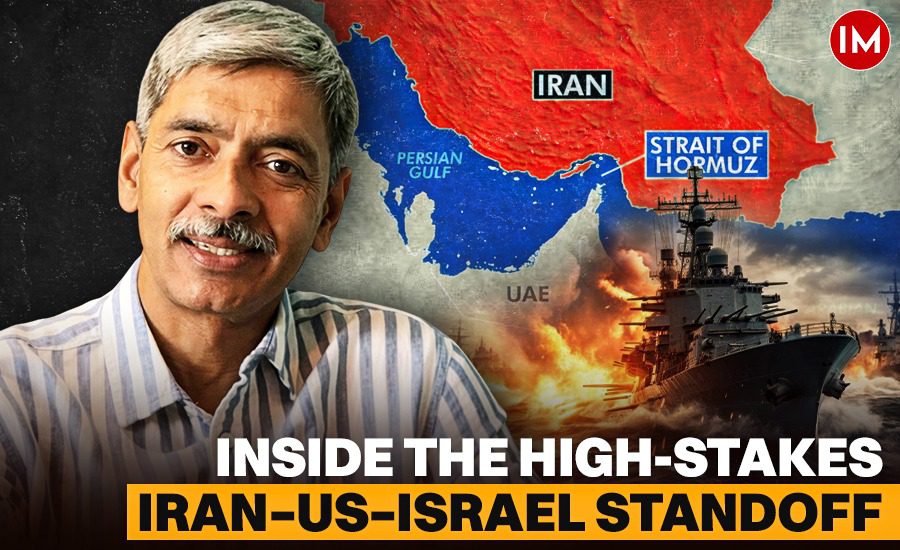
Thirty days into the conflict involving Iran, Israel, and the United States, the battlefield is no longer linear. It is layered -maritime, aerial, cyber, economic, psychological. And somewhere in that complexity lies the real question – is this controlled escalation or the prelude to something far larger?
The U.S. has paused planned strikes against Iranian energy plants and power infrastructure, contingent on Iran opening the blockaded Strait of Hormuz. Deadline date, 5 PM Eastern Time, 06 April 2026 (5.30 AM IST, 07 April 2026).
Let us unpack the fault lines as the conflict enters a decisive phase.Nearly 20% of global oil flows through the Strait of Hormuz. It is not geography but that is leverage which Iran is exercising as on today.
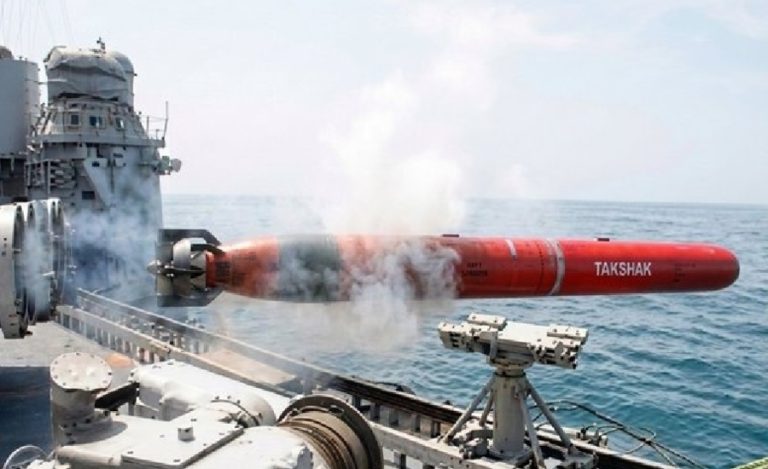
Will Iran be able to close it permanently? Technically, yes. Mines, swarm tactics by IRGC fast boats, anti-ship missiles from coastal batteries all which would have been a playbook by now for years.
The asymmetric warfare and repeated airstrikes by US- Israel on the nuclear & research facilities, military, drone & missile sites, industrial production sites of Iran have led to the strategic closure of the strait by the latter.
Closure has not just hurt adversaries. It would isolate Iran economically too, invite overwhelming naval retaliation, and potentially unify even neutral Gulf actors against it. Iran understands escalation thresholds. It prefers ambiguity -harassment, not outright closure.
So, the real game is not “closure.” It is controlled disruption. Raise insurance premiums. Create uncertainty. Weaponize hesitation.The American Calculus: Control Without Occupation
The USS Tripoli Amphibious Ready Group with 31st Marine Expeditionary Unit, comprising 5000 Marines and soldiers approximately have arrived in area of responsibility of CENTCOM, with two more expeditionary units from the Pacific and another amphibious group enroute. The 82 Airborne Division of paratroopers have reached somewhere in the Middle East.Will the United States attempt to wrest control of Hormuz?
In operational terms, it already maintains dominance through the Fifth Fleet. But dominance is not the same as control in a contested environment.
A full-scale attempt to “secure” Hormuz militarily would mean:
Neutralizing Iranian coastal missile systems
Suppressing swarm boat tactics
Ensuring uninterrupted convoy operations
This is not a policing mission. It a full -fledged war.
The US doctrine favours freedom of navigation operations, not territorial seizure. Expect a calibrated show of force by the carrier groups, ISR dominance, and coalition escorts and not outright occupation is on the anvil.
Here is the uncomfortable truth; controlling Hormuz is easy on paper, brutally complex in execution.If you wanted to cripple Iran’s economy without invading its mainland, where would you strike? The obvious answer is Kharg Island.
Over 90% of Iran’s oil exports pass through this island. It is both a lifeline and a vulnerability.
Would the US-Israel axis target it? Possibly but with caution. A strike here escalates economically and symbolically. It signals intent not just to deter, but to debilitate.
And once that threshold is crossed, retaliation will not be symmetrical.
Ground Invasion: A Strategic Mirage?
The idea of US boots on Iranian soil has surfaced periodically. It sounds decisive. It sounds familiar. It is also deeply improbable.
Iran is not Iraq circa 2003. It is geographically vast, politically layered, and militarily prepared for asymmetric warfare.
A ground invasion would mean:
Urban warfare in dense terrain
Insurgency sustained by ideology and geography
Massive logistical tail across hostile zones.
Rugged and mountainous terrain
The option appears impractical. The US knows this. Iran counts on it.
The narrative of course still persists- why do you think so? Because signalling matters. Even improbable options shape deterrence psychology.
Modern war is rarely contained. It spills. Houthis have recently joined the conflict with their second strike on Israel confirming their support to Iran and Hezbollah.
The Houthis have already demonstrated capability to disrupt Red Sea shipping. If they escalate, the Bab el-Mandeb becomes another choke point.
Pause for a moment. Hormuz in the Gulf. Bab el-Mandeb in the Red Sea. Two arteries squeezed simultaneously.
This not a coincidence. It is strategy.
Then comes Hezbollah. Its calculus is different calibrated retaliation without triggering full-scale war. But miscalculation is always one rocket away.
Israel’s Military Fatigue: The 900-Day Question
Sustained operations take a toll. The Israel Defence Forces have been on near-continuous operational footing for close to 900 days.
What does fatigue look like in modern warfare?
Strain on reservist systems.
Equipment wear cycles compressing.
Decision-making under prolonged stress and collapsing.
Israel remains tactically sharp. But endurance is a strategic variable. Every additional front stretches the capacity and capability.
And adversaries are watching closely.
Gulf Nations: Silent Stakeholders, Potential Actors
Will Gulf nations retaliate directly against Iran?
Their dilemma is clear. They are both vulnerable and cautious. Direct confrontation risks escalation. Inaction risks perception of weakness.
So far, the approach has been:
Strengthening air defences.
Quiet intelligence cooperation
Strategic hedging
Financial hedging not exercised.
But if Iranian strikes directly threaten critical infrastructure, that restraint may not hold.
The Pause Before the Storm: Diplomacy or Deception?
The reported US pause in hostilities until 06 April introduces a familiar military concept – an operational pause.
Is it for de-escalation? Or repositioning?
History offers both possibilities.
Not much has be talked about the backchannel diplomacy although Egypt, Turkiye and Pakistan have stepped in. But diplomacy without leverage is noise. And right now, leverage is being built militarily, economically, psychologically.
Will Iran accept the reported 15-point demands of Donald Trump? Unlikely in totality. Media reports from Iran have rejected it outright.
The Larger Shift: War Without Borders
What are we witnessing?
Not just a regional conflict but a transformation and a new grammar of warfare.
Chokepoints as weapons.
Proxies as force multipliers
Economic disruption as strategy
Narrative control as battlefield
This is not conventional war. This is systemic warfare.
For India, the lessons are immediate:
Maritime security is non-negotiable
Energy routes are strategic vulnerabilities and diversify supply chains.
Multi-domain readiness is essential.
Diplomacy must align with deterrence capability
The Indian Ocean may seem distant from Hormuz but in energy terms, it is directly connected.
Where Do We Stand Exactly at Day 30?
We are at an inflection point, not a conclusion.
Hormuz remains blocked but tense.
Proxy fronts are active but not emerged as conflict winners.
Major powers are engaged but cautious.
Diplomacy is alive but fragile and faith lacking. Everything is poised. Nothing is resolved.
And perhaps that is the most dangerous phase of any conflict, the illusion of control.
“In war, the simplest things become difficult.”
Clausewitz said that long before drones and cyber warfare. Yet it holds.
Because today, complexity is the strategy.
The world is not just watching missiles. It is watching intent. Watching restraint. Watching for the moment when calculation gives way to impulse.
Will calibrated hostility continue to define this conflict or will diplomacy find a way to interrupt escalation before the map redraws itself?
The world is watching with bated breath as the West Asia conflict has spiralled over and many nation states interests are at stake.