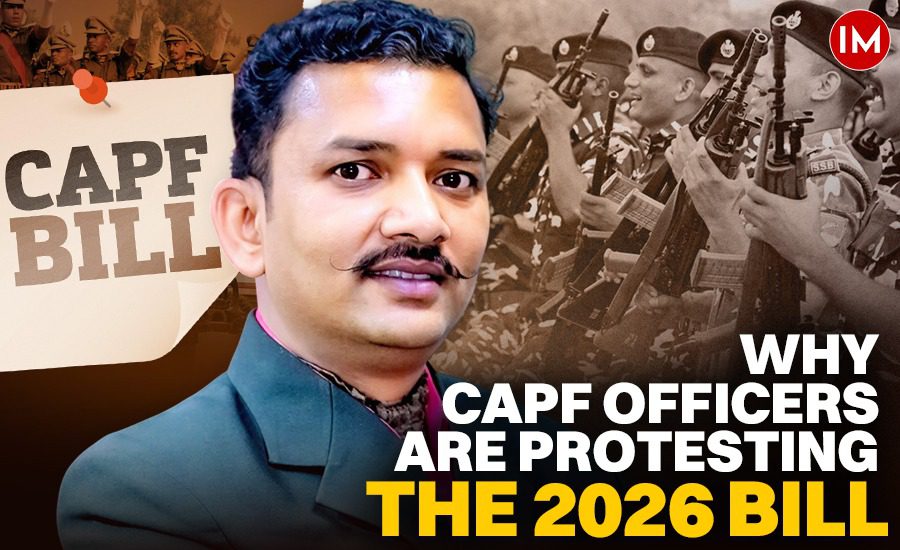
The introduction of the Central Armed Police Forces (General Administration) Bill, 2026 in the Rajya Sabha has ignited a complex administrative and constitutional debate. The legislation aims to create an umbrella statutory framework for India’s paramilitary forces, standardizing rules across the CRPF, BSF, ITBP, CISF, and SSB. However, the Bill has drawn significant criticism from CAPF veterans, cadre officers, and legal observers. By legally mandating that the highest echelons of CAPF leadership be reserved for Indian Police Service (IPS) officers on deputation, the Bill raises fundamental questions about cadre rights, judicial precedent, and the structural morale of the forces.
Here is a detailed analysis of the primary arguments raised against the proposed framework.
The “Vocal for Local” Paradigm and Homegrown Leadership
The ethos of “Vocal for Local,” frequently championed by Prime Minister Narendra Modi, emphasizes self-reliance, the nurturing of indigenous talent, and reducing dependence on external imports. In the context of India’s security apparatus, critics apply this principle to the internal command structure of the CAPFs.
Officers who join the CAPFs as Assistant Commandants through the UPSC spend decades operating in the most hostile environments—from guarding high-altitude borders and countering insurgencies to managing volatile law-and-order situations. They represent the “local” or homegrown institutional knowledge of these specific forces. However, the 2026 Bill reserves 100% of Director General (DG) and Special DG posts, at least 67% of Additional DG posts, and 50% of Inspector General (IG) posts for IPS officers. From the perspective of the CAPF cadre, perpetually importing leadership from outside the force to fill top decision-making roles contradicts the spirit of empowering indigenous institutional talent. Giving ultimate command to the CAPF cadre would align with building self-reliant, specialized forces led by officers who have risen through their specific ranks.
The Legislative Response to the Supreme Court Mandate
A central point of contention surrounding the Bill is its relationship with recent judicial rulings. After years of litigation regarding career stagnation, the Supreme Court delivered a landmark judgment in May 2025. The Court recognized CAPF cadre officers as members of Organised Group A Services (OGAS), entitling them to structured career progression. Crucially, the apex court directed the Ministry of Home Affairs to “progressively reduce” IPS deputation in the CAPFs up to the level of Inspector General within a two-year timeframe.
The government’s subsequent review petition was dismissed by the Supreme Court in October 2025. Critics argue that the 2026 Bill is a legislative mechanism designed specifically to nullify the Court’s mandate. By codifying the IPS deputation quotas into a formal statute rather than relying on executive orders, the legislation effectively entrenches the very dominance the judiciary sought to dismantle. For many within the CAPFs, the actual requirement for administrative justice is to honor the Supreme Court’s ruling and allow cadre officers to ascend to the leadership roles they have earned through decades of service.
The Cascade Effect: Stagnation from IG to Constable
The reservation of top posts for deputationists does not only affect senior officers; it creates a severe structural bottleneck that reverberates down the entire chain of command, ultimately impacting the lowest ranks, including constables.
In a hierarchical uniformed service, promotions are strictly vacancy-based. An officer can only move up when the position above them is vacated. When an IPS officer arrives on deputation to occupy an IG or ADG post, the CAPF officer who was next in line for that promotion remains stuck at the DIG level. Consequently, the Commandant below them cannot be promoted, which blocks the Second-in-Command, the Deputy Commandant, and so forth.
This top-heavy blockage slows down the promotion cycle drastically. It is not uncommon for a CAPF officer to wait 15 to 18 years for their first promotion. This stagnation cascades down to the enlisted personnel. Jawans and constables, who form the operational backbone of the forces, face severely delayed career progression, leading to profound frustration. Parliament data cited during the Bill’s debate highlighted severe attrition rates within the CAPFs, including high numbers of voluntary retirements and resignations. Critics point out that clearing the leadership bottleneck at the top is essential to ensuring timely promotions and maintaining morale for constables and jawans at the bottom.
The Case for Reciprocal Coordination
The primary justification provided by the government for maintaining high IPS quotas in the CAPFs is the necessity of Centre-State coordination. Because IPS officers serve in both state police departments and central agencies, the argument states that they serve as a vital bridge, ensuring seamless communication and integrated policy execution during national security crises.
However, advocates for the CAPF cadre argue that if institutional coordination and cross-pollination of experience are the true objectives, this relationship should be reciprocal. Currently, the deputation is almost entirely one-way: IPS officers assume leadership roles in the CAPFs, but CAPF officers are rarely, if ever, deputed to senior leadership roles within State Police forces.
CAPF officers possess highly specialized expertise in border management, industrial security, and counter-terrorism that state police forces frequently rely upon. A truly coordinated security architecture would involve a reciprocal exchange, where CAPF officers are temporarily assigned to state commands to share their tactical and operational expertise, just as IPS officers bring their administrative experience to the center. Without reciprocity, the current system is viewed not as a collaborative bridge, but as a rigid hierarchy that marginalizes the specialized forces.
Conclusion
The debate over the CAPF Bill 2026 highlights a deep friction between the desire for a centralized, uniform command structure and the legitimate career aspirations of specialized security personnel. Balancing the need for federal coordination with the principles of homegrown leadership and judicial respect remains a critical challenge in shaping the future of India’s internal security architecture.
(About the Author Tarun Kumar Banjaree is a retired gazetted officer from the UPSC CPF 2004 batch, having served 27 years across the ITBP and Indian Navy. The Best Blogger of the Senior Command Course at the Army War College, his extensive field experience includes anti-Naxal operations, border guarding in Ladakh and Himachal Pradesh, and nationwide election duties. He led the Clean Ganga Expedition, which was recognized in the Golden Book of World Records. He was the lead petitioner among 72 CAPF officers in the OGAS implementation case, securing a favorable Supreme Court judgment in May 2025, and currently works as a writer, educator, and career counselor. He can be contacted at [email protected])