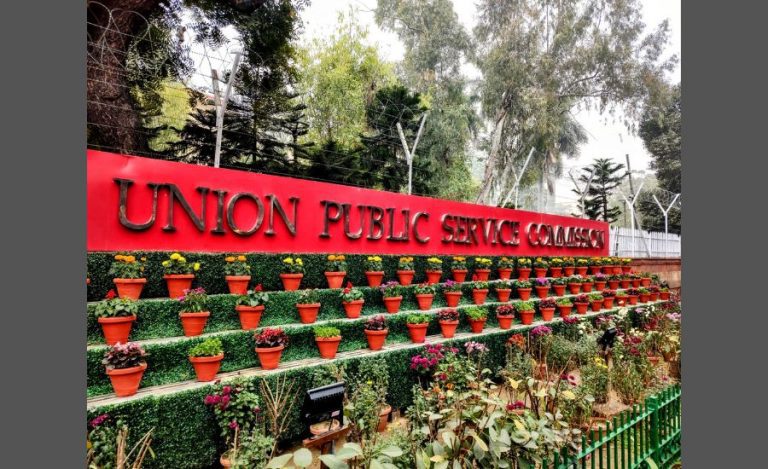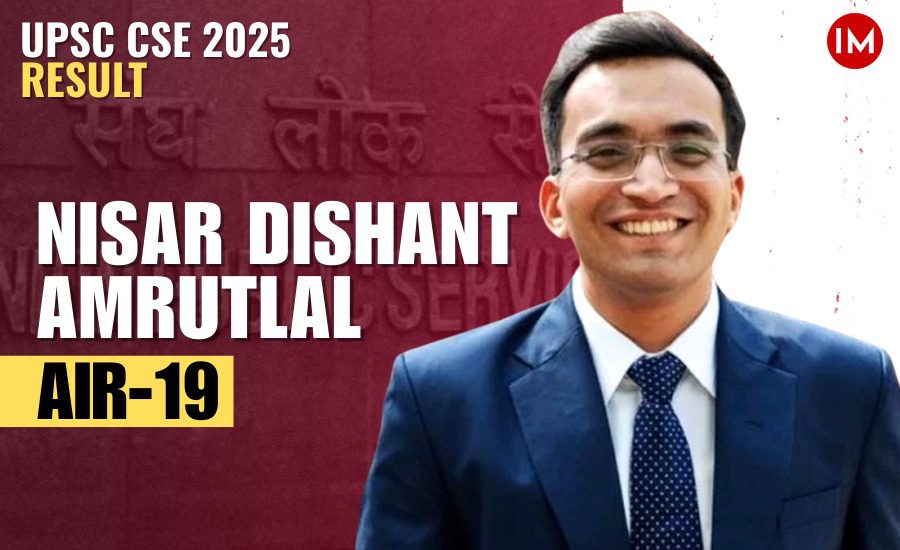
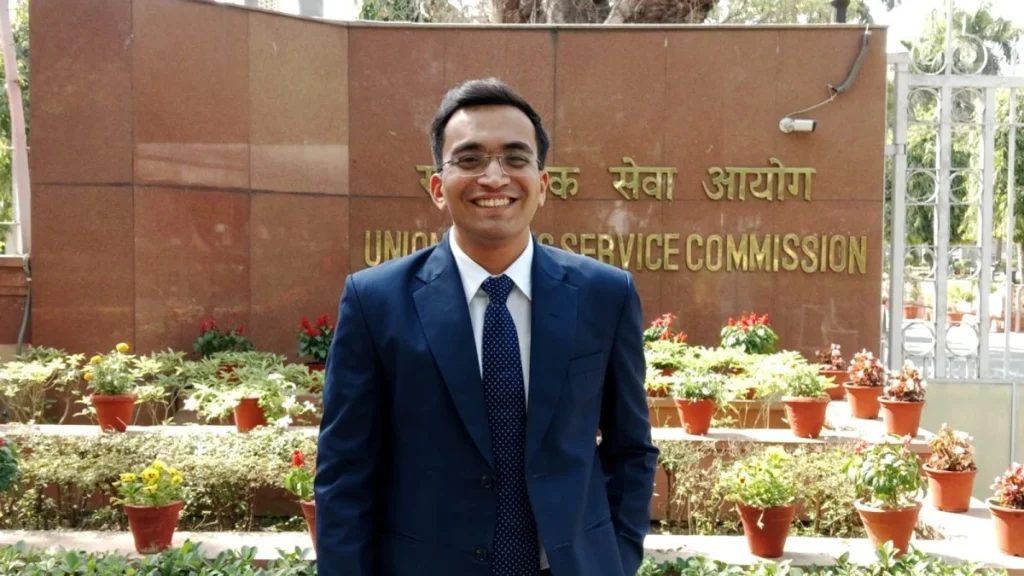
When the UPSC Civil Services Examination 2025 results were declared, 27-year-old Nisar Dishant Amrutlal emerged as one of the standout achievers, securing All India Rank 19.
His success carried a special significance. Nisar was the only candidate from Gujarat in the top 100 ranks and one among 34 candidates from the state who cleared the exam this year.
Behind this achievement lies a journey shaped by multiple attempts, shifting strategies, and an unconventional academic background—far removed from the stereotypical engineering or elite institutional paths often associated with UPSC toppers.
A CHILDHOOD BETWEEN MUMBAI AND KUTCH
Though a native of Bhachau in Gujarat’s Kutch district, Nisar was born and raised in Mumbai, where his family had moved years earlier.
His father, Amrutlal Nisar, is a writer who ran a regional magazine, produces Gujarati plays, and hosts cultural events in Mumbai. His mother, Harsha Nisar, is a homemaker.
Coming from a family deeply rooted in the performing arts and cultural spaces, Nisar’s early exposure was more creative than conventional.
“I am the first graduate in my family. My father was the one who came to Mumbai to start work and he always encouraged me to explore creative fields like mass communication and journalism,” Nisar shared in an exclusive conversation with Indian Masterminds.
For several years, the family lived in Mumbai before eventually returning to Gujarat about six years ago.
FROM JOURNALISM GRADUATE TO CIVIL SERVICES ASPIRANT
Nisar completed his Bachelor’s degree in Mass Media and Journalism in 2019 from Nagindas Khandwala College, Mumbai, under the University of Mumbai. After graduating, he briefly worked in marketing, but his interests began to expand beyond media and communication.
His turning point came during a rural exposure visit to Kutch, connected with a film project. The experience introduced him to ground realities in rural India and pushed him to think about public service on a larger scale.
“That exposure made me think about issues at a much broader level. That’s when I started reading about civil services and eventually decided to give this exam a shot,” he recalls.
Today, he is also pursuing a postgraduate degree in Political Science from Indira Gandhi National Open University (IGNOU).
FOUR ATTEMPTS AND CONSTANT STRATEGY CHANGES
Nisar’s journey to the top ranks was far from straightforward. His first UPSC attempt in 2022 ended at the preliminary stage. Instead of seeing it as a setback, he used the experience to completely rethink his preparation.
“I went back to Kutch for some time and started again from square one. I made all my notes again and rebuilt my strategy,” he says.
The following attempts brought him closer to success:
- 2023: Reached the interview stage but could not make the final list due to lower marks in the personality test.
- 2024: Performed well in the interview but his optional score dropped. He still cleared the exam and joined the Indian Railway Management Service (IRMS).
- 2025: Took one year’s leave from IRMS, refined his strategy, and finally secured AIR 19.
“In every attempt, something improved, and something else slipped. This time, everything aligned together,” he told Indian Masterminds.
CHOOSING POLITICAL SCIENCE AND INTERNATIONAL RELATIONS
Despite his journalism background, Nisar opted for Political Science and International Relations (PSIR) as his optional subject. The decision came from both interest and practicality.
“The subject aligned well with General Studies Paper II and current affairs, and I was also interested in international relations because I was considering foreign services,” he explains.
He points out that reading newspapers today is deeply connected with global politics and diplomacy, making the subject both engaging and relevant.
A PREPARATION STRATEGY ROOTED IN SIMPLICITY
Nisar believes the UPSC examination is often made to look more complicated than it actually is.
“This exam, at its core, is very traditional and simple, provided you keep doing the basics correctly,” he says.
For the Mains examination, he relied heavily on structured answer writing.
- Clear handwriting
- Underlining key points
- Crisp answers
- Use of diagrams and flowcharts
“I realised that writing was my strength, so I focused on presenting answers neatly and precisely,” he explains.
AVOIDING THE NOISE OF THE INTERNET
One of the biggest adjustments in his preparation was limiting online distractions. With the explosion of online educators and strategy videos, Nisar deliberately decided not to get caught in an endless cycle of content consumption.
“YouTube is flooded with people becoming educators and content creators. It was important for me to draw a line and not watch every strategy video that appeared online,” he says.
Instead, he relied primarily on standard books, repeated revisions, and consistent test practice.
USING AI, BUT CAREFULLY
Interestingly, Nisar also experimented with new digital tools such as AI during his preparation. However, he used them cautiously.
“In the last one or two attempts, I saw many people using AI tools. I used them very selectively, mainly for my optional subject, to find quotations and references,” he says.
But he believes aspirants should avoid over-reliance.
“If you use it for every answer, you’ll end up with too much information to memorize. It should only support preparation, not replace it.”
LESSONS FROM THE INTERVIEW BOARD
Nisar appeared for his final interview on February 21, just two weeks before the results were declared.
One question from the board particularly stayed with him.
A board member asked: If India became extremely rich in the future and could buy another country, which one would you choose?
Nisar responded with an unusual answer: Russia.
“The land area is enormous, and with our population it could provide huge strategic and economic opportunities,” he said during the interview.
Questions like these, he believes, test not just knowledge but how candidates think in real time.
BREAKING THE ‘ELITE COLLEGE’ MYTH
One of the biggest mental hurdles Nisar faced during preparation was the perception that the exam is dominated by graduates from elite institutions.
“I was not from IITs or IIMs. Sometimes you start questioning yourself, ‘am I actually capable of clearing this exam’?” he admits.
His eventual success challenges that perception. For him, the exam rewards clarity, discipline, and consistency, regardless of academic background.
THE COST OF THE JOURNEY
Like many aspirants, Nisar’s preparation involved long periods of isolation. He had to distance himself from social events, friends, and everyday distractions.
“It’s a marathon. Usually, people think they will clear it in two or three attempts, but sometimes it takes longer,” he says.
For him, the biggest challenge was not the syllabus but maintaining the drive to keep studying every day.
HIS VISION AS A FUTURE IAS OFFICER
Nisar has kept IAS as his first service preference. His interests lie in improving civic infrastructure and public services, especially in areas that directly affect everyday life.
“I see many friends going abroad because they feel basic civic facilities are lacking here. I want to work in areas that provide better infrastructure and access to resources,” he shared with Indian Masterminds.
He is particularly passionate about health and education, which he believes are essential for turning India’s massive population into a long-term advantage.
“Our population is our biggest asset. Health strengthens the body and education strengthens the mind. Those are the areas I would always want to work in.”
ADVICE FOR UPSC ASPIRANTS
Having experienced the exam cycle multiple times, Nisar believes success starts with honest self-assessment.
“It is very important to analyse your strengths and weaknesses before entering this exam,” he says.
He also stresses the importance of disciplined study routines.
“You should be ready to study eight to ten hours every day and stay away from social media distractions. Once you decide to enter this journey, consistency becomes the most important factor.”
A JOURNEY BUILT ON SELF-BELIEF
From a mass media classroom in Mumbai to AIR 19 in one of the toughest examinations in the country, Nisar Dishant Amrutlal’s journey reflects how persistence, reflection, and strategy can reshape outcomes.
His story also sends a powerful message to aspirants from non-traditional backgrounds: success in the civil services is not limited to a particular degree, city, or institution.
Sometimes, it is simply about staying in the race long enough for everything to finally fall into place.