On a quiet afternoon in October 2022, inside a government office in Rupnagar, a file lay open on the desk of the Deputy Commissioner. It was not the first time the woman in that file had sought help. She had come before, twice. The third time, she arrived with a medical report that recorded something chilling — she had been given rat poison.
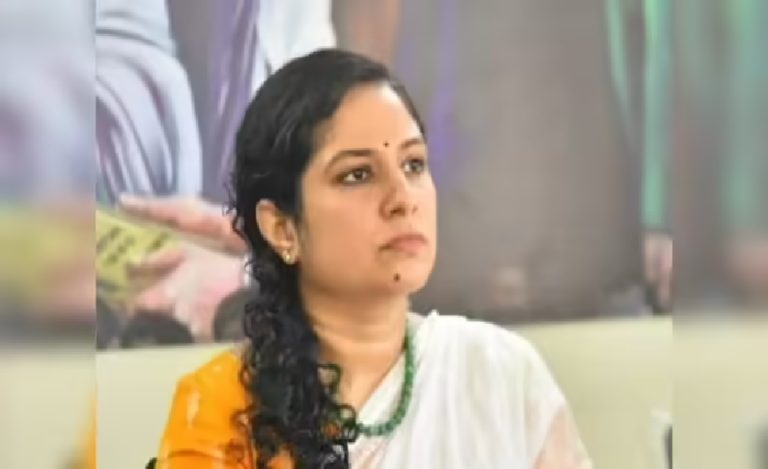
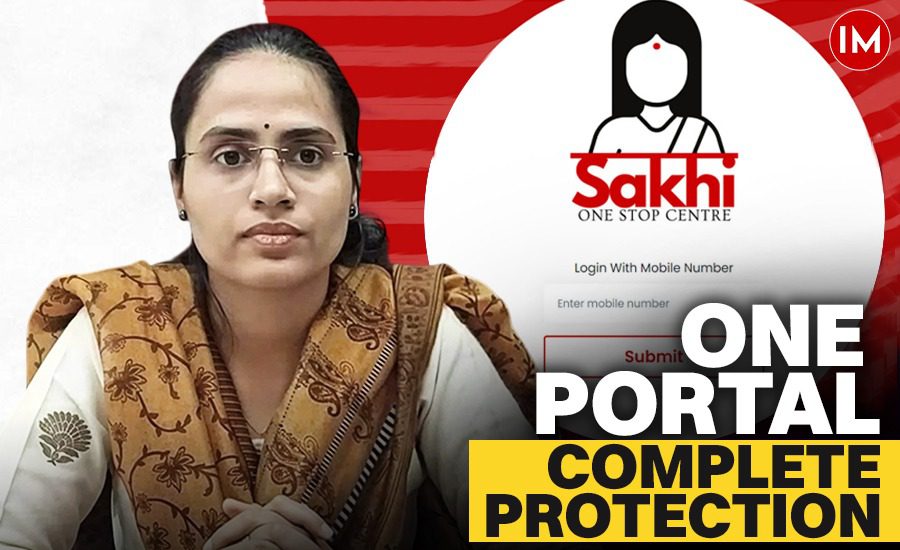
Across the table sat Dr. Preeti Yadav. A 2014 batch IAS officer from the Punjab cadre trained to read patterns in policy and administration. But this was not a statistic. This was a system failure. “Why do you keep going back?” she asked gently. The answer was not about fear.
It was about children.
No income.
No place to live.
No support structure that could hold her beyond a brief moment of crisis.
That afternoon, Dr Yadav realised something stark: the crisis was not only violence — it was fragmentation. The present system responds in emergencies, but it rarely stays long enough to rebuild a life. Departments act, files move, immediate relief is provided — and then the momentum fades. When institutional support becomes episodic instead of sustained, survivors are left to navigate the aftermath alone. And when the system recedes, many women are pushed back into the very circumstances they tried to escape.
Sakhi was born from that realisation.
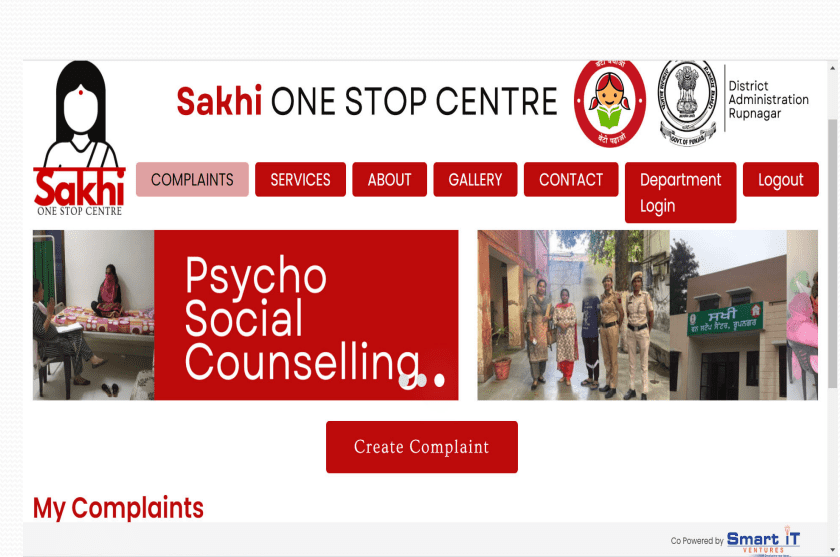
https://sakhiapp.punjab.gov.in/
A Maze Called Help
Before Sakhi, a survivor’s journey often looked like this: Police station to Hospital to Court to Welfare office to Employment centre and more. Each department functioned independently. Each desk required her to narrate her trauma again. The One Stop Centre existed physically, but there was no digital convergence, no shared tracking, and no unified accountability. Courage brought her to the first office. Exhaustion often stopped her at the third. Many returned to abusive homes not because they wanted to — but because navigating the system demanded more strength than surviving the violence.
Dr. Yadav’s idea was deceptively simple: What if a woman only had to knock once?
Sakhi: When the System Moves Towards Her
Launched in Rupnagar in 2022 and expanded to Patiala in 2024, Sakhi is today operational across all 14 blocks of both districts. More than 500 survivors have been supported. Complaint registration time has reduced from nearly two hours to under five minutes. Emergency cases are acted upon within six hours. Standard cases are resolved within 24–48 hours.
But Sakhi is not merely faster. It is structurally different. The platform integrates over 20 government departments — including police, cybercrime units, health services, legal aid, livelihood missions, social security offices, banks, and district authorities — into a single cloud-enabled system.
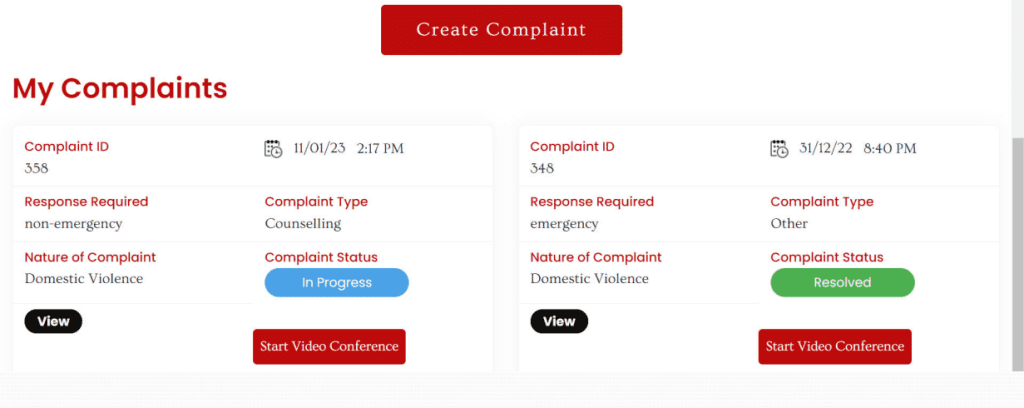
A complaint generates one ID. That ID activates the State. Every action is time-stamped. Every department must upload an action-taken report. No case can be closed without documented compliance. The Deputy Commissioner monitors cases in real time.
Delay is no longer invisible. Accountability is built into the design.
Recognised by the Department of Social Security and Women & Child Development, Punjab, as a model initiative, Sakhi represents governance engineered for convergence.
Designed for the Woman Who Cannot Type
Most digital systems assume literacy and access. Sakhi assumes vulnerability.
A woman can register her complaint through:
• Typed text
• Audio recording
• Video message
If she cannot type, she speaks. If she cannot travel, she connects remotely.
The app allows GPS-enabled SOS alerts. In emergencies, alerts reach the nearest mapped police station automatically. Jurisdiction is resolved by software — not by the survivor.
She receives real-time SMS updates at every stage. She does not need to chase her file.
For many women, the biggest barrier is not courage. It is logistics. Sakhi removes the logistics.
Justice Without a Waiting Room
Among its most transformative features is video consultation.
A survivor can request a live video call with:
• A police officer
• A legal aid advocate
• A medical facilitation officer
No travel. No repeated narration. No waiting outside offices.
For a woman confined at home or financially dependent, this changes the equation entirely. Access to justice no longer requires physical mobility. It requires a phone. And the State meets her there.
Convergence in Action
Consider one case. A woman with a disability registered her complaint through Sakhi. Within hours, police were assigned. But the system saw more than immediate violence.
Through convergence:
The Red Cross delivered a wheelchair.
She was enrolled in skill training.
She was placed in a self-help group-run canteen.
Her children were mapped for educational support.
She did not visit multiple offices. She did not repeat her story. The State coordinated internally.
This is the shift Sakhi represents — from episodic relief to structured rehabilitation.
Beyond Rescue: The Economics of Dignity
Dr. Yadav recognised early that protection without financial independence is temporary.
Sakhi integrates access to:
• Skill development missions
• District employment offices
• Loans under PMEGP, PMFME and rural livelihood missions
• Urban livelihood schemes
• Welfare pensions
• Social security benefits
• Temporary shelter and ration support
Because the true exit from violence is economic agency. Without income, many survivors return — not by choice, but by compulsion. Sakhi reduces that compulsion.
A Blueprint Waiting to Expand
Technically, the platform is secure, cloud-enabled, API-integrated and VAPT-audited. It is hosted on government servers and designed for district-level configuration.
Replication across Punjab requires minimal additional infrastructure. The architecture already exists. The Government of Punjab has before it a tested model that:
- Reduces response time.
- Ensures inter-departmental convergence.
- Builds real-time accountability.
- Protects survivor privacy.
- Restores dignity.
The question is not whether Sakhi works. It does. The question is how far it will travel.
When Governance Becomes Human
In Punjabi, “Sakhi” means friend. For a woman who once swallowed poison because she believed she had no alternative, that word now carries weight.
- A friend does not pass you to another counter.
- A friend does not make you repeat your pain.
- A friend stays. Sakhi stays.
Dr. Preeti Yadav did not merely launch a portal. She altered the relationship between the citizen and the State — ensuring that when a woman gathers the courage to speak, the system is finally strong enough to respond.
And perhaps, in that quiet redesign of governance, lies its greatest impact.
Punjab now has a proven, scalable model in Sakhi; it’s time for the state government to expand it district-wide and ensure no woman is ever left to fight alone again.