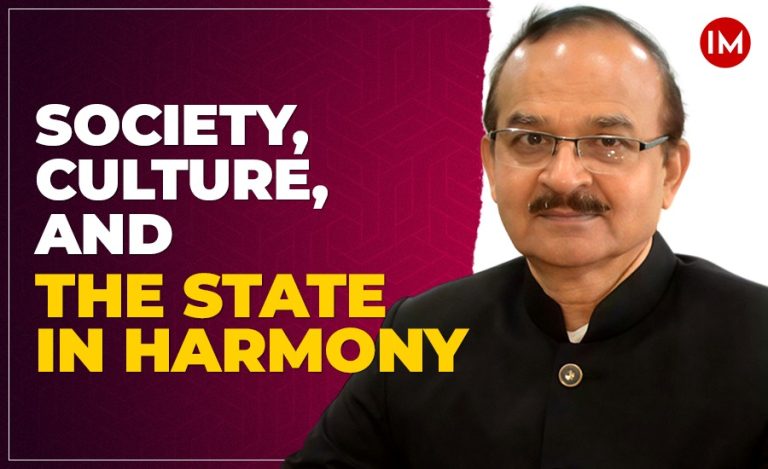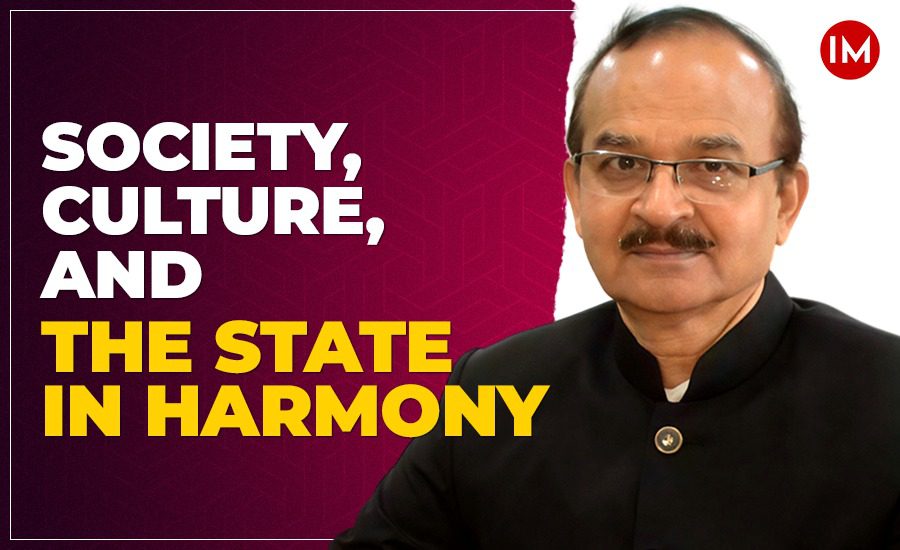
By Dr. Shailendra Srivastava
A nation is not merely a political arrangement. It is a lived experience, a civilisational memory, and a constitutional aspiration. India, perhaps more than any other modern state, embodies this layered reality. It is at once ancient and modern, spiritual and constitutional, diverse and yet deeply unified.
The discourse on nationhood in India cannot be confined to territorial sovereignty or electoral democracy alone. It must be understood through the interplay of society, culture, and constitutional governance, where each element reinforces and restrains the other.
India is not just a nation-state. It is a civilizational state governed by a modern Constitution.
Society as the Foundation of the State
In India, society precedes the state. The social fabric, woven through centuries of shared traditions, languages, customs, and belief systems, forms the substratum upon which governance structures are built.
Unlike many Western models where the state constructs the nation, India presents the reverse. The nation emerges organically from society, and the state seeks to regulate, protect, and channel this diversity.
This relationship places a unique responsibility on governance. The state must not homogenize society but harmonise it. It must protect pluralism without fragmenting unity.
This delicate balance finds expression in the Constitution through:
- Article 14, ensuring equality before law
- Article 19, safeguarding freedoms of expression and association
- Article 25, guaranteeing freedom of conscience and religion
Together, these provisions create a framework where diversity is not a challenge but a constitutional value.
Culture as Soft Power and Civilizational Strength
Culture in India is not static. It is dynamic, adaptive, and deeply embedded in everyday life. From classical traditions to folk practices, from spiritual philosophies to artistic expressions, Indian culture functions as a powerful instrument of soft power.
India’s global influence increasingly draws upon this cultural reservoir. Yoga, Ayurveda, classical arts, and philosophical traditions are not merely heritage elements. They are instruments of global engagement and cultural diplomacy.
Institutions like UNESCO have recognised multiple Indian traditions as intangible cultural heritage, reinforcing India’s civilisational relevance on the world stage.
However, cultural assertion must remain inclusive. The strength of Indian culture lies in its ability to absorb, adapt, and coexist. Any attempt to rigidly define culture risks undermining the very plurality that sustains it.
Constitutional Morality: The Bridge Between Tradition and Modernity
The Indian Constitution is not an alien imposition on society. It is a transformative document that seeks to align ancient civilizational values with modern democratic principles.
The Supreme Court has repeatedly emphasized the doctrine of constitutional morality. In Navtej Singh Johar v. Union of India, the Court underscored that constitutional morality must prevail over social morality when the two are in conflict.
Similarly, in S.R. Bommai v. Union of India, secularism was held to be a basic feature of the Constitution, reinforcing the idea that the state must remain equidistant from all faiths while protecting each.
These judgments reflect an evolving understanding of nationhood, one that is rooted in rights, dignity, and inclusiveness.
Media and Governance: The Narrative of Nationhood
In contemporary India, media plays a decisive role in shaping the discourse of nationhood. It is both a mirror and a moulder of public opinion.
The transition from traditional media to digital platforms has democratized expression but has also introduced challenges:
- Information overload
- Misinformation and disinformation
- Algorithm driven polarization
The responsibility of media, therefore, extends beyond reporting. It must contribute to nation building by fostering informed, balanced, and constructive dialogue.
The judiciary has recognized the importance of free speech while cautioning against its misuse. In Shreya Singhal v. Union of India, the Supreme Court struck down Section 66A of the IT Act, affirming that freedom of expression is integral to democracy.
At the same time, the need for responsible communication becomes critical in preserving social harmony.
Governance in a Plural Society
Governance in India operates within a complex matrix of diversity. Policymaking must navigate competing interests while ensuring equity and justice.
The challenge is not merely administrative efficiency but ethical governance. This includes:
- Transparency in decision making
- Accountability of institutions
- Responsiveness to societal needs
India’s governance model increasingly integrates technology, data, and digital platforms. While this enhances efficiency, it also raises concerns regarding privacy, surveillance, and exclusion.
The decision in Justice K.S. Puttaswamy v. Union of India marked a watershed moment by recognizing privacy as a fundamental right under Article 21. This has significant implications for digital governance and citizen autonomy.
National Identity in a Globalized World
Globalization has redefined the contours of national identity. Borders are porous, cultures interact, and ideas travel rapidly.
In this context, India’s identity must remain rooted yet adaptable. It must draw strength from its civilizational ethos while engaging confidently with the modern world.
National identity cannot be reduced to uniformity. It must be understood as a shared commitment to constitutional values, cultural continuity, and collective progress.
India’s diaspora, its global partnerships, and its cultural outreach contribute significantly to this evolving identity.
The Way Forward: Harmonizing State, Society, and Culture
The future of Indian nationhood lies in harmonising three core elements:
- Society, which provides diversity and dynamism
- Culture, which offers continuity and soft power
- The State, which ensures order and justice
This harmony requires:
- Strengthening constitutional institutions
- Promoting inclusive cultural narratives
- Ensuring responsible media discourse
- Balancing technological advancement with ethical safeguards
Nation building is not a one time project. It is a continuous process of negotiation, adaptation, and renewal.
Conclusion
India’s journey as a nation is unique. It is not defined solely by political milestones but by a deeper civilizational consciousness that has endured and evolved over millennia.
The Constitution provides the framework. Society provides the substance. Culture provides the soul.
The task before us is to ensure that these elements remain aligned in purpose and direction.
In doing so, India does not merely sustain its nationhood. It offers a model of coexistence, resilience, and democratic vitality to the world.
About the Author
Dr. Shailendra Srivastava is a retired IPS officer of the 1986 batch, Madhya Pradesh cadre, who served as Director General of Police with over 35 years of experience in law enforcement, governance, and public administration. He is also a legal professional and author, known for his work on criminal justice, cyber law, and societal issues. His writings reflect a deep engagement with constitutional values, cultural traditions, and contemporary policy challenges, bridging the domains of governance, law, and civilizational thought.