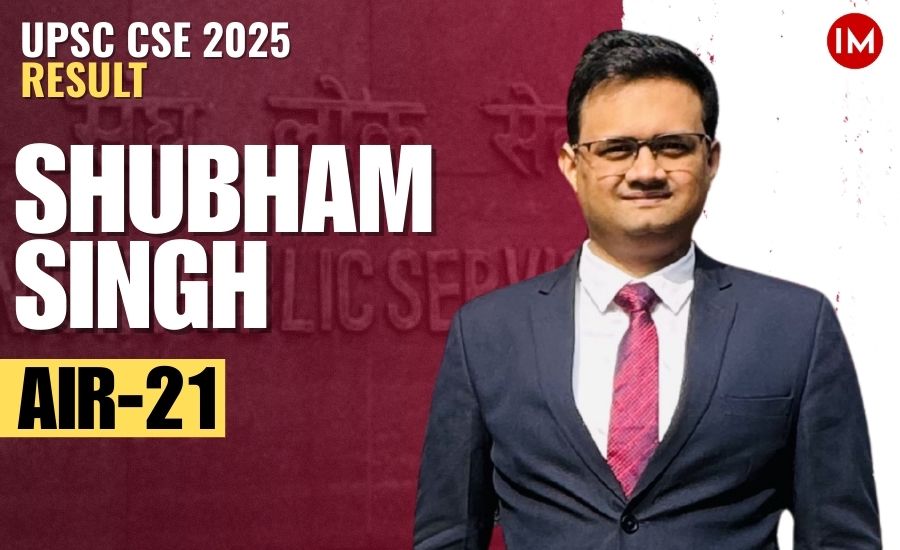
The journey to the civil services often spans years of preparation, uncertainty, and repeated self-reflection. For Shubham Singh, who secured All India Rank 21 in the UPSC Civil Services Examination 2025, the path was particularly long and filled with phases of self-doubt, professional responsibilities, and personal decisions.
What makes his story remarkable is not just the final rank, but the way he balanced a government career, marriage, and preparation before achieving success in what turned out to be his last eligible attempt.
EARLY LIFE AND EDUCATION IN VARANASI
Shubham Singh comes from Varanasi, Uttar Pradesh, where he completed his schooling until Class 12. His father served in the Uttar Pradesh government as a veterinary doctor and later retired as chief veterinary officer, while his mother managed the household.
Growing up in a family that valued education and discipline, Shubham developed a strong academic foundation early in life. After finishing school in Varanasi, he cleared the highly competitive entrance examination for the Indian Institutes of Technology and secured admission to IIT Kanpur.
At IIT Kanpur, he pursued B.Tech in Electrical Engineering and graduated in 2015. During college, he also interned with Texas Instruments, a global semiconductor company. The internship led to a job offer, which many engineering graduates would consider a major achievement.
But Shubham had already begun thinking about a different path.
CHOOSING UPSC OVER A CORPORATE CAREER
Instead of joining the corporate sector, Shubham decided to explore public service. After graduating from IIT Kanpur, he joined the Young India Fellowship (YIF) program at Ashoka University, where he completed a one-year postgraduate diploma in Liberal Studies in 2016.
The fellowship played an important role in shaping his perspective. The program frequently invited senior bureaucrats, social leaders, and professionals from different sectors to interact with students.
These discussions helped him understand the role of administration and governance more deeply.
“At Ashoka University, many IAS officers—both retired and serving—came for lectures. Listening to them and asking questions made me realise the importance of administration and whether I should pursue civil services,” Shubham shared in an exclusive conversation with Indian Masterminds.
The experience strengthened a thought that had already existed in the background since his childhood.
“The inclination towards public service was probably there since childhood. My parents and our spiritual environment always encouraged the idea of working for society,” he says.
With that decision, Shubham returned home to Varanasi in July 2016 and formally began his UPSC preparation.
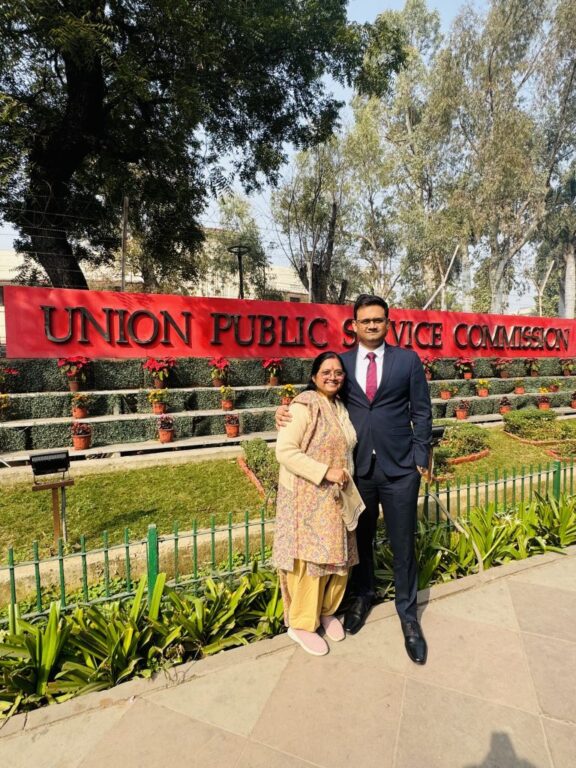
EARLY ATTEMPTS AND ENTRY INTO CIVIL SERVICES
Like many aspirants, Shubham’s journey did not start with immediate success.
His first UPSC attempt in 2017 ended before the final stage as he could not clear the Mains examination.
In 2018, his second attempt, he achieved a major milestone by securing a position in the Indian Corporate Law Service (ICLS).
He joined the service in 2019 and began working under the Ministry of Corporate Affairs. Over time, he was promoted and currently serves as Deputy Director.
However, the dream of becoming an IAS officer remained somewhere in his mind.
BALANCING JOB RESPONSIBILITIES AND PREPARATION
After joining the government service, managing work and UPSC preparation became increasingly difficult.
In 2020, he was allocated the Indian Postal Service, but he chose not to join it. At the same time, the pressure of balancing professional duties and preparation began affecting his confidence.
“If office work came, I couldn’t ignore it. I always felt that if I am doing a job, I must do justice to it. Because of that, I couldn’t prepare properly for the exam,” he explains.
The workload eventually forced him to pause his attempts for some time.
A TURNING POINT
In 2023, Shubham decided to attempt the exam again. With personal milestones approaching, he felt it might be his last opportunity to try.
He appeared for the examination but could not make it to the final list.
Around the same time, he got married. His wife is a gynaecologist, and during the early phase of their marriage they lived in different cities—he was posted in Delhi, while she was completing her postgraduate medical training in Hisar.
The long distance meant frequent travel and limited time for preparation.
Still, the idea of attempting UPSC one last time remained.
“My wife always felt that if I still had the desire to become an IAS officer, I should try again. She never made me feel that my existing service was ‘not enough’,” Shubham says.
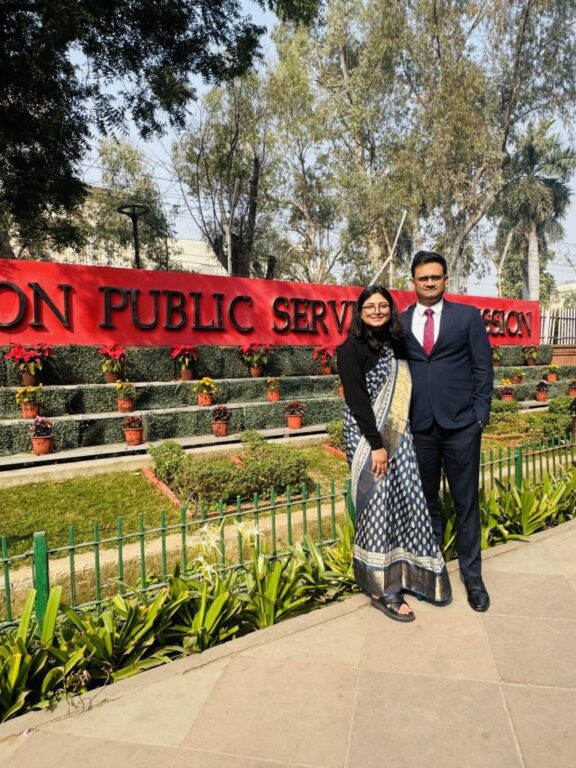
THE FINAL ATTEMPT
By 2025, Shubham had reached the last year of his eligibility.
Determined to give the exam one final attempt, he applied for extended leave from his office. Eventually, he received five to six months of leave, which allowed him to focus on preparation.
Interestingly, the leave also coincided with a difficult time for his family, as his wife was facing health issues. He spent this period supporting her while also studying.
Rather than following an overly ambitious strategy, Shubham focused on improving his weak areas.
He joined a few selective courses, such as current affairs coaching, a test series for answer writing, and a dedicated ethics course to improve his performance in the General Studies papers.
Even then, he admits he could not follow his study plan perfectly.
But the effort proved enough.
THE RESULT DAY MOMENT
The UPSC result day turned out to be unexpectedly emotional.
Shubham was at home during the Holi holidays when the results were announced around 2:30 PM. As the result PDFs started circulating online, he found himself unable to check his name.
Years of unsuccessful attempts had made the moment difficult.
“I was opening the PDF but didn’t have the courage to search my name because so many times earlier the final list had not included it,” he says.
At that moment, he walked to the temple and placed his phone before the deity.
A priest nearby checked the result for him.
“The priest searched my name and said, ‘You’re at 21.’ I just started crying. There wasn’t much left to celebrate inside me at that moment,” Shubham recalls.
Instead of excitement, the result brought a strong sense of responsibility.
“It feels less like a celebration and more like a responsibility. This is an important role, and now I have to do justice to it,” he says.
ADVICE FOR UPSC ASPIRANTS
Having experienced both success and repeated setbacks, Shubham offers practical advice for aspirants, especially those who have already spent several years in preparation.
He believes that many candidates continue attempting the exam without understanding the real reasons behind their low scores.
“First analyse your marks carefully. Understand why you are not clearing the exam. Without that clarity, continuing the journey blindly may not lead to improvement,” he advises.
At the same time, he emphasises that public service should not be seen only through the lens of one exam.
“Even outside IAS, there are many ways to contribute to the country. Whether you are in government, the private sector, or any profession, if you work sincerely, you can make a meaningful impact,” Subham Singh concluded.