In the quiet hills of Oinam Hill Village in Manipur, dreams rarely travel beyond familiar landscapes. Limited resources, lack of guidance, and geographical isolation often place invisible boundaries around ambition. But sometimes, one story breaks through those boundaries.
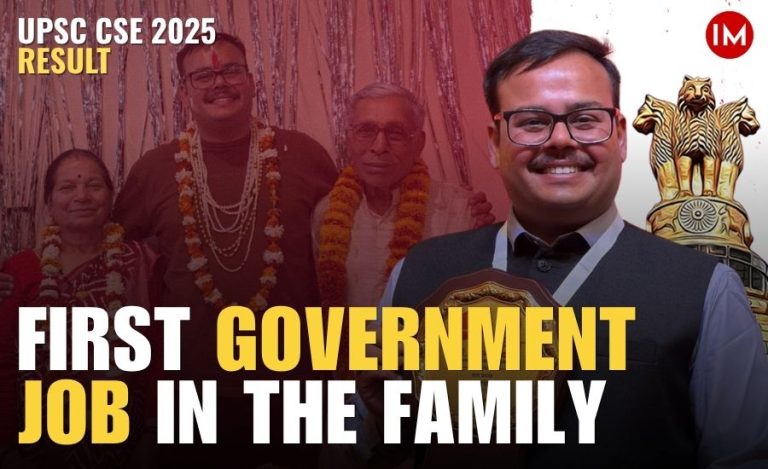
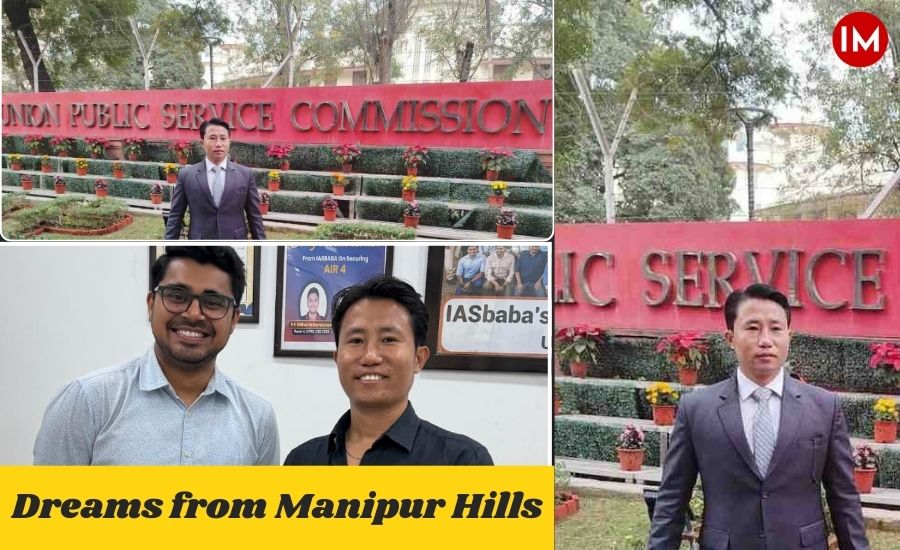
Dr. Th. Vapani John Tao, a medical graduate from Jawaharlal Nehru Institute of Medical Sciences (JNIMS), Imphal, has secured All India Rank 800 in the UPSC Civil Services Examination 2025, starting a remarkable journey from a remote hill village to one of India’s most prestigious examinations.
A first-generation learner from his community, John’s success is more than an individual achievement-it represents the aspirations of an entire region.
This year, six candidates from Manipur cleared the Civil Services Examination, the highest number from any northeastern state. Congratulating the achievers, Khemchand Yumnam, the Chief Minister of Manipur, called it a proud moment for the State and a sign of growing academic excellence in the region.
Yet behind the celebratory headlines lies a deeply personal story of struggle, grief, persistence, and hope.
A first-generation dreamer
“If I never tried UPSC, I knew I would regret it for the rest of my life.”
Growing up in Senapati District, John belonged to a generation that had very little exposure to national-level career opportunities. Education itself was a milestone.
He became the first person in his generation to pursue higher education, navigating a path where guidance was scarce and opportunities even scarcer.
Like many students in his region, the career choices he knew about were limited to engineering or medicine.He chose medicine.
After years of rigorous study, he completed his MBBS from JNIMS-Imphal in 2019.
But medical college opened a new world before him-a world where he began to observe how public systems shape everyday life.
Healthcare delivery, infrastructure gaps, and governance challenges slowly sparked curiosity far beyond the hospital walls. There, for the first time, he encountered the idea of Civil Services. Even more striking was the realization that no one from his family or nearby community had ever cleared UPSC.
For John, it became a challenge worth accepting.
The beginning of the UPSC journey
“The absence of guidance does not mean the absence of potential.”
John began his preparation in 2020. The path ahead was uncertain. Unlike many aspirants in metropolitan cities, he started his preparation from his hometown, without structured coaching or mentorship.
The COVID-19 pandemic disrupted plans to shift to Delhi, the hub of UPSC preparation.
And so he continued alone. The first two years became a phase of learning through mistakes. Without guidance, it took time to understand the exam pattern, the vast syllabus, and the right strategy.
But every mistake became a lesson.
A personal loss that changed everything
“Behind every success story is a moment when giving up would have been easier.”
In 2021, tragedy struck. John lost his father. The loss shook him deeply.
Preparing for UPSC already demands emotional resilience; grief made the journey even more difficult. But in those difficult moments, he found strength in the people around him.
His mother, sister, and a circle of supportive friends became pillars of encouragement. Their faith helped him stay emotionally grounded.
Instead of giving up, John turned his grief into determination. He realized that his success could become a tribute to his father and a source of inspiration for his community.
Delhi: Where direction met determination
“Sometimes all determination needs is the right direction to transform effort into achievement.”
In 2023, John finally moved to Delhi. The change proved transformative.
While he had always possessed determination and discipline, Delhi offered something he had long been missing structured guidance and mentorship.
He reflects that earlier his preparation had energy but lacked direction.
Delhi’s ecosystem of peers, and academic resources helped him optimize his strategy.
That small shift in preparation made a big difference.
Choosing the optional: Staying true to his roots
“True preparation begins when knowledge meets purpose.”
When it came to selecting an optional subject, John stayed connected to his academic training. He chose Medical Science, leveraging his MBBS background.
The subject allowed him to integrate his medical knowledge with broader questions of public health, governance, and social welfare.
The philosophy of UPSC success
“UPSC is not just about knowledge. It is about clarity of thought.”
For John, the Civil Services Examination tests far more than academic ability.
He believes the exam ultimately evaluates maturity of thought. This maturity is not about age or experience alone.Instead, it reflects how an individual interprets situations, analyses issues, and arrives at balanced conclusions.
According to him, every aspirant must ask themselves one fundamental question: Why do I want to join the civil services?
Because when preparation becomes exhausting, purpose becomes the strongest source of motivation.
Discipline beyond books
“A disciplined body sustains the long battles fought by the mind.”
UPSC preparation can easily consume every waking hour.
Yet John believes maintaining physical and mental health is equally important. Before beginning this intense journey, he enjoyed football, dancing, and singing. During preparation, time for hobbies became limited.
But one routine remained non-negotiable. Every morning, he went for a 45-minute walk and physical exercise.
This simple habit helped him stay physically active, maintain immunity, and keep his mind refreshed.
With that balance, he could sustain 12-13 hours of daily study without burnout.
A message for students
“In the UPSC journey, the most important question is not how much you study, but why you started.”
John’s advice for UPSC aspirants is both practical and philosophical.
Hard work, dedication, and knowledge are essential- but they are not enough on their own. The exam requires a mature thought process, analytical ability, and clarity of purpose. Students must develop the ability to evaluate situations critically and reach a balanced conclusion.
Above all, they must believe in their own potential-even when the path seems uncertain.
A symbol of hope for the Northeast
“One success from a remote village can ignite a thousand new dreams in the hills.”
For the youth of Manipur and the broader Northeast, John’s journey represents something larger than a rank.
It signals possibility, that a student from a remote hill village, with limited guidance and resources, can still reach the national stage.
His success sends a powerful message: Dreams are not limited by geography.