It was a scene of mounting panic at Hyderabad’s Rajiv Gandhi International Airport. Departure boards flashed Cancelled in angry red. Families with children, elderly passengers, and professionals on urgent schedules stood stranded, clutching mobile phones and unanswered questions. With IndiGo cancelling dozens of flights over multiple days in early December 2025, air travel from Hyderabad came to a near standstill. But as chaos brewed in the skies, a quieter, faster response was taking shape on the ground—on steel rails stretching across the country.
THE INDIGO FIASCO THAT TRIGGERED A RAILWAY RESPONSE
The crisis began on December 3, 2025, when over 31 IndiGo flights—18 arrivals and 13 departures—were cancelled at RGIA. Over the next few days, the situation worsened. Nearly 69 flights were cancelled on one day, followed by a staggering 112 cancellations on December 8 alone. With limited information and few alternatives, hundreds of passengers were left stranded, many facing personal emergencies and missed commitments.
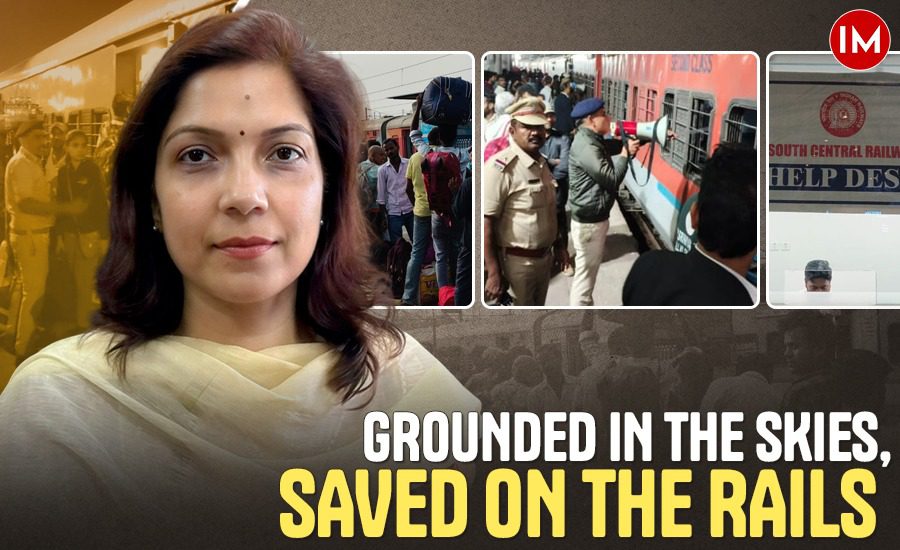
Recognising the gravity of the situation, South Central Railway’s Secunderabad Division moved swiftly. Within hours of receiving reports of large-scale cancellations, the division—under the leadership of Senior Divisional Commercial Manager Ms. Shifali Kumar—took a decisive call: the Railways would step in where aviation had faltered.
A HELP DESK AMID THE CHAOS
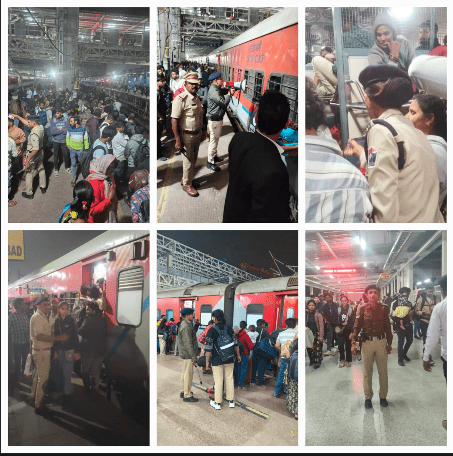
In coordination with SCR Zonal Headquarters, Secunderabad Division decided to operate special trains to major destinations that are normally well connected by air. Simultaneously, permission was sought from RGIA authorities to set up a Railway Help Desk inside the airport itself—an unusual but crucial intervention.
Despite logistical challenges, the Railway team mobilised within 4–5 hours. Flex banners were arranged, official correspondence expedited, and inter-departmental coordination kicked in. The Help Desk was finally set up right next to the IndiGo Help Desk—a symbolic and practical statement of support.
“I am an IRTS officer, and as Senior Divisional Commercial Manager, Secunderabad Division, my priority is always the passenger. In situations like this, railways must respond not just as a transporter, but as a public service institution,” said Ms. Shifali Kumar while talking to Indian Masterminds
14 SPECIAL TRAINS, 3,278 RELIEVED PASSENGERS
On December 6 and 7, 2025, Secunderabad Division operated 14 special train services to absorb the sudden passenger surge. In just two days, 3,278 stranded air passengers were safely transported to destinations including Chennai, Mumbai, Tirupati, Shalimar (Kolkata), New Delhi, Bengaluru, and Pune.
Railway officials guided passengers on schedules and connectivity, enabling seamless booking through the IRCTC portal. Rather than creating permanent infrastructure at the airport, the division focused on agile, need-based solutions.
“Setting up a permanent reservation counter at the airport may not be optimal during normal times. But timely guidance, clear information, and special trains during emergencies make all the difference,” Ms. Kumar explained.
A DIVISION ALREADY BATTLE-TESTED IN CROWD MANAGEMENT
What made the response even more effective was the division’s proven expertise in handling large passenger volumes. During the festive travel season from September 21 to October 28, 2025, Secunderabad Division handled a massive 136.9 lakh passengers—an average of 4.5 lakh daily.
Sixty special trains were operated, additional entry and exit gates were created, temporary stoppages provided at high-demand stations, and real-time crowd monitoring was implemented. Coordination with RTC and state traffic authorities ensured smooth passenger flow, while digital ticketing was aggressively promoted to reduce congestion.
RAILWAYS AS THE ULTIMATE SAFETY NET
The IndiGo disruption underscored a larger truth: when one system fails, resilient public institutions must rise to the occasion. Secunderabad Division’s swift, passenger-centric response transformed potential chaos into coordinated relief—quietly reinforcing the Railways’ role as India’s most dependable mobility backbone.
As stranded passengers finally boarded trains and journeys resumed, the message was clear. When the skies shut down, the railways didn’t just keep moving—they carried people home.