The forest officials at Bandhavgarh Tiger Reserve in Madhya Pradesh have been under intense pressure in recent days, following the tragic deaths of not one or two but 10 elephants! Allegations ranged from negligence to the incompetence of the authorities. However, it now seems that the forest officials can finally breathe a sigh of relief, as recent lab reports have ruled out foul play or poisoning as the cause of death. Instead, the findings point to the ingestion of fungus-infected kodo millet as the likely culprit.
The toxicology report from the ICAR Indian Veterinary Research Institute (IVRI) in Bareilly confirmed that the deaths were linked to fungal contamination. The shocking incident has raised serious concerns about the safety and well-being of elephants in the country. The investigation revealed the presence of cyclopiazonic acid, a toxic substance produced by certain types of fungi, in the organs of all 10 elephants.
To gain further insight into the incident, Indian Masterminds spoke with two key forest officials: Mr. L. Krishnamoorthy, a 1997 batch IFS officer and Additional Principal Chief Conservator of Forests (APCCF) for Wildlife in Madhya Pradesh, and Ritesh Sirothia, a 2017 batch IFS officer and the officer in charge of the State Tiger Strike Force.
Mr Sirothia explained, “There was immense pressure on us throughout this investigation. I’m not sure what theories were circulating, but it was clear that the situation was challenging for everyone involved, including the forensic lab. After extensive deliberation, we concluded that the deaths were caused by microtoxins. And ultimately, that’s what the reports confirmed.”
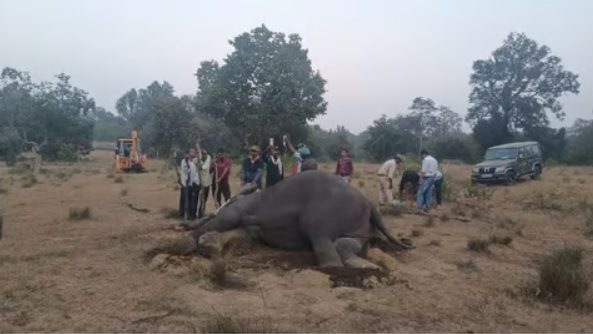
THE INCIDENTS
The recent mysterious deaths of 10 elephants at Madhya Pradesh’s Bandhavgarh Tiger Reserve have sent shockwaves across the country, leaving the authorities under intense pressure. In the wake of this tragic incident, two senior forest officials have been suspended for alleged negligence in their duties. Assistant Forest Conservator Fateh Singh Ninama and Field Director Gaurav Chaudhary, IFS, were both removed from their posts due to lapses in leadership and vigilance. These suspensions followed multiple allegations, including delayed responses to the crisis and a failure to provide adequate oversight regarding the welfare of the elephants in the reserve.
NOW THE REPORTS
On November 5th, the toxicological report on the viscera samples of the deceased elephants revealed no traces of nitrates, nitrites, heavy metals, or harmful pesticides, including organophosphates, organochlorines, pyrethroids, and carbamates. The findings, released by the IVRI, also confirmed the presence of cyclopiazonic acid (CPA), a mycotoxin. The report suggests that the elephants may have ingested a significant amount of spoiled Kodo plants or grains, which likely led to the poisoning.
The toxic substance was traced back to a fungus that had infected the Kodo millet, which the elephants had consumed. This particular type of fungus is not yet fully understood, and further research is required to learn more about its behavior and effects. To gain a clearer understanding, the forest department has sent samples to several other laboratories for additional analysis and to identify the fungus more precisely.
In response to the findings, IVRI has issued a precautionary advisory for the surrounding areas, urging local communities to be more vigilant. Key recommendations include preventing livestock from grazing on spoiled crops and conducting additional research on the potential risks associated with contaminated vegetation. The local management team is actively implementing these guidelines to minimize the risk of further incidents.
Mr Krishnamoorthy who was also the head of the state probe committee set up to investigate the deaths, said, “CPA found in fungal-infected kodo millets was detected in all samples of lever, kidney, spleen, heart, lung, stomach, and intestinal contents with concentration above 100ppb (parts per billion). The result indicates that elephants might have eaten large quantities of kodo.”
THE FUNGUS
The investigation is still ongoing to determine why the fungus spread in the first place. However, one possible factor could be the heavy rainfall in the area during the harvest season. The region experienced an unusually high amount of rain, which may have contributed to the conditions that allowed the fungus to thrive. Fungal growth is influenced by several factors, including a hot and humid climate. “To further understand the cause, a team from the forest department is working closely with the forensic experts to investigate this potential link,” Mr Sirothia added.
THE ROAD AHEAD
To prevent such incidents from recurring and to ensure that elephants do not consume fungus-infected food in the future, several steps are being taken. Ritesh Sirothia explained that addressing this issue is now a matter of inter-departmental policy, as it involves coordination between multiple agencies. Given that it is currently the harvest season, the forest department acted swiftly by mapping the affected areas. As per the lab reports, the kodo millet crops have already been harvested with oversight from local authorities. The fungus-infected crops will be destroyed, and the land will be plowed to ensure that no fungal spores or seeds remain in the soil.
The issue is not only affecting elephants but also other animals such as cows and buffaloes, which have become ill due to the fungus. Moving forward, a scientific committee will work on strategies to eliminate the fungus from the area and protect both wildlife and livestock from further harm.