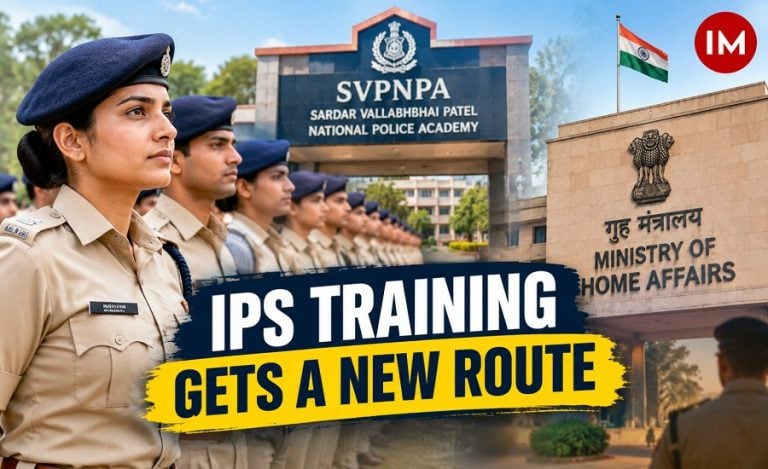
New Delhi: In a significant change to the training process for Indian Police Service (IPS) officers, the Union Ministry of Home Affairs (MHA) has introduced a new arrangement under which newly trained officers will be attached to the ministry before proceeding to their respective state cadres for further probationary training.
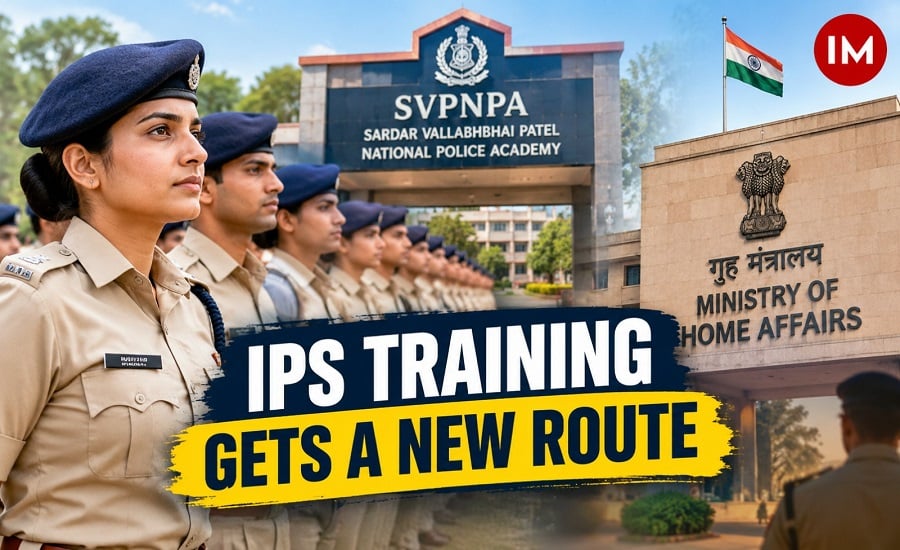
For the first time, officers from the 2025 batch, also known as the 78th Regular Recruit (78RR) batch, will gain exposure to the functioning of the Union Home Ministry immediately after completing the first phase of their training at the Sardar Vallabhbhai Patel National Police Academy (SVPNPA) in Hyderabad.
Previously, IPS probationers would generally proceed directly to their allotted cadres after completing their academy training. Under the new arrangement, the officers will first undergo an attachment with the MHA before moving to their respective states.
The development marks a new step in the professional training of IPS officers, offering them an opportunity to understand the functioning of the central ministry responsible for internal security and several aspects of police administration.
151 Officer Trainees in 78RR Batch, Including 16 Foreign Officers
The 78RR batch comprises 151 officer trainees, including 16 foreign officers from neighbouring countries.
All the trainees have recently completed Phase-I training at the Sardar Vallabhbhai Patel National Police Academy in Hyderabad, the country’s premier training institution for IPS officers.
Of the 151 trainees, 135 are Indian officer trainees, while the remaining 16 are foreign officers undergoing training at the academy.
According to officials cited in reports, a special programme was organised at Vigyan Bhavan in New Delhi on Thursday, October 29, to facilitate the attachment of the 2025 batch with the Ministry of Home Affairs.
The programme represents the formal introduction of the ministry attachment before the officers proceed to their respective cadres for the next stage of training.
The available information does not specify the duration of the attachment or the individual departments and divisions to which the trainees will be assigned.
What Has Changed in the IPS Training Process?
Under the earlier training arrangement, IPS probationers generally moved from the National Police Academy to their allotted state cadres after completing the prescribed academy phase.
They would then undergo further practical training under the supervision of the respective state police organisations, gaining experience in field policing, district administration, investigations and law-and-order management.
The new arrangement introduces an additional stage between academy training and state-level probation.
Officers of the 78RR batch will now be attached to the Union Ministry of Home Affairs before proceeding to their allotted cadres.
This attachment will provide the officers with exposure to the administrative functioning of the central ministry that oversees key internal security and policing matters.
The change is particularly notable because IPS officers spend much of their early careers in field assignments, where they are responsible for implementing laws, maintaining public order and coordinating with different government agencies.
An early understanding of central government processes could help officers appreciate the relationship between national internal security priorities and state-level policing responsibilities.
What Do the Existing IPS Training Guidelines Say?
The Ministry of Home Affairs issued directives concerning IPS training in 2023, outlining the arrangements for probationers after their training at the Sardar Vallabhbhai Patel National Police Academy.
Under these directives, an IPS probationer is required to undergo further training in the state to which the officer has been allotted.
The duration of such training is determined by the Central Government in consultation with the concerned State Government.
The guidelines establish the importance of state-level training as part of the professional preparation of IPS officers.
The newly introduced ministry attachment adds an exposure component before the officers proceed to their allotted cadres.
However, the available information does not establish whether the attachment represents a permanent amendment to the training framework for all future batches or a special arrangement introduced for the 78RR batch.
Why Is the Ministry of Home Affairs Attachment Significant?
The Union Ministry of Home Affairs plays a central role in India’s internal security administration. Its responsibilities include matters relating to internal security, coordination with states, central armed police forces, border management and other aspects of national security.
The ministry also serves as the cadre-controlling authority for the Indian Police Service.
For newly trained IPS officers, an attachment with the MHA offers an opportunity to become familiar with the administrative structure through which national-level policing and security matters are handled.
The experience could help them understand how central policies are formulated and how coordination takes place between the Union Government, state governments and different security organisations.
It could also provide useful context before the officers begin field-level responsibilities in their respective cadres.
While the detailed schedule of the attachment has not been disclosed, the initiative introduces a direct connection between newly trained IPS officers and the ministry responsible for their service administration.
Amit Shah’s Message to IPS Probationers: Zero Tolerance Towards Terrorism
The new arrangement follows the Dikshant Parade of the 78RR batch held on October 17 at the Sardar Vallabhbhai Patel National Police Academy.
During the ceremony, the Union Home Secretary conveyed a message from Union Home Minister Amit Shah to the graduating officers.
The message emphasised a zero-tolerance approach towards terrorism, time-bound action and improved intelligence coordination.
These priorities are central to the country’s internal security framework and reflect the responsibilities that IPS officers may encounter during their careers.
The emphasis on intelligence coordination is particularly relevant because effective policing often requires cooperation among state police forces, central agencies and other security organisations.
The Home Minister’s message also highlighted the importance of timely responses to security challenges.
The introduction of the MHA attachment comes against this backdrop, although the available reports do not explicitly establish that the training change was introduced as a direct consequence of the message delivered at the parade.
What Happens After the Ministry Attachment?
Following their attachment with the Ministry of Home Affairs, the Indian IPS probationers are expected to proceed to their allotted state cadres for the next phase of their professional training.
State-level probation provides practical exposure to police administration and operational responsibilities.
During this stage, officers gain familiarity with the functioning of district police establishments, law-and-order arrangements, criminal investigations and coordination with civil administration.
The training helps prepare probationers for their future responsibilities as officers of the Indian Police Service.
The new arrangement therefore places the ministry attachment between the academy phase and the state-level training component rather than replacing the existing requirement for practical training in the allotted cadre.
A First for the 78RR Batch
The decision to attach newly trained IPS officers to the Union Home Ministry before their state-cadre assignments represents a first for the 78RR batch.
With 151 trainees completing Phase-I training at SVPNPA, including 16 officers from neighbouring countries, the batch has already reached an important milestone in its professional training.
The new initiative adds another stage of institutional exposure for the Indian probationers before they begin their next phase of training in their respective cadres.
Its longer-term significance will depend on how the attachment is structured, the responsibilities assigned to the officers and whether the arrangement is extended to future IPS batches.
For now, the decision marks a notable departure from the earlier practice of sending newly trained IPS officers directly to their state cadres after academy training.