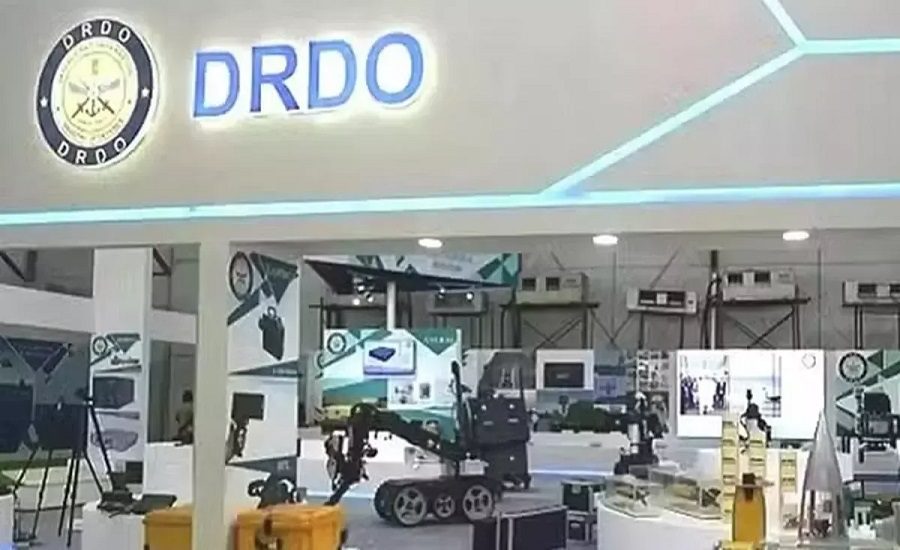
Bengaluru: Defence Research and Development Organisation (DRDO) has announced significant developments in the nation’s indigenous combat aircraft programmes, reaffirming committed timelines for the Advanced Medium Combat Aircraft (AMCA) and the Light Combat Aircraft (LCA) Tejas Mk-2.
Speaking at the TEJAS-25 national seminar organised by the Aeronautical Development Agency (ADA) in Bengaluru on January 4, 2026, DRDO Chairman Dr. Samir V. Kamat provided key timeline updates that signal accelerated progress in India’s aerospace capabilities.
AMCA Project Timeline: Tejas Mk-2 First Flight by June 2026
Dr. Kamat confirmed that the Tejas Mk-2, the upgraded multi-role variant of India’s indigenous light combat aircraft family, is set to make its first flight by June 2026.
As a 4.5-generation fighter, the Tejas Mk-2 incorporates a suite of technological enhancements over its predecessor — including advanced avionics, enhanced weapons integration, greater range and payload capacity, and improved electronic warfare systems — reflecting a substantial evolution from the LCA Mark-1.
Prototypes are currently in production, and DRDO officials emphasised that this development aligns with the Indian Air Force’s (IAF) operational commitments under norms set by the Cabinet Committee on Security (CCS).
AMCA Project Timeline Sets for Late 2028, Maiden Flight in 2029
Highlighting India’s push towards advanced military aviation, Dr. Kamat also revealed that the Advanced Medium Combat Aircraft (AMCA) — India’s homegrown fifth-generation stealth fighter — is slated for rollout by the end of 2028, with its first flight planned for early 2029.
The AMCA programme, long viewed as the cornerstone of India’s future air combat strategy, is being built around cutting-edge capabilities including:
- Stealth design and low observability
- Supercruise performance
- Advanced sensor fusion and AI-driven avionics
- Internal weapons bays
- Network-centric warfare integration
These technologies aim to elevate the IAF’s strategic edge while reducing dependence on foreign aerospace technology.
Legacy & Future: TEJAS-25 National Seminar
The announcement was part of the TEJAS-25 seminar, commemorating 25 years of the Tejas programme — India’s milestone journey from concept to frontline induction.
The event was attended by top defence scientists, industry leaders, and senior military officials, including Air Chief Marshal Amar Preet Singh, who lauded the progress of both Tejas Mk-2 and AMCA programmes.
Sessions at the seminar expanded beyond timelines, focusing on:
- Technology transfer and private sector partnerships
- Plans for serial production and future variants
- Use of digital twins, propulsion systems, materials science and UAV integration
This collaborative platform emphasised India’s growing aerospace ecosystem and the government’s priority on achieving technological self-reliance (Atmanirbharta) by 2047 — India’s vision for defence dominance.
Strategic Implications for India’s Defence Preparedness
The accelerated timelines for both Tejas Mk-2 and AMCA programmes have far-reaching implications:
1. Strengthening Indigenous Defence Capabilities
These developments showcase India’s expanding capacity to design, develop, and produce advanced combat aircraft indigenously, decreasing reliance on foreign imports and strengthening national defence sovereignty.
2. Enhancing IAF’s Combat Readiness
With older platforms like SEPECAT Jaguars, Mirage 2000s and MiG variants nearing retirement, the induction of Tejas Mk-2 and future AMCA models will fill critical capability gaps in the IAF’s fighter fleet.
3. Boost to Defence Sector Innovation
The programmes also galvanise India’s aerospace supply chain — involving HAL, ADA, and private partners — fostering technology transfer, advanced manufacturing, and skilled workforce growth.
Looking Ahead: India’s Vision for 2047
India’s pursuit of advanced combat aviation aligns with its broader strategic objective: becoming a global defence and aerospace powerhouse by 2047.
The firm timelines set for Tejas Mk-2 and AMCA underline the DRDO’s commitment to meeting national security goals and empowering the Indian Air Force with state-of-the-art combat platforms.
As these programmes transition from development to deployment phases, defence analysts view them as foundational to South Asia’s evolving air power dynamics, particularly amid regional security challenges.