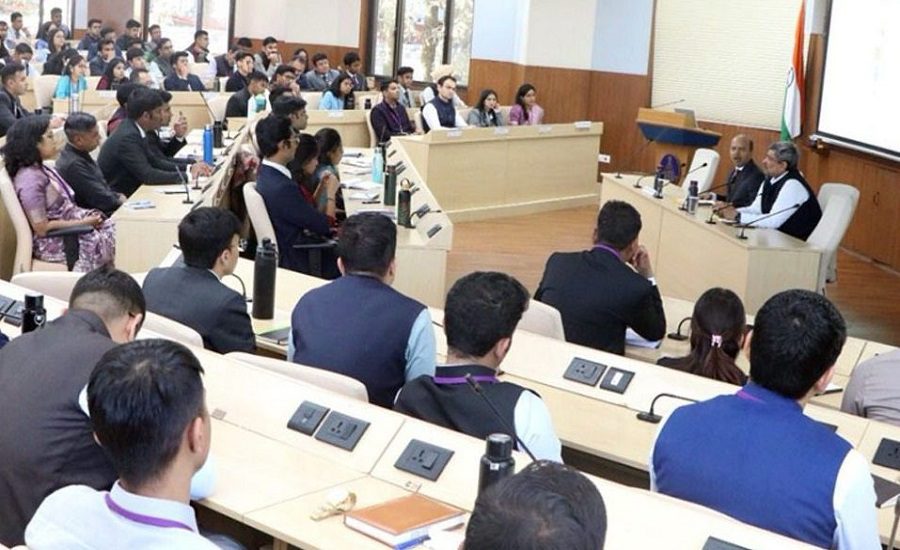
New Delhi: Ashish Kumar Bhutani, an IAS officer of the 1992 Assam-Meghalaya cadre and Secretary in the Ministry of Cooperation, addressed officer trainees at the Lal Bahadur Shastri National Academy of Administration (LBSNAA) in Mussoorie, highlighting the increasing importance of the cooperative sector in promoting grassroots development and strengthening governance across India.
The interaction took place on March 5, 2026, as part of the Phase-I Professional Course for IAS officer trainees of the 2025 batch. RBCS officer trainees also attended the session, which focused on how cooperative institutions can play a vital role in inclusive economic growth and rural empowerment.
Session at LBSNAA with IAS and RBCS Trainees
The session was organised at LBSNAA, Mussoorie, one of the premier training institutions for India’s civil servants.
IAS officer trainees of the 2025 batch and RBCS officer trainees participated in the interaction as part of their training curriculum under the Phase-I IAS Professional Course.
Siddharth Jain, Joint Secretary in the Ministry of Cooperation, was also present during the session.
The discussion aimed to familiarize future administrators with the role and potential of the cooperative sector in governance and development programmes.
Read also: Rajasthan ACB Intensifies Search for Retired IAS Officer in Rs 9 Billion Jal Jeevan Scheme Scam
Theme: Leveraging the Cooperative Sector in the Field
During his address, Bhutani spoke on the theme “Leveraging the Cooperative Sector in the Field.”
He explained how cooperative institutions can act as powerful instruments for:
• Inclusive economic growth
• Rural development and empowerment
• Strengthening community participation
• Improving service delivery at the grassroots level
Bhutani encouraged the trainees to explore innovative ways to utilize cooperative structures in their future administrative roles.
Government Initiatives to Strengthen Cooperatives
The Cooperation Secretary highlighted several initiatives being undertaken by the Ministry of Cooperation to strengthen the cooperative ecosystem across the country.
One of the initiatives discussed was the Bharat Taxi initiative, which aims to generate new livelihood opportunities through cooperative-based transport services.
The initiative is designed to help individuals and communities benefit from collective ownership models while creating sustainable employment opportunities.
Role of Dairy Cooperatives in Rural Economy
Bhutani also emphasized the importance of dairy cooperatives, which have long played a crucial role in supporting farmers and strengthening rural economies.
He noted that such cooperatives provide farmers with better market access, stable incomes, and institutional support, contributing significantly to rural prosperity.
The success of dairy cooperative models, he said, demonstrates how cooperative institutions can empower communities and improve livelihoods.
Vision of “Sahakar Se Samriddhi”
The initiatives discussed during the session are aligned with the government’s broader vision of “Sahakar Se Samriddhi”, which translates to prosperity through cooperation.
This vision focuses on expanding the cooperative movement and integrating it into various sectors such as agriculture, transport, and rural enterprises.
Officials believe that strengthening cooperative institutions can lead to more inclusive and sustainable development across the country.
Preparing Future Administrators
Officials noted that such interactions with young civil service trainees are aimed at preparing future administrators to effectively leverage the cooperative framework in their work.
By understanding the structure, functioning, and potential of cooperative institutions, officers can better implement development programmes at the state, district, and grassroots levels.
The session provided trainees with insights into policy reforms, institutional frameworks, and new initiatives aimed at modernizing and expanding the cooperative sector in India.