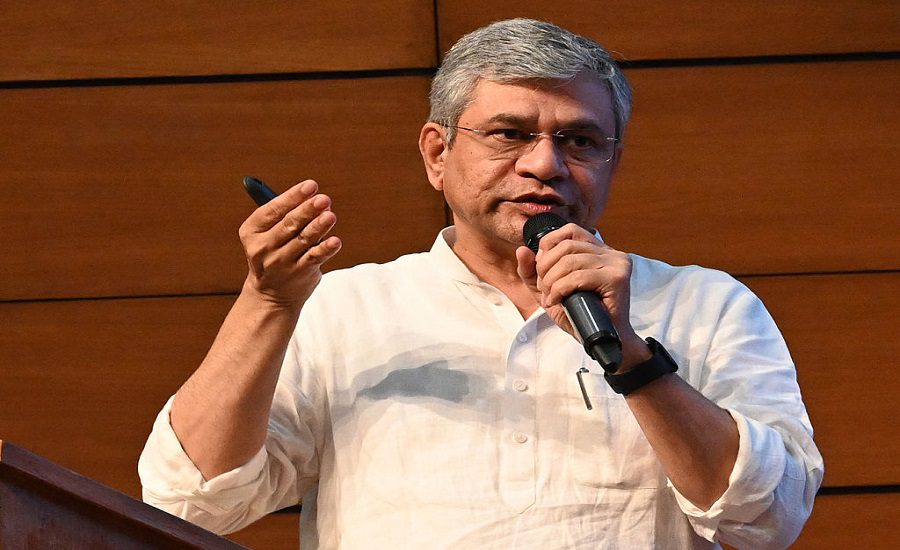
New Delhi: In a historic move to eliminate colonial-era practices from Indian institutions, Union Railway Minister Ashwini Vaishnaw announced on Friday that the British-introduced black prince coats (bandhgala coats) will no longer be part of the formal dress code in Indian Railways.
This marks the first step in a broader government initiative aimed at identifying and removing colonial relics from official uniforms, ceremonial attire, and certain traditional practices across various sectors.
Colonial-Era Railway Uniforms Banned
Speaking at an event to honour railway officials and the best-performing zones, Vaishnaw stated, “We have to get rid of all colonial mindset. We need to find each of them and remove them whether it’s in our working style or dressing style. Today (Friday) I am making the first announcement. Humare jo bandgale ka kala suit angrezon chalu kiya tha, aaj se yeh railway mein formal dress nahi rahegi.“
(Translation: From today onwards, the black prince coats that the British introduced will no longer be a part of formal dress in railways).
Officials confirmed that this announcement is part of a larger exercise mandated by Prime Minister Narendra Modi, instructing ministers and senior bureaucrats to review all government uniforms, ceremonial attire, and other vestiges of colonial legacy, and suggest culturally appropriate Indian alternatives.
Broader Exercise to Remove Colonial Practices Across Sectors
Sources indicate that the government is reviewing a wide range of colonial hangovers, including:
University convocation gowns and mortarboards, which continue to be used despite protests from students and faculty and are often impractical for India’s hot and humid climate.
Bandhgala suits and other formal attire that officials are required to wear during receptions, formal meetings, and official events.
State-specific dress codes for personnel attached to district collectors, mayors, and municipal officers.
The initiative aims to replace such attire with clothing that reflects Indian cultural heritage, climate suitability, and modern sensibilities.
Possible Changes in Other Professions
Officials have also indicated that colonial-era attire in the legal profession may come under review. Under the Advocates Act, 1961, lawyers are required to wear black robes with white neckbands, a practice inherited from the British judicial system. While the attire symbolizes authority, dignity, and commitment to justice, government sources suggest that alternatives reflecting Indian identity may be considered in the long term.
Significance and Public Reception
The move has been hailed as a symbolic step towards decolonising Indian institutions and promoting indigenous culture and practices. By modernising uniforms and formal attire, the government aims to:
- Remove remnants of colonial authority symbols in official spaces.
- Make official attire more comfortable and practical for India’s climate.
- Encourage a reform-oriented mindset across public institutions.
Officials stressed that this is just the beginning, and more colonial relics may be identified during consultations with ministries, departments, and educational institutions.
Maintaining Professionalism and Dignity
Railway Minister Ashwini Vaishnaw’s announcement marks the first visible step in India’s larger decolonisation drive in government institutions. The removal of the British-era black prince coats from railways uniforms is symbolic, highlighting a shift towards modern, Indian-origin practices while maintaining professionalism and dignity.
As the government continues to review attire across sectors, Indians can expect more culturally-aligned reforms in bureaucratic and ceremonial dress codes in the coming months.