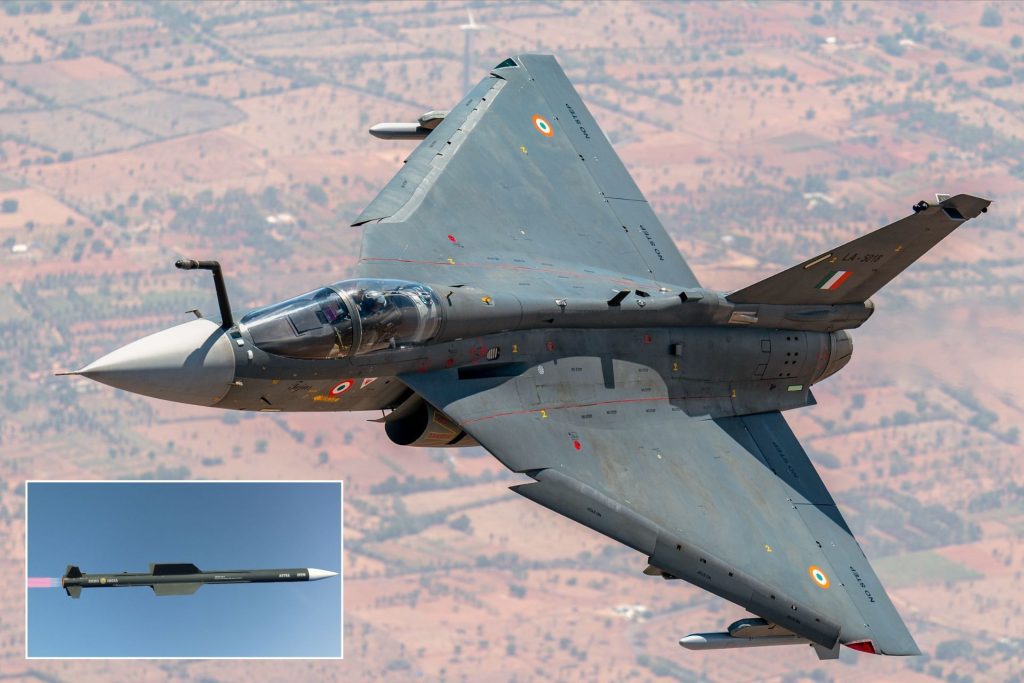
India is set to significantly enhance the combat strength of its Rafale fighter jets by integrating indigenous Astra MK1 and Astra MK2 Beyond Visual Range Air-to-Air Missiles (BVRAM). Already deployed on Sukhoi-30MKI and LCA Tejas aircraft, the Astra missile system is now poised to become a key weapon in India’s Rafale fleet as well.
Indigenous Firepower Meets French Fighter Jets
The move marks a major step in India’s push for self-reliance in defence technology, aligning advanced foreign platforms with homegrown weapon systems. According to defence sources, testing of Astra missiles on Rafale aircraft is expected to begin within the next two years, with full integration likely by 2028.
Rafale Deal and IAF’s Squadron Shortfall
The development comes amid ongoing deliberations within the Ministry of Defence over the proposed purchase of 114 additional Rafale fighter jets from France to address the Indian Air Force’s fighter squadron shortage. The deal is widely expected to gain momentum during French President Emmanuel Macron’s visit to India next month.
Astra MK1 Already Battle-Ready
Astra MK1, currently operational on Su-30MKI and Tejas, has a strike range of over 100 kilometres and is designed to engage fast-moving aerial targets beyond visual range. Its successful induction has already boosted the IAF’s aerial combat flexibility.
Astra MK2: A Game-Changer in the Making
The upcoming Astra MK2 will further enhance India’s air combat edge by extending the missile’s range to 160 kilometres. Defence experts say it will place Astra MK2 in the same league as advanced Western missiles such as Europe’s Meteor.
Both Rafale and Su-30MKI aircraft are expected to be upgraded to deploy the MK2 variant, significantly increasing India’s stand-off strike capability in aerial warfare.
Dassault–Thales Support Key to Integration
Defence sources indicate that Dassault Aviation and Thales have agreed to provide critical technical support for the integration programme. This includes specialised software upgrades enabling seamless coordination between Astra missiles and Rafale’s RBE2 AESA radar and combat management system.
The integration process will pass through multiple validation and testing phases before being cleared for operational deployment.
Strategic Message for China and Pakistan
The planned upgrade is being closely watched in China and Pakistan, as it strengthens India’s air superiority along both fronts. With Rafale jets armed with long-range indigenous missiles comparable to Western systems, India’s deterrence capability is set to rise sharply.
By combining a cutting-edge fighter platform with indigenous missile technology, India is not only enhancing its military preparedness but also sending a clear strategic signal across the region.