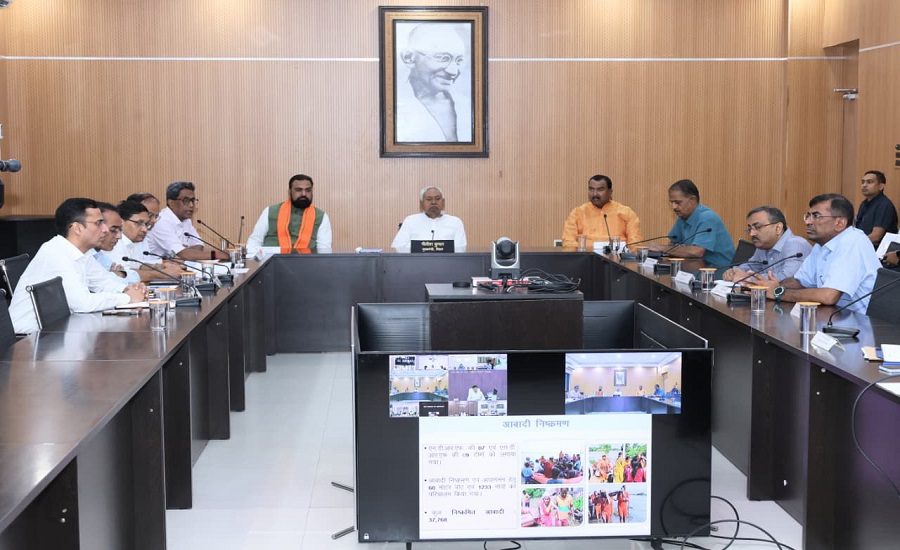
Patna: In a major push to accelerate industrial growth, Chief Minister Nitish Kumar announced plans to position Bihar as a major industrial and technological hub in Eastern India. Speaking at a review meeting on Saturday, the CM outlined an ambitious strategy aimed at attracting ₹50 lakh crore in investments over the next five years, setting the stage for Bihar’s rapid industrialization and economic transformation.
A Bold Vision for Industrial Growth
Bihar is set to take a giant leap in its industrial journey, with CM Kumar highlighting the state’s goal to be counted among India’s top five most investment-friendly states. To achieve this, the Bihar government plans to host investor conferences in leading commercial centers across India and abroad. With a focus on business-friendly policies, infrastructural development, and creating the right ecosystem, the state is poised for a new era of industrial progress.
Key Developments on the Horizon
The state government’s plans include establishing five new mega food parks, ten industrial parks, and 100 micro, small, and medium enterprise (MSME) parks. These initiatives are part of Bihar’s comprehensive strategy to create jobs, foster entrepreneurship, and support MSMEs across the state.
A key element of the state’s industrial growth plan is the development of industry-relevant skills and entrepreneurship. The state government is also planning the establishment of a dedicated MSME Directorate and MSME centers in every district to streamline support for small businesses. In addition, local industries will receive access to improved export facilities and market linkages.
Focus on High-Tech and Emerging Sectors
Bihar’s industrial strategy is not limited to traditional industries. CM Kumar emphasized the state’s plans to make significant strides in high-tech sectors, including Defense, Semiconductor Manufacturing, and FinTech. To make this vision a reality, a high-level committee has been set up to promote initiatives such as the Defense Corridor, Global Capability Centers, Mega Tech Cities, and FinTech Cities. These efforts are designed to position Bihar as a key player in emerging global industries.
Additionally, the state is aiming to become a prominent Global Back-End Hub and Global Workplace, providing a wide range of employment opportunities for youth and entrepreneurs, particularly in new-age, job-oriented sectors like startups and tech-based industries.
Tracking Industrial Growth: Key Achievements
Reflecting on the state’s industrial achievements, CM Kumar pointed to significant milestones over the last two decades. Since 2005, the number of industrial zones in Bihar has increased from 46 to 94, and the number of industrial units has grown from 1,674 to 3,500. Exports from Bihar, which were just ₹25 crore in 2005, have surged to ₹17,000 crore by 2025, demonstrating the increasing industrial output.
The state’s MSME sector has also experienced tremendous growth. The number of MSMEs has increased from 72,000 in 2005 to over 35 lakh today, contributing more than 21% to Bihar’s Gross State Domestic Product (GSDP). The Chief Minister Entrepreneur Scheme has supported over 44,000 new entrepreneurs, enabling them to start their own businesses and industries.
Building Infrastructure: Integrated Manufacturing Clusters
In terms of infrastructure development, Bihar is focusing on the creation of Integrated Manufacturing Clusters (IMCs) to further strengthen its industrial base. The IMCs will span 14,036 acres across 29 districts and are designed to provide modern facilities for large-scale manufacturing. The state is also accelerating the development of a 1,700-acre IMC in Dobhi, Gaya, which will be a key driver for industrial growth.
Future Pathways: Scaling Up Bihar’s Industrial Sector
CM Kumar emphasized that large-scale industrialization is essential for the state’s economic growth and job creation. With the development of new industrial parks, manufacturing clusters, and a focus on skills training, Bihar is poised to become a major player in India’s industrial landscape.
The meeting was attended by key state officials, including Deputy Chief Minister Samrat Chaudhary, Water Resources Minister Vijay Kumar Chaudhary, Industry Minister Dr. Dilip Kumar Jaiswal, Chief Secretary Pratyay Amrit, Development Commissioner Mihir Kumar Singh, and senior officials from the Industry Department. These efforts, according to the CM, will play a vital role in ensuring Bihar’s industrial and economic future.
Read also: Bihar Achieves 80% Completion of Rural Roads and Bridges Under NABARD-Supported Infrastructure Push