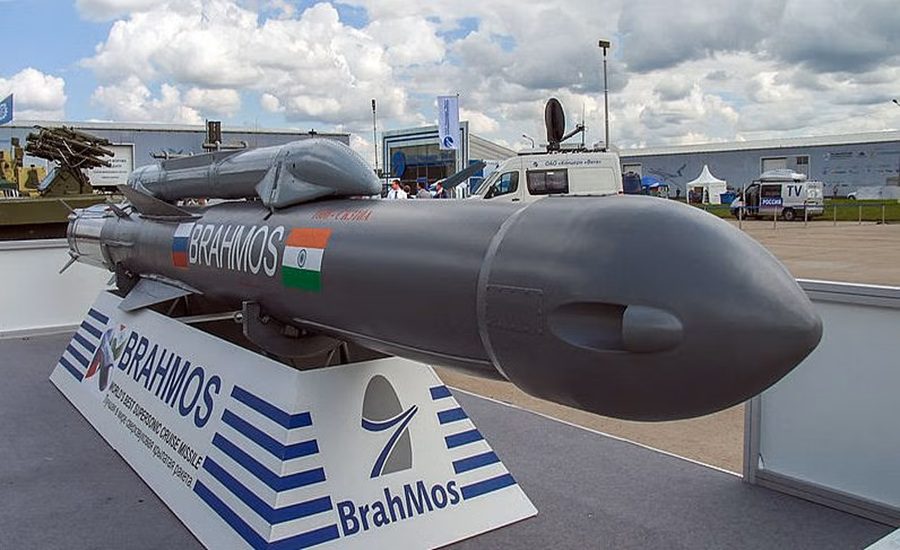
New Delhi: India’s pursuit of next-generation hypersonic capabilities has reached a critical juncture with the upcoming BrahMos-II missile—an advanced supersonic cruise missile engineered to achieve Mach 8 speed.
According to reports, the first flight test of BrahMos-II is slated for 2027 or 2028, marking a decisive step in India’s long-term strategy to strengthen its hypersonic warfare portfolio. The test aims to validate propulsion, guidance, materials, and structural stability under extreme conditions—pushing Indian missile technology into a new era of strategic competitiveness.
Background of BrahMos-II Hypersonic Cruise Missile
India has steadily evolved from conventional missile platforms to cutting-edge supersonic and hypersonic systems. The BrahMos project, a joint venture between India’s DRDO and Russia’s NPO Mashinostroyenia, has already delivered the world’s fastest supersonic cruise missile currently in service.
Read also: From Lab to Battlefield: India Fast-Tracks 800 km BrahMos Missile for 2027 Deployment!
BrahMos-II, often referred to as BrahMos-IIK in early developmental documents, represents the next leap—integrating scramjet propulsion to reach sustained hypersonic velocities. The planned Mach 8 capability positions India among a select group of nations competing in the rapidly expanding hypersonic weapon domain.
Scramjet Propulsion: The Core of BrahMos-II Hypersonic Cruise Missile Hypersonic Ambition
At the center of BrahMos-II’s performance lies the scramjet (Supersonic Combustion Ramjet) engine, a complex propulsion technology designed to combust fuel at supersonic speeds.
Significance of BrahMos-II Hypersonic Cruise Missile
- Enables continuous combustion at extremely high velocities
- Allows missile to maintain sustained flight at Mach 8
- Offers extended range and quicker time-to-target
- Increases survivability by reducing interception probability
- Validating the scramjet engine during the initial flight trial is a primary objective, as reliable combustion at cruise conditions is essential for long-duration hypersonic flight.
Guidance, Navigation, and Control: Precision at Extreme Speed
Achieving Mach 8 is only one part of the challenge. Maintaining precise control and trajectory accuracy at such speeds presents unique engineering difficulties.
The test will evaluate:
- Advanced guidance systems
- Navigation sensors capable of functioning under extreme heat
- Aerodynamic stability and flight control algorithms
- Targeting accuracy despite intense atmospheric friction
At hypersonic velocities, even minor deviations can escalate rapidly; thus, the upcoming trials will play a crucial role in verifying system reliability.
Material and Structural Integrity: Withstanding Hypersonic Heat
Hypersonic flight subjects missile components to immense thermal stress. Temperatures can exceed thousands of degrees Celsius due to friction with the atmosphere.
The BrahMos-II test will examine:
- Heat-resistant materials
- Structural robustness under dynamic pressure
- High-temperature tolerance without losing functionality
- Component durability across the entire flight envelope
Successful validation will confirm that the missile’s airframe and materials can endure harsh operational environments without structural failure.
Phased Development Approach for Gradual Maturity
The BrahMos-II program follows a step-by-step developmental strategy, where each phase builds upon previous successes.
Key phases include:
- Propulsion validation – scramjet ignition and cruise capability
- Guidance and control assessment
- Structural and material endurance testing
- High-speed systems integration
- Operational readiness and platform compatibility
This methodical evolution ensures reduced risks and guarantees readiness before deployment.
Operational Deployment: Strengthening India’s Hypersonic Strike Arsenal
Once evaluation trials conclude, BrahMos-II is expected to become a transformative asset for India’s strategic forces.
The missile’s Mach 8 speed will dramatically enhance:
- First-strike capability
- Penetration against advanced air defenses
- Precision long-range strike potential
- Deterrence posture in the Indo-Pacific region
Integration with platforms such as naval destroyers, submarines, and mobile ground launchers may follow after extensive qualification.
Significance of the 2027–2028 BrahMos-II Hypersonic Cruise Missile Test
The upcoming flight trial is a pivotal step with substantial technological implications:
- Confirms sustained Mach 8 flight feasibility
- Validates scramjet engine efficiency
- Demonstrates resilience of hypersonic-grade materials
- Advances India’s position in the global hypersonic race
- Defines readiness for future deployment and mass production
A successful test would signal India’s emergence as a formidable player in global hypersonic missile technology—a domain currently dominated by the U.S., Russia, and China.