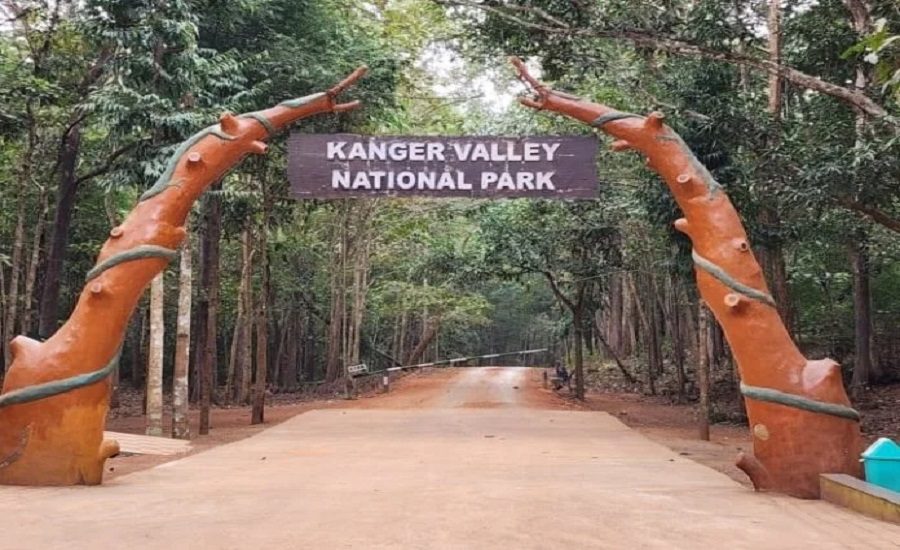
Raipur – The Chhattisgarh government has opened the Green Cave, a rare natural formation located inside Kanger Valley National Park in Bastar district, to tourists. The move marks a significant step toward promoting ecotourism in the region, which was once affected by Maoist activity and is now witnessing improved security and development.
Officials believe the initiative will enhance tourism potential and generate local employment, while showcasing one of India’s lesser-known geological wonders.
What Makes the Green Cave Unique
The Green Cave derives its name from microscopic green-colored microbial layers found on limestone formations across its walls and ceiling. These formations, known as stalactites, are the cave’s most striking feature.
Formed over thousands of years, the cave survives only under highly specific environmental conditions, including:
- High humidity
- Stable temperature
- Limited nutrient availability
- Controlled exposure to sunlight
Any disruption to these delicate conditions could threaten the cave’s long-term survival.
Government Push for Ecotourism
Kanger Valley National Park Field Director Naveen Kumar said the cave is being developed as part of a broader ecotourism initiative.
“We are planning to open the Green Cave for tourists after January as part of an ecotourism development project. Necessary infrastructure is being created to ensure a controlled and sustainable experience,” he said.
Forest Minister Kedar Kashyap added that the cave’s inclusion in tourism circuits would boost employment and accelerate regional development in Bastar.
“The reduction in Maoist activity has created opportunities to bring Bastar’s natural heritage to the global tourism map,” Kashyap said.
Experts Raise Ecological Concerns
Despite the government’s optimism, environmentalists and geoscience experts have raised serious concerns about opening such a fragile site to public access.
Prof. Mahesh G. Thakkar, Director of the Birbal Sahni Institute of Palaeosciences, warned that increased human activity could cause irreversible damage.
“Increased dust, vibration, noise, carbon dioxide, and changes in humidity can disrupt the cave’s microclimate. Opening the site without comprehensive scientific and environmental impact assessments is extremely risky,” he said.
Experts caution that cave ecosystems, once disturbed, rarely recover within human time scales.
Global Examples Highlight Tourism Risks
Studies published by ScienceDirect and Springer Nature indicate that tourism in caves often alters atmospheric composition and microclimate, threatening fragile ecosystems.
Globally known sites like:
- Waitomo Glowworm Caves (New Zealand)
- Carlsbad Caverns (USA)
- Škocjan Caves (Slovenia)
have all faced ecological stress due to excessive tourist footfall, lighting, litter, and carbon dioxide buildup.
A recent incident at Carlsbad Caverns showed how even a discarded snack packet triggered fungal growth and disrupted the cave’s natural ecosystem.
Balancing Tourism and Conservation
Experts stress that while tourism can drive regional development, it must be strictly regulated. Controlled entry, scientific monitoring, limited visitor numbers, and minimal infrastructure are essential to preserve such geologically sensitive sites.
As the Green Cave opens its doors to the public, conservationists say the responsibility now lies with authorities to ensure that this natural treasure is protected, not compromised, by human intervention.
The Road Ahead
The Green Cave represents both an opportunity and a challenge for Chhattisgarh. If managed responsibly, it could become a model for sustainable ecotourism. If not, the damage caused may take thousands of years to undo.