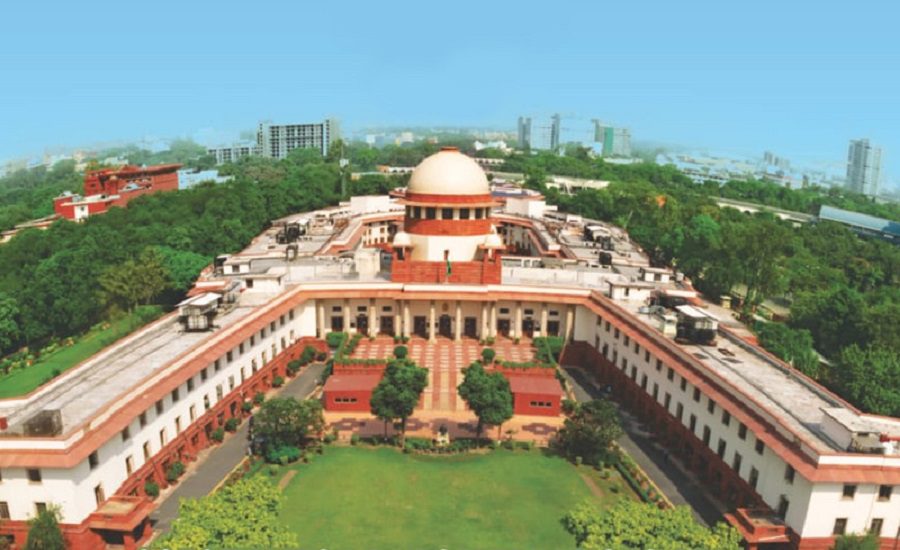
New Delhi: The Supreme Court of India has ignited a major legal and socio-political debate by issuing a notice on a Public Interest Litigation (PIL) that seeks to apply the creamy layer concept to Scheduled Castes (SC) and Scheduled Tribes (ST) reservations. The development signals a possible change in how affirmative action is interpreted in India’s constitutional reservation regime.
Details of the Supreme Court Notice on Creamy Layer SC/ST Reservation
A Constitution Bench led by Chief Justice of India Surya Kant and Justice Joymalya Bagchi issued notices to the Union Government and all state governments, seeking their responses on a writ petition filed under Article 32 of the Indian Constitution.
The petition argues that excluding affluent members, commonly referred to as the creamy layer, from the SC/ST quota is essential to fulfil the Constitution’s goals of justice, equality, and substantive upliftment.
What Is Creamy Layer in Indian Constitution
The term creamy layer is traditionally linked to the Other Backward Classes (OBC) quota, where economically and socially advanced members within the category are excluded from reservation benefits.
This prevents relatively better-off individuals from perpetually occupying quota benefits meant for the more disadvantaged.
However, for SCs and STs, the creamy layer concept has been contentious because reservation for these groups was historically anchored in untouchability and social exclusion, not just economic backwardness.
The Union Government has long maintained that economic criteria should not override the social discrimination basis of SC/ST reservations.
Details of the PIL against Creamy Layer SC/ST Reservation
Advocate Ashwini Kumar Upadhyay, who filed the petition, argues that:
- Continuing to award reservation benefits to socially and economically advanced SC/ST families creates a privileged class within reserved groups and defeats the remedial purpose of affirmative action.
- This elite capture deepens internal inequalities and prevents the poorest and most marginalised from accessing education and jobs that reservations were designed to protect.
- It allegedly violates multiple constitutional provisions, including Articles 14 (equality before law), 15 (prohibition of discrimination), 16 (equality of opportunity), 38, 41, 46, and 335.
- The plea further states that without creamy layer exclusion, reservation policy risks becoming arbitrary and disconnected from the Constitution’s foundational goal of reducing socio-economic disparities.
Legal Context of Creamy Layer SC/ST Reservation
The Supreme Court’s notice arrives amid evolving jurisprudence on reservation:
Landmark ‘Sub-Classification’ Ruling
In State of Punjab v. Davinder Singh (2024), a seven-judge Constitution Bench held that state governments could create sub-classifications within SC/ST quotas to ensure equitable distribution, overturning the long-standing view that these groups are homogeneous.
Justices on that bench suggested the creamy layer concept may be applied even to SCs/STs, although criteria might differ from those used for OBCs. This signals judicial support for recalibrating affirmative action policies to target the “truly backward.”
Counterpoints and Government Position
The Union Government has historically opposed applying creamy layer to SCs and STs on the ground that discrimination endured by these communities stems from social ostracism and historic caste-based exclusion, not merely economic status. Government representatives argue that economic measures alone cannot capture the depth of social marginalisation faced by SC/ST individuals.
Read also: UPSC Reservation Rule Clarified: SC Bars Relaxed Candidates from General Category Seats