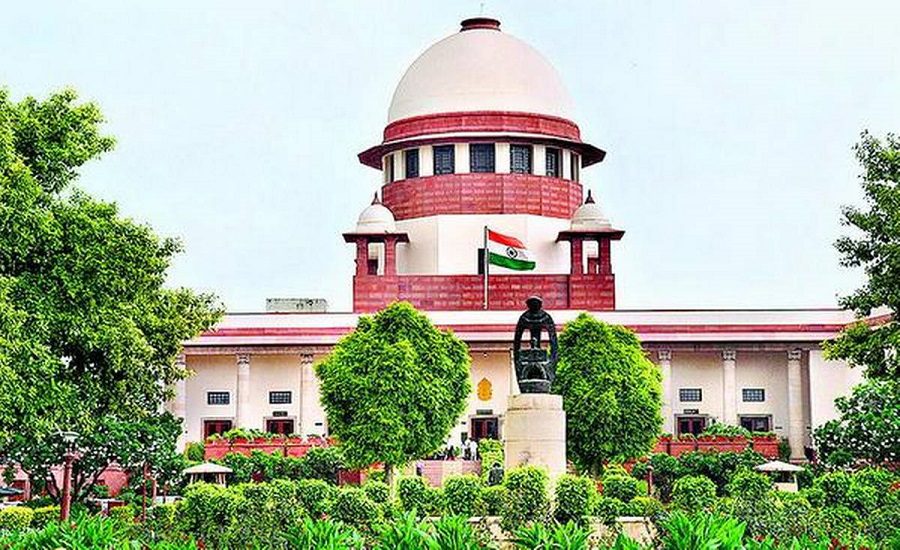
New Delhi: In a landmark decision on December 8, 2025, the Supreme Court of India has ruled that 30 percent of the seats in each State Bar Council — where elections are yet to be notified — must be reserved for women advocates. The Court further provided that, for the current year, 20 percent of those seats should be filled through the election process and 10 percent through “co-option” (nomination), encouraging Bar Councils to ensure women’s representation even if fewer women contest elections.
The decision has been hailed as a significant step towards gender parity within India’s legal profession, addressing long-standing concerns over the underrepresentation of women in bar governance.
At the same time, the judgment acknowledges practical challenges — especially in states where very few women practise law — by permitting co-option. This article explores the background, details, implications, and possible challenges of the verdict.
Background of the Women Reservation in State Bar Councils
The call for greater female representation in legal professional bodies is not new. Despite women constituting roughly 15 percent of practising lawyers in India, their presence in the leadership of bar bodies has been disproportionately low. According to recent estimates, they hold only about 2 percent of the leadership posts in State Bar Councils.
Prior to the current order, there had been increasing judicial interventions. Several petitions sought mandatory reservation for women in bar associations and bar councils.
In early 2025, the court had already directed certain High Court Bar Associations to reserve the post of treasurer and a portion of committee seats for women.
Nevertheless, across many State Bar Councils, women’s representation remained negligible, prompting fresh pleas before the Supreme Court by senior women advocates such as those in the petitions Yogamaya M.G. v. Union of India and Shehla Chaudhary v. Union of India.
The Supreme Court Order in Women Reservation in State Bar Councils
A bench comprising Chief Justice of India Surya Kant and Joymalya Bagchi passed the order. The petitions were filed by the advocates behind the aforementioned cases.
Key Directives
- The Court directed that 30 percent of seats in every State Bar Council — where elections are not yet notified — should be reserved for women advocates.
- For the current year, 20 percent of the reserved seats must be filled by election, and 10 percent by co-option (nomination).
- A formal proposal for co-option must be placed before the Court for those Councils where women’s participation in elections is low or inadequate.
- The Court expects the Bar Council of India (BCI), the statutory regulatory body for lawyers, to “construe” its existing rules in a manner that renders the reservation effective — effectively treating relevant rules as if already amended.
- The reservation is not limited to ordinary seats but extends to posts of office bearers within the Councils.
However the Court excluded six State Bar Councils from the immediate quota order because in those states the election process had already been notified. For the remainder, the quota scheme applies.
Significance & Rationale of the Women Reservation in State Bar Councils
1. Towards Gender Parity and Institutional Inclusivity: The decision recognizes the structural underrepresentation of women in legal institutions despite their growing numbers in the profession. By mandating a floor of 30% representation, the Court aims to ensure that women’s voices are heard in legal governance, policy-making and regulation of the profession.
2. Legitimising Reservation Without Legislative Amendment (for Now): Given that the existing statutory framework (the Advocates Act and Rules under BCI) does not explicitly mandate gender-based reservation, the Court’s decision instructing BCI to “construe” its rules in favor of reservation is significant. It effectively uses its constitutional powers to bring parity — without waiting for legislative reform.
3. Balanced, Pragmatic Approach — Election + Co-option: Acknowledging practical difficulties — such as low number of women lawyers in certain states, or low interest among women to contest elections — the Court introduced a balanced mechanism: part election (20 %) and part nomination (10 %). This ensures that the quota is not just symbolic, but is likely to be realized in practice.
4. Broader Impact on Legal Profession and Governance: The representation of women in statutory bar bodies could have far-reaching effects: influencing the priorities of bar councils, steering gender-sensitive reforms, shaping policies for women lawyers, addressing issues such as harassment, inclusivity, and improving access to justice for women litigants.
Women Reservation in State Bar Councils: Potential Challenges & Criticisms
While widely seen as progressive, some challenges and concerns may arise:
- Practical viability in States with few women advocates: As raised by the BCI’s counsel, in some states the percentage of practising women lawyers is too low — making election-based representation difficult.
- Reluctance to Contest Elections: There may be hesitation among women lawyers to stand for elections due to structural, societal or professional barriers (workload, lack of resources, established male-dominated networks). The recourse to co-option in such cases, while pragmatic, could be seen as undermining electoral legitimacy.
- Administrative and Legal Hurdles: The BCI and State Bar Councils may need to revise internal rules, notify election schedules, manage co-option proposals. Resistance or delays might arise.
- Backlash or Resistance from Traditional Bar Bodies: Given decades of male-dominated leadership, there could be resistance — overt or covert — against enforced gender quotas.
Broader Context: Gender Representation & Legal Profession Reform
The order from the Supreme Court comes at a time when the Indian legal profession — and institutional governance broadly — is under scrutiny for patriarchal structures, unequal access and lack of representation for women and marginalized communities. The verdict echoes a growing recognition that mere numerical participation (women lawyers enrolling in Courts) is not enough; what matters is leadership, decision-making power, and institutional influence.
By invoking constitutional ethos and leveraging its powers under its supervisory and interpretative roles, the Court has attempted to accelerate equality in bar governance, potentially influencing the shape of the legal profession for decades to come.