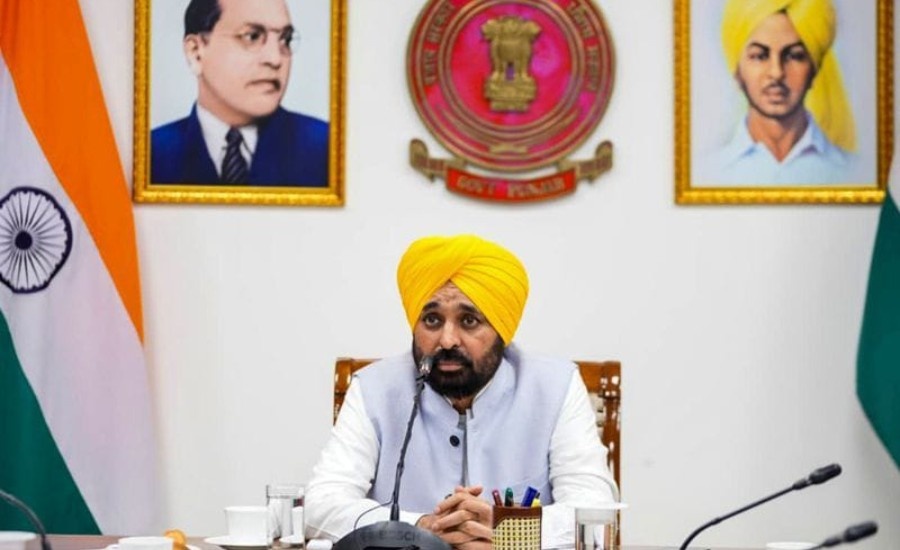
Chandigarh: The Punjab Cabinet, chaired by Chief Minister Bhagwant Mann, has approved the establishment of three new Digital Open Universities in the state and given the go-ahead to amend the law governing fees charged by private unaided educational institutions.
Three Digital Open Universities Approved
The Cabinet approved the establishment of three Digital Open Universities at different locations in Punjab:
- Cloud University at Bohan in Hoshiarpur
- MS Digital University at Fatehpur
- Physicswallah Digital University at Nandpur Kesho in Patiala
Read Also: Punjab CM Bhagwant Mann Lays Foundation for ₹1,116 Crore Vardhman-Aichi Unit in Ludhiana
The state government has prepared the Punjab Private Digital Open Universities Policy, 2026 to attract educational institutions of national and international repute to Punjab.
According to the government statement, the establishment of the universities is expected to bring quality education to the respective areas and contribute to their overall development.
Bill to Regulate Private School Fee Hikes
The Cabinet also approved a proposal to introduce the Punjab Regulation of Fee of Un-aided Educational Institutions (Amendment) Bill, 2026.
The proposed legislation seeks to regulate what the government described as “unnecessary and unreasonable” increases in fees by private unaided educational institutions.
According to the government, the amendment has been proposed after instances of private unaided educational institutions allegedly increasing annual fees arbitrarily and unreasonably, placing an additional financial burden on students and their parents.
The proposed changes will amend the Punjab Regulation of Fee of Unaided Educational Institutions Act, 2016, the Punjab Regulation of Fee of Un-aided Educational Institutions Amendment Act, 2019, and the rules framed under the Act. The stated objective is to check unjustified fee hikes by private unaided schools.
Cabinet Clears Bill on Outsourced Personnel
Among its other decisions, the Punjab Cabinet approved the Punjab State Outsourced Personnel Transition to Contractual Engagement Bill, 2026. The proposed legislation provides a framework for eligible outsourced personnel to transition to direct contractual engagement after meeting the prescribed service requirements.
The qualifying period would be:
- Five years of continuous service for eligible outsourced personnel.
- Three years for personnel working in specified hazardous categories.
The remuneration of contractual appointees will be determined by the Department of Finance and will not be lower than the minimum rate of wages fixed under the Code on Wages, 2019, or any other applicable law relating to minimum wages.
The Bill also proposes to repeal the Punjab Ad Hoc, Contractual, Daily Wage, Temporary, Work Charged and Outsourced Employees’ Welfare Act, 2016, from the date of its enactment.
Punjab GST Amendment Also Approved
The Cabinet further approved amendments to the Punjab Goods and Services Tax (Amendment) Bill, 2026.
The stated objectives of the changes are to promote voluntary compliance, reduce litigation and streamline GST procedures, with the government saying the measures will benefit trade and industry across the state.