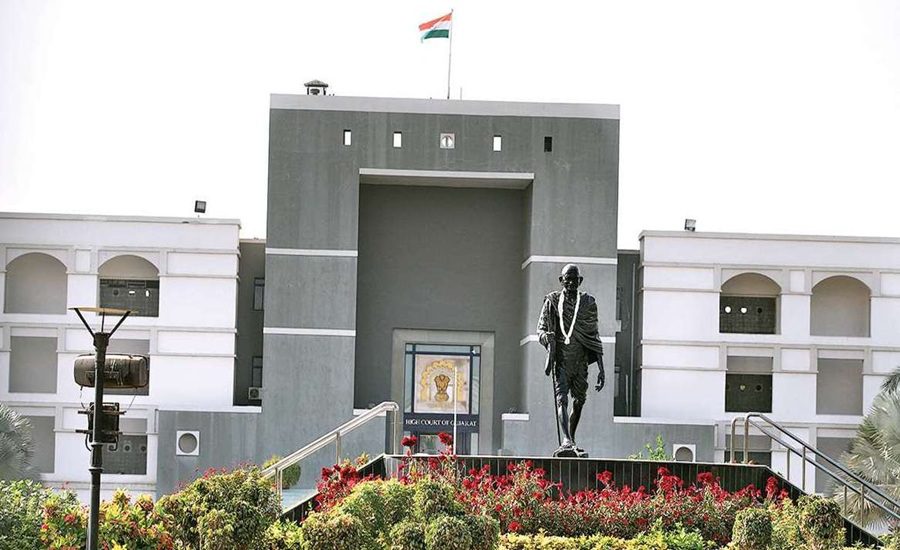
Ahmedabad: The Gujarat High Court has taken a major step to address the deepfake danger in Gujarat by issuing notices to both the Central Government and the Gujarat Government on a public interest litigation (PIL) highlighting the growing misuse of artificial intelligence (AI) to create deepfake and manipulated content targeting constitutional and statutory authorities.
Deepfake Danger in Gujarat: PIL Highlights Risks of AI-Generated Deepfakes
On Tuesday, a division bench of Chief Justice Sunita Agarwal and Justice D.N. Ray directed both governments to file detailed responses to the PIL. The petition raises serious concerns that advanced AI tools are being used to produce fake videos and images that mimic real public figures, making it hard for the public to distinguish between truth and fabrication.
Read also: President Appoints Seven New Judges to Gujarat High Court – Full Details Inside
The petition was filed by Advocate Vikas Vijay Nair, seeking urgent legal reforms and regulatory directions to safeguard public trust and institutional credibility in the digital age.
Deepfake Danger in Gujarat: What the Petition Demands
The PIL has asked the High Court for the following:
- Immediate prohibition on circulation and publication of all AI-generated videos, images, or content involving constitutional authorities.
- Mandatory watermarking of all AI-created media with clear tags such as “AI-generated data”.
- Instructions for police stations and specialised cyber units in Gujarat to adopt standard operating procedures (SOPs) for handling deepfake cases.
- Directions to tech platforms — including Meta, Google, X, Reddit, and Scribd — to enforce compliance with due diligence, content labelling, and traceability requirements under Indian law.
Next Steps
The bench has also asked the Director General of Police (DGP) of Gujarat to submit a detailed response, and indicated it will decide whether to issue notices to technology platforms only after the government replies are received.
The matter is scheduled for further hearing on March 20, 2026.