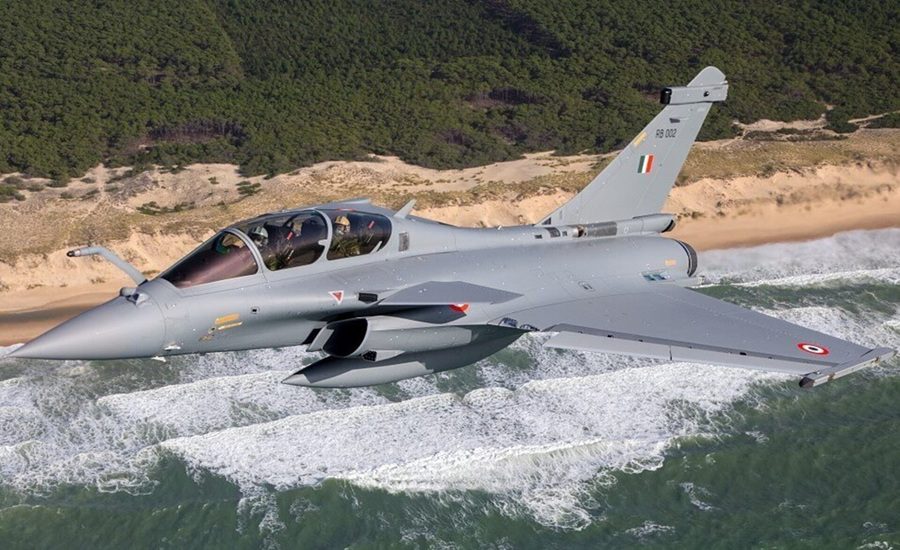
New Delhi: In a major step toward strengthening India’s air combat capability, the Defence Procurement Board (DPB) has approved a proposal to acquire 114 additional Rafale fighter jets from French aerospace major Dassault Aviation.
The clearance marks a crucial milestone in what is set to become one of India’s largest-ever defence acquisition programmes, both in value and strategic significance .
Background of 114 Rafale Jets Procurement
The Defence Procurement Board, chaired by Defence Secretary Rajesh Kumar Singh, is responsible for vetting large capital acquisition proposals before they are forwarded to the Defence Acquisition Council (DAC) and the Cabinet Committee on Security (CCS).
Read also: Inside the Indian Army’s ‘Bhairav’ Force: How 100,000 Drone Warriors Are Transforming Modern Warfare
With this approval:
- The proposal formally moves into the final approval pipeline
- Contract negotiations with France can begin
- Cost, industrial partnership, and technology transfer terms will now be scrutinized in detail
Officials describe the DPB’s nod as a “critical breakthrough” after years of deliberations over the Indian Air Force’s long-pending multi-role fighter aircraft requirement .
Why India Needs 114 More Rafale Jets
The Indian Air Force (IAF) is currently operating just 31 squadrons against a sanctioned strength of 42 squadrons. Aging MiG-21, MiG-27, and Jaguar aircraft are being phased out faster than replacements are entering service.
At present:
- IAF operates 36 Rafale jets, inducted between 2020 and 2022
- The new acquisition would raise the fleet to 176 Rafale aircraft
- This would significantly reduce the operational gap in the medium-weight fighter category .
Estimated Cost and Scale of the Deal
The acquisition is estimated to be worth ₹3.25 lakh crore, making it:
- One of the costliest defence deals in Indian history
- Larger than the original Rafale contract signed in 2016
- A long-term investment spread over manufacturing, technology transfer, training, and lifecycle support .
“Make in India” at the Core of the Rafale Plan
Unlike the earlier Rafale purchase, this proposal places strong emphasis on indigenous manufacturing.
Key Make-in-India Provisions:
- 80–90 aircraft to be assembled in India
- Transfer of Technology (ToT) from Dassault Aviation
- Integration of Indian-made weapons systems
- Participation of Indian aerospace companies as production partners
Defence sources confirm that the proposal mandates local manufacturing lines and excludes mere license-assembly without capability transfer .
114 Rafale Jets Procurement: Integration of Indian Weapons and Systems
The proposal also includes:
- Integration of Indian missiles and ammunition
- Secure data links compatible with India’s Integrated Air Command and Control System (IACCS)
- Adaptation for future indigenous weapons platforms
However, sources indicate that source code access will remain restricted, a standard clause in most advanced fighter deals .
Why Rafale Was Chosen Again
According to defence analysts, the Rafale was selected due to:
- Proven performance in high-altitude and maritime roles
- Existing IAF infrastructure and trained personnel
- Lower lifecycle costs compared to introducing a new aircraft type
- Interoperability with Indian and allied systems
The aircraft’s performance during the Ladakh standoff and its rapid operational readiness further strengthened the IAF’s confidence in the platform.
Next Steps in the Acquisition Process
1. Proposal moves to the Defence Acquisition Council
2. Financial vetting by the Ministry of Defence
3. Final clearance by the Cabinet Committee on Security
4. Contract signing under an inter-governmental agreement with France
Officials caution that while the DPB clearance is significant, final approvals may still take several months.
What are the Implications of 114 Rafale Jets Procurement
- Enhance deterrence against China and Pakistan
- Strengthen India’s air superiority and deep-strike capabilities
- Complement indigenous programmes like Tejas Mk-2 and AMCA
- Reduce over-dependence on aging Soviet-origin aircraft
Experts view the deal as a bridge capability until India’s fifth-generation fighter programmes mature.