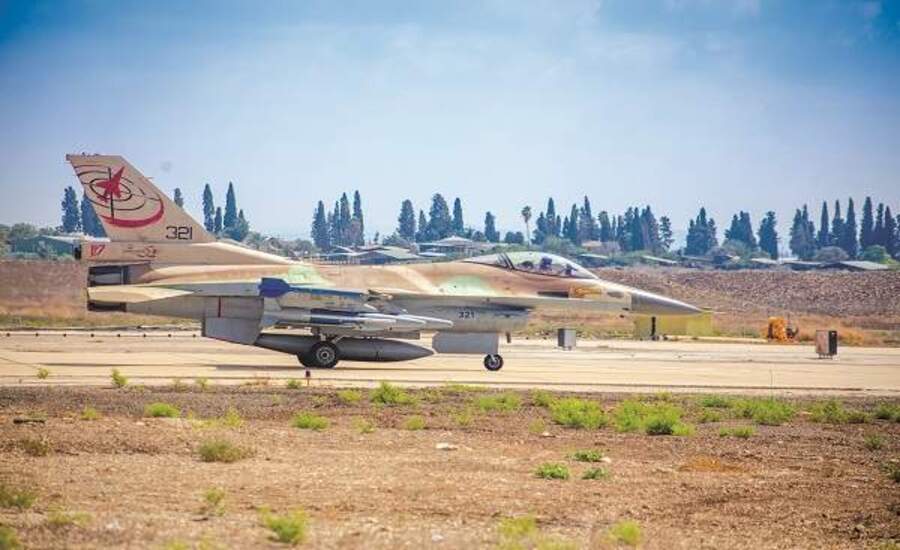
New Delhi: India’s Defence Acquisition Council (DAC) has recently approved the procurement of SPICE-1000 glide bomb kits from Israel — a move that has raised eyebrows in defence circles given the concurrent development of an indigenous alternative known as DRDO’s Gaurav Long-Range Glide Bomb (LRGB).
The decision reflects a nuanced balancing act between operational readiness, cost-efficiency, and self-reliance in defence capability development.
What Is the SPICE-1000 Bomb?
The SPICE-1000 (Smart, Precise Impact, Cost-Effective) glide bomb kit is a stand-off precision strike munition that converts a standard 1,000-lb general-purpose aircraft bomb into a long-range precision-guided weapon.
Read also: What Is Krasukha-2 EW System? and How It Can Protect S-400 Air Defence Without Firing a Shot
It does this by integrating a glide body, navigation systems (INS + SATNAV), and an electro-optical/infrared (EO/IR) seeker for terminal guidance.
What are the Features of the SPICE-1000 Bomb
- Autonomous Target Acquisition (ATA) using scene-matching algorithms that compare real-time EO imagery with stored mission data.
- Two-way data link allowing pilot or weapon systems officer (WSO) interaction during flight.
- Precision with a CEP (Circular Error Probable) of fewer than 3 meters in day/night and adverse weather conditions.
- A stand-off range of up to ~125 km, enabling aircraft to release weapons from well outside hostile air defence envelopes.
India has already operated SPICE variants such as SPICE-2000 and SPICE-250 during past missions like the 2019 Balakot airstrikes, cementing confidence in the system’s battlefield performance.
SPICE-1000 Bomb Vs Gaurav Bomb
DRDO’s Gaurav LRGB has been under development for years and represents India’s attempt at achieving indigenous precision strike capability.
Designed by the Research Centre Imarat (RCI), Hyderabad, and supported by partners like Adani Defence and Bharat Forge, Gaurav is a glide-navigation kit meant for the 1,000-kg High Speed Low Drag (HSLD) bomb.
Notable attributes of Gaurav:
- Uses INS + SATNAV navigation, and can be equipped with a Semi-Active Laser Homing (SALH) seeker.
- Demonstrated a range of ~100 km during trials from Su-30MKI aircraft.
- Can deliver pinpoint accuracy when a target is laser-illuminated.
However, there are critical differences between SPICE-1000 and Gaurav that explain India’s procurement strategy:
No EO/IR seeker on Gaurav: The SPICE’s onboard optical seeker allows autonomous target recognition and flexible attack geometry — a capability Gaurav currently lacks.
Laser illumination dependency: Gaurav’s accuracy hinges on external laser designation, typically from drones.
This exposes supporting platforms to enemy air defences and risks weather interference such as cloud cover, dust, or smoke — conditions that can degrade laser guidance.
Procurement Cost vs Capability: Calculated Decisions
Cost is often central to defence procurement debates, especially when indigenous alternatives are available.
Reports estimate a single SPICE-1000 kit costs around $480,000 (≈ ₹4 crore) — a steep price that makes the weapon unsuitable for large-scale use across an entire air fleet.
Despite high unit costs, the Indian Air Force (IAF) sees SPICE-1000 as essential for high-value, heavily defended targets where precision and flexibility are mission-critical.
Conversely:
- DRDO’s Gaurav offers a cost-effective solution suitable for broader operational use — particularly against fixed infrastructure where extreme precision is less critical.
- Experts propose a mixed inventory strategy: limited SPICE-1000 stocks for high-priority targets, and larger quantities of Gaurav kits for general strike capability — balancing cost, capability, and mission needs.
Strategic and Defence Self-Reliance Considerations
The procurement of SPICE-1000 does not signify rejection of DRDO or Indian defence innovations. Instead, it reflects:
1. Immediate operational readiness requirements — SPICE-1000’s proven battlefield performance makes it a reliable stop-gap solution.
2. Capability gap mitigation — until indigenous systems like Gaurav reach full operational maturity and performance parity.
3. Future trajectory toward indigenisation — continued enhancements to Gaurav or similar domestic kits, possibly incorporating EO/IR seekers and advanced mission profiling.
India’s defence doctrine emphasizes self-reliance (Atmanirbharta), but pragmatism in procurement ensures that the armed forces are not overly constrained by development timelines when operational imperatives demand readiness.
Looking Ahead: The Indian Air Force and Precision Strike Evolution
Precision-guided munitions will remain a central pillar of the IAF’s strike capability as regional and global security dynamics evolve. The SPICE family of weapons, with its extended range and precision, will complement indigenous efforts and provide immediate operational capability enhancements.
With continued refinement of DRDO systems like Gaurav, India edges closer to greater defence technology autonomy, even as it selectively imports systems that fulfill urgent strategic needs.