New Delhi: India’s aerospace ambitions have taken a decisive leap forward with the CSIR-NAL partnership with Russia’s United Engine Corporation, a move poised to reshape the future of aircraft propulsion technology in India.
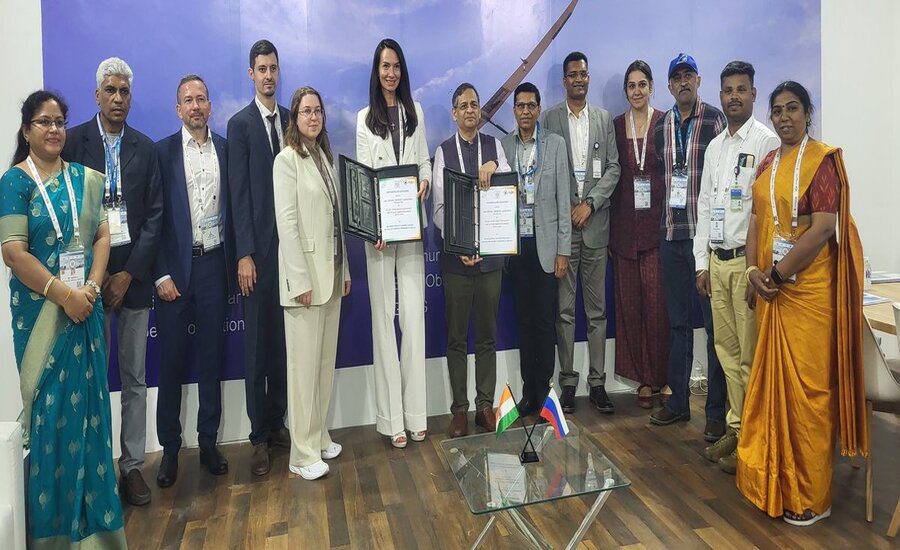
The collaboration, formalized through a non-disclosure agreement (NDA) at the prestigious Wings India 2026 air summit in Hyderabad, aligns directly with India’s push for aerospace self-reliance and advanced engine capabilities for both civil and defense applications.
Details of CSIR-NAL United Engine Corporation Deal
During Wings India 2026, Asia’s largest civil aviation event, the Council of Scientific and Industrial Research – National Aerospace Laboratories (CSIR-NAL) signed an NDA with Russia’s United Engine Corporation (UEC), a subsidiary of the Russian state aerospace group ROSTEC.
This agreement is the first formal step toward deeper cooperation in aircraft engine research, design, and technology transfer between the two nations. By joining forces, CSIR-NAL and UEC aim to explore joint development of advanced propulsion systems suited for a new generation of Indian aircraft.
Importance of CSIR-NAL United Engine Corporation Deal
Jet engines are among the most complex technologies in aerospace. India has historically faced challenges in developing high-performance engines entirely on its own — notably with projects like the Kaveri engine, which struggled to meet full performance requirements.
By partnering with UEC, India gains access to decades of Russian expertise in turbofan and turboprop technology — engines that power well-known platforms including military fighters and commercial aircraft. This could accelerate India’s engine development ambitions significantly.
What CSIR-NAL United Engine Corporation Deal Could Unlock
The NDA primarily enables exploratory collaboration, aimed at evaluating joint design concepts, potential manufacturing pathways, and technology transfer frameworks. While detailed project specifics remain under wraps, the focus is clearly on strengthening India’s ability to produce reliable, high-performance engines domestically.
Possible Applications
Analysts expect this collaboration to support a range of platforms — from trainer and regional transport aircraft to future advanced military jets. It may also complement existing Indian programs like the SARAS light aircraft and initiatives to build engines for unmanned systems.
Boosting India’s Aerospace Self-Reliance
This partnership reflects India’s broader drive for Atmanirbhar Bharat (self-reliant India) in critical technologies. By combining CSIR-NAL’s domestic research capabilities with UEC’s global engine expertise, India aims to strengthen its aerospace supply chain and reduce reliance on Western engine manufacturers.
This is particularly significant as India scales up aircraft production for domestic and export markets. Advanced propulsion technology is a key component underpinning the competitiveness and performance of both civil and military aviation platforms.
A New Phase in Indo-Russian Aerospace Cooperation
India and Russia have a long history of defence cooperation, especially in aviation — from fighter jets like the Sukhoi-30MKI to helicopter platforms. Building on this foundation, the CSIR-NAL–UEC partnership signals a new era of collaboration that broadens into cutting-edge propulsion systems.
Industry experts believe this move could also open the door for future joint ventures, co-manufacturing deals, and knowledge exchange programs that benefit both countries’ aerospace sectors.