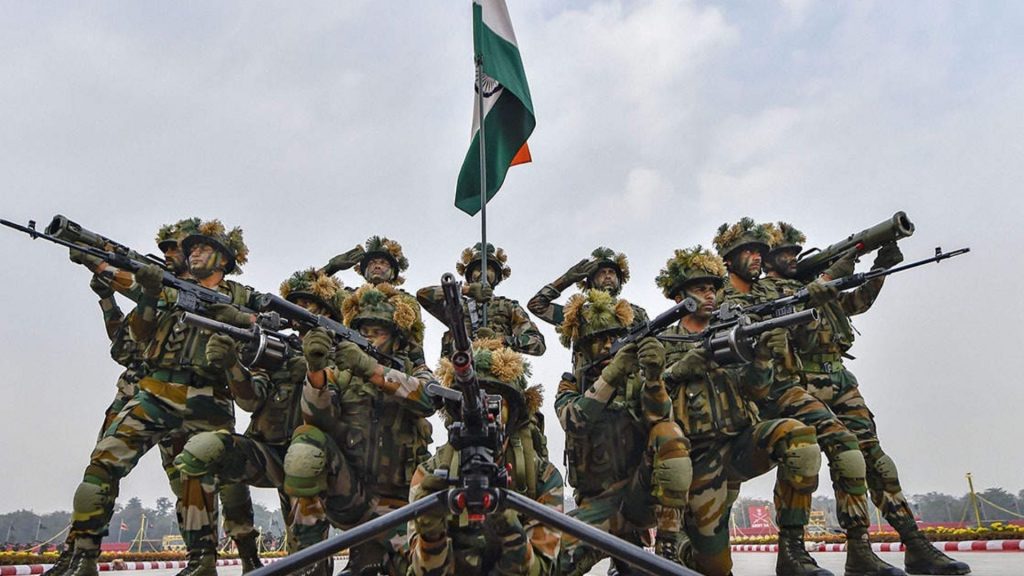
New Delhi: The Indian Army is undertaking a comprehensive transformation of its battlefield capabilities by establishing a dedicated drone force and integrating unmanned systems across all arms and services.
This ambitious plan envisions equipping each corps with 8,000 to 10,000 drones and advancing a universal soldier training regime in drone operations by 2027 — a strategic move aimed at future warfare preparedness and technological dominance.
Strategic Context of Indian Army Drone Force
Modern conflicts increasingly hinge on unmanned aerial vehicles (UAVs) and autonomous systems. These tools provide persistent surveillance, rapid intelligence gathering, and precision strike capabilities — all while keeping human soldiers out of harm’s way. Recognising this shift, the Indian Army is pivoting from traditional force structures toward a drone-centred doctrine designed to bolster tactical flexibility and battlefield awareness.
Read also: CSIR-NAL and SDAL Successfully Tests Long-Range Loitering Munition UAV With AI-Enabled Navigation
In this new doctrine, drones do more than support operations — they become embedded within manoeuvre formations, effectively acting as third-dimension force multipliers alongside infantry and artillery.
What are Indian Army Drone Force Plans
A central pillar of this initiative is the deployment of thousands of drones per corps — with estimates ranging between 8,000 and 10,000 UAVs per unit of the Army.
These platforms will include nano, micro, small and medium-class drones capable of fulfilling diverse battlefield roles such as:
- Surveillance & reconnaissance
- Tactical early warning
- Target acquisition
- Offensive missions using precision loitering munitions
This scale represents a major doctrinal shift and emphasises mass saturation coverage, creating a dense unmanned network that enhances situational awareness from the frontline to rear echelon units.
Training Expansion Across Military Institutions
To build the human capability required for this drone revolution, the Indian Army is establishing specialised drone training centres at 19 major military institutions.
These include:
- Indian Military Academy (Dehradun)
- Officers Training Academies (Chennai & Gaya)
- Infantry School (Mhow)
- School of Artillery (Deolali)
Training modules will span basic piloting, sensor operation, mission planning, and counter-drone tactics, ensuring that personnel from officer cadets to field units maintain high proficiency levels.
Universal Soldier Training Goal: 2027
Perhaps the most groundbreaking aspect of the plan is the goal to have every Indian Army soldier trained in basic drone operations by 2027.
This initiative aims to make drone proficiency a core soldier skill, similar to marksmanship or first aid.
A range of advanced tools — including virtual reality (VR)-based drone simulators — will support scalable, realistic training even in remote postings.
These simulators allow soldiers to experience real-world drone operations without risking costly hardware, paving the way for expedited and safe learning paths.
Indian Army Drone Force: Focus on Indigenous Technology and Self-Reliance
Aligned with Atmanirbhar Bharat and defence self-reliance goals, the Army is prioritising domestically developed drones and counter-drone systems. Key indigenously built platforms include:
- Nagastra-1 loitering munition — an AI-enabled UAV capable of precision strikes and autonomous target loitering.
- Bhargavastra counter-drone system — a multi-layer micro-missile and micro-rocket counter-UAS system designed to neutralise hostile swarms of UAVs.
- DRDO laser-based defence systems with directed-energy capabilities.
These systems reduce reliance on foreign suppliers, enhance tactical flexibility, and allow Indian defence industries to capture greater value across the UAV ecosystem.
Counter-Drone Defence: A Multi-Layered Shield
Alongside offensive and operational drones, the Indian Army is investing heavily in counter-UAV technologies to defend against hostile drones. Indigenous systems like D4 anti-drone platforms, SAKSHAM, and Bhargavastra form layered protection capable of detecting, tracking and neutralising threats.
Additionally, DRDO’s laser-based directed energy weapons add a silent, ammunition-free layer of protection with engagement ranges up to two kilometres — expanding the Army’s ability to defend key assets and formations.
Challenges and Future Outlook
Despite rapid progress, challenges remain in implementing such a wide-ranging drone doctrine. Key hurdles include:
- Spectrum management for controlling multiple drone swarms
- Electronic warfare resilience against jamming and spoofing
- Integration with existing service arms (aviation, artillery, signals)
Responding to these challenges, the Army is committing further R&D investments and joint exercises with defence industry partners and research institutions.
In the long term, the integration of drones with other battlefield systems is expected to realise a networked kill web, enabling seamless data exchange across units and dramatically improving decision speed and battlefield reflexes.